
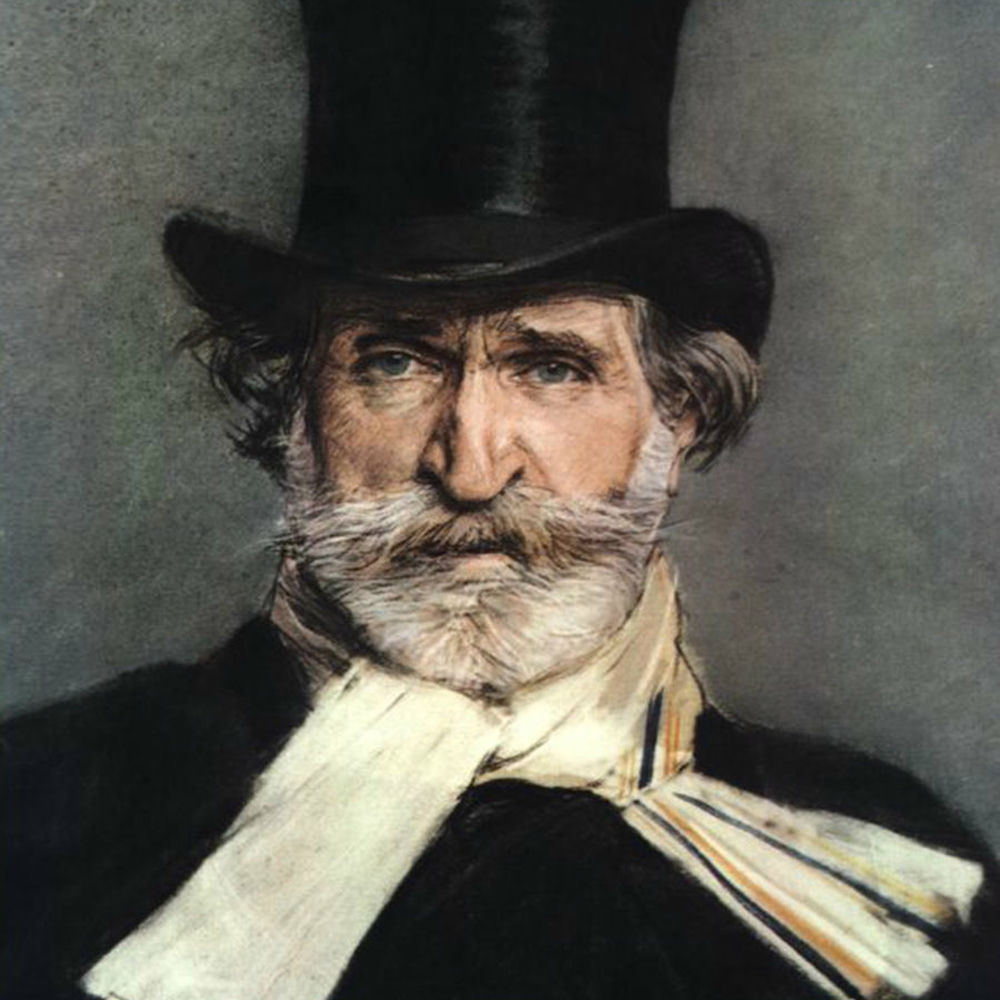
Giuseppe Verdi
Listen Giuseppe Verdi on radio stations:



Giuseppe Verdi: The Titan of Italian Opera
Giuseppe Verdi was an Italian composer whose operas dominate the standard repertoire of opera houses worldwide. Hailing from the village of Le Roncole near Busseto, his career spanned much of the 19th century, producing a series of masterworks that became synonymous with Italian Romanticism and national identity.
Early Career
Born in 1813, Verdi's musical talent was evident early, leading to studies in Milan. His first opera, Oberto, was produced at La Scala in 1839 with modest success. A period of personal tragedy followed, but he persevered, and his third opera, Nabucco (1842), with its famous chorus "Va, pensiero," resonated deeply with Italian audiences yearning for unification, catapulting the young composer to fame.
Breakthrough and Middle Period
The success of Nabucco began Verdi's "galley years," a prolific period of composing roughly an opera per year for Italian theaters. Works like Rigoletto (1851), Il Trovatore (1853), and La Traviata (1853) solidified his reputation, though La Traviata initially faced a lukewarm reception. These operas showcased his gift for dramatic melody, complex characterizations, and orchestral innovation, becoming cornerstones of the operatic genre.
Key Tracks
Va, pensiero (Nabucco) - This chorus of exiled Hebrews became an unofficial anthem for the Italian Risorgimento, cementing Verdi's early fame and his connection to the national cause.
La donna è mobile (Rigoletto) - The Duke's aria is one of the most recognizable tenor pieces in all of opera, famous for its catchy, ironic melody.
Libiamo ne' lieti calici (La Traviata) - This brindisi, or drinking song, is a quintessential example of Verdi's ability to craft immediately engaging and dramatically potent ensemble numbers.
Later Mastery and Legacy
In his later career, Verdi composed less frequently but with greater depth and ambition. Collaborating with librettist Arrigo Boito, he produced the Shakespearean dramas Otello (1887) and Falstaff (1893), works that pushed the boundaries of operatic form and psychological insight. Beyond opera, his Requiem (1874) remains a monumental work in the choral repertoire. Verdi's music, from the early vigor to the late sophistication, defines a core strand of the operatic tradition.
Similar artists in the realm of grand opera include Giacomo Puccini, who continued the Italian operatic tradition with a more verismo style. The dramatic scope of Richard Wagner, though German, provides a contemporary contrast in 19th-century music drama. For earlier Italian opera, the works of Gioachino Rossini were a significant precursor to Verdi's era.
The music of Giuseppe Verdi is a staple of classical music programming, featured regularly on dedicated opera radio stations and classical FM broadcasts. Listeners can explore the powerful drama and melody of Verdi's operatic world through such specialized stations.
Discover the timeless works of Giuseppe Verdi, the master of Italian opera, on the classical radio stations featured here.
