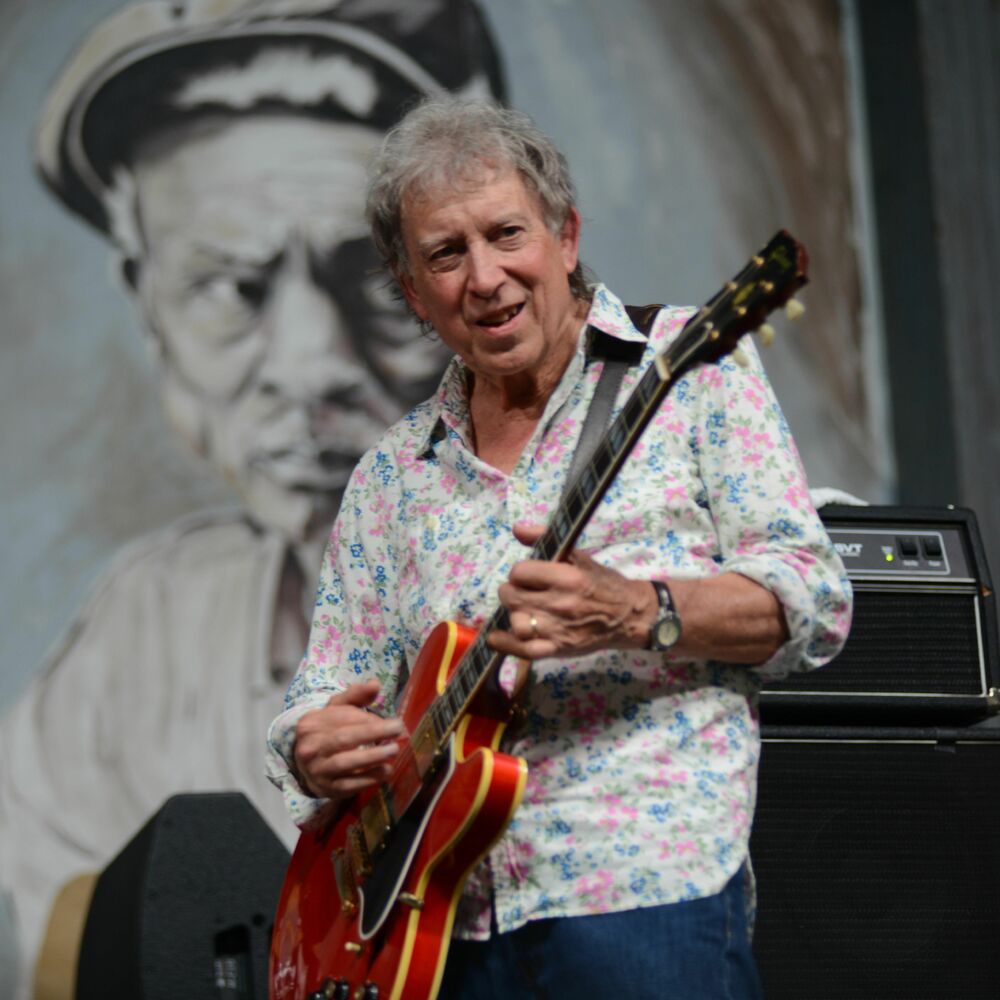

John Lee Hooker
 United States
Listen John Lee Hooker on radio stations:





John Lee Hooker: The Patriarch of Blues and Boogie
John Lee Hooker was an American blues singer, songwriter, and guitarist whose raw, rhythmic style became a cornerstone of modern music. His career, spanning over half a century, produced timeless hits like Boom Boom and established him as a definitive voice in Delta and electric blues.
Early career
Born in 1917 in Mississippi, John Lee Hooker was deeply influenced by the Delta blues sound of his stepfather. He moved to Detroit in 1948, where his unique, droning guitar style and spoken-word delivery quickly caught the ear of record store owner Bernie Besman.
Their 1948 collaboration resulted in the seminal single Boogie Chillen', released on the Modern label. This track, with its hypnotic one-chord groove, became an immediate hit in the burgeoning post-war rhythm & blues scene.
Breakthrough
While Boogie Chillen' was his first hit, John Lee Hooker's mainstream breakthrough came over a decade later with the 1962 single Boom Boom. Recorded for the Vee-Jay label, its driving beat and catchy riff crossed over to pop charts, solidifying his status beyond the blues circuit.
This period saw him performing at major folk festivals and collaborating with younger rock artists, introducing his primal sound to a new, wider audience. His prolific output led him to record for numerous labels under various aliases like Texas Slim and Birmingham Sam.
Key tracks
Boogie Chillen' - This 1948 debut was a landmark record that defined his signature boogie groove and became a number one R&B hit.
Boom Boom - The 1962 single that became his most recognizable song, widely covered and a staple of blues and rock sets for generations.
I'm in the Mood - Another early hit, this slow, sensual blues track showcased the more introspective side of his vast repertoire.
One Bourbon, One Scotch, One Beer - Hooker's gritty narrative blues was famously adapted by George Thorogood, highlighting his storytelling influence on rock.
The Healer - The 1989 title track from his Grammy-winning comeback album, featuring a celebrated duet with Carlos Santana.
The late 1980s and 1990s marked a major career resurgence for John Lee Hooker. His 1989 album The Healer, featuring collaborations with Santana, Bonnie Raitt, and Robert Cray, won a Grammy and achieved multi-platinum sales.
He continued to record and perform successfully until his passing in 2001, leaving behind a legacy heard in the work of countless blues and rock musicians. His influence is directly traceable in the raw, riff-based styles of artists like ZZ Top, who channeled his boogie into Southern rock. The gritty, electric approach of George Thorogood is deeply indebted to Hooker's sound. For the British blues rock interpretation, listeners can explore The Animals, who covered his songs. The visceral guitar work of Buddy Guy also carries the torch of Hooker's emotive, less-structured style.