

Talk Talk
Listen Talk Talk on radio stations:






Talk Talk: The Pioneers of Post-Rock
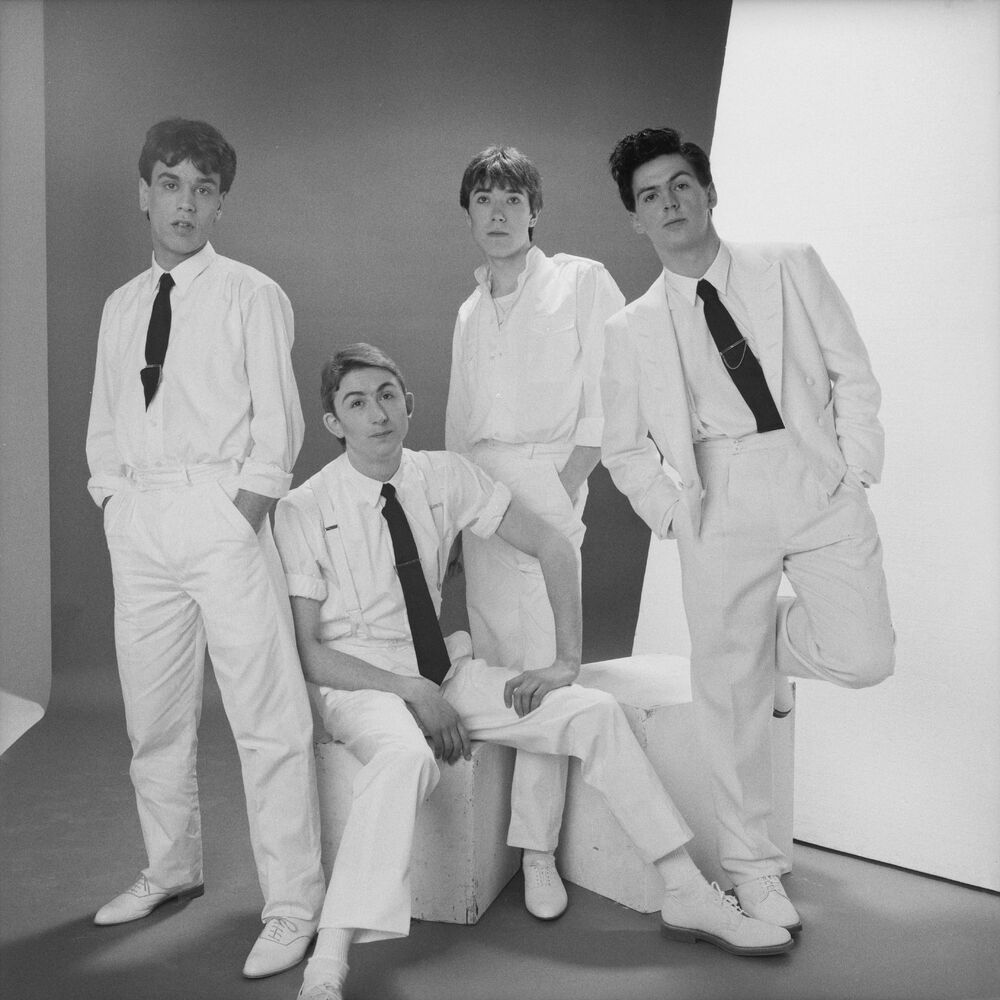
Talk Talk was an English band formed in London in 1981, initially achieving success as part of the synth-pop movement before radically transforming their sound to become unlikely pioneers of what would later be defined as post-rock. Led by the distinctive baritone of Mark Hollis, the group's journey from chart-friendly pop to deeply experimental, atmospheric compositions remains one of the most profound evolutions in modern music history.
Early Career
Talk Talk formed in 1981 with the core lineup of vocalist and primary songwriter Mark Hollis, bassist Paul Webb, drummer Lee Harris, and keyboardist Simon Brenner. Signed to EMI Records, their early output was firmly within the synth-pop landscape of the early 1980s, characterized by catchy melodies and prominent synthesizers. Their 1982 self-titled debut album, featuring the hit "Talk Talk," established them as a commercially viable act, though it offered little hint of the artistic ambition that would later define them.
Breakthrough
The band's commercial peak arrived with their second album, 1984's It's My Life. Produced by Tim Friese-Greene, who became a key creative collaborator, the title track became a major international hit, particularly across Europe. While still rooted in a more sophisticated pop framework, the album showcased a growing desire for musical depth beyond the constraints of the era's pop charts, setting the stage for their dramatic reinvention.
Key Tracks
Talk Talk - The debut single that gave the band their name and first chart success, encapsulating their early synth-pop sound.
It's My Life - The breakthrough single that remains their most recognizable song, a sleek and defiant anthem of the mid-80s.
Life's What You Make It - The driving lead single from 1986's The Colour of Spring, marking a clear transition towards a more organic, band-oriented sound using live instrumentation.
Desire - A track from The Colour of Spring that exemplified their new direction, blending spiritual lyrical themes with a powerful, gospel-influenced arrangement.
I Believe in You - A haunting and sparse single from their final album, 1991's Laughing Stock, representing the absolute apex of their minimalist and emotionally resonant style.
Following The Colour of Spring, Talk Talk severed ties with EMI and embarked on their most radical phase. Their 1988 album Spirit of Eden, recorded in near-darkness, was a monumental departure-a slow-burning, improvisational, and jazz-influenced work that baffled their label but is now hailed as a landmark. Their final album, 1991's Laughing Stock, released on the Verve label, pushed this aesthetic even further into abstract, atmospheric territory, directly inspiring the post-rock genre. The band dissolved after this release, with Mark Hollis releasing one final solo album in 1998 before retreating from public life until his passing in 2019.
Artists exploring a similar journey from accessible forms to profound experimentalism include Radiohead, who also transitioned from alt-rock anthems to complex, textured albums. The atmospheric soundscapes of Bark Psychosis were directly influenced by Talk Talk's later work. The introspective and patient compositions of Slowdive in their later shoegaze and ambient phases share a spiritual kinship. Finally, the improvisational and mood-focused approach of The Blue Nile parallels Talk Talk's emphasis on feeling over structure.
