
Warda: The Rose of Algerian Chaabi and Arab Pop
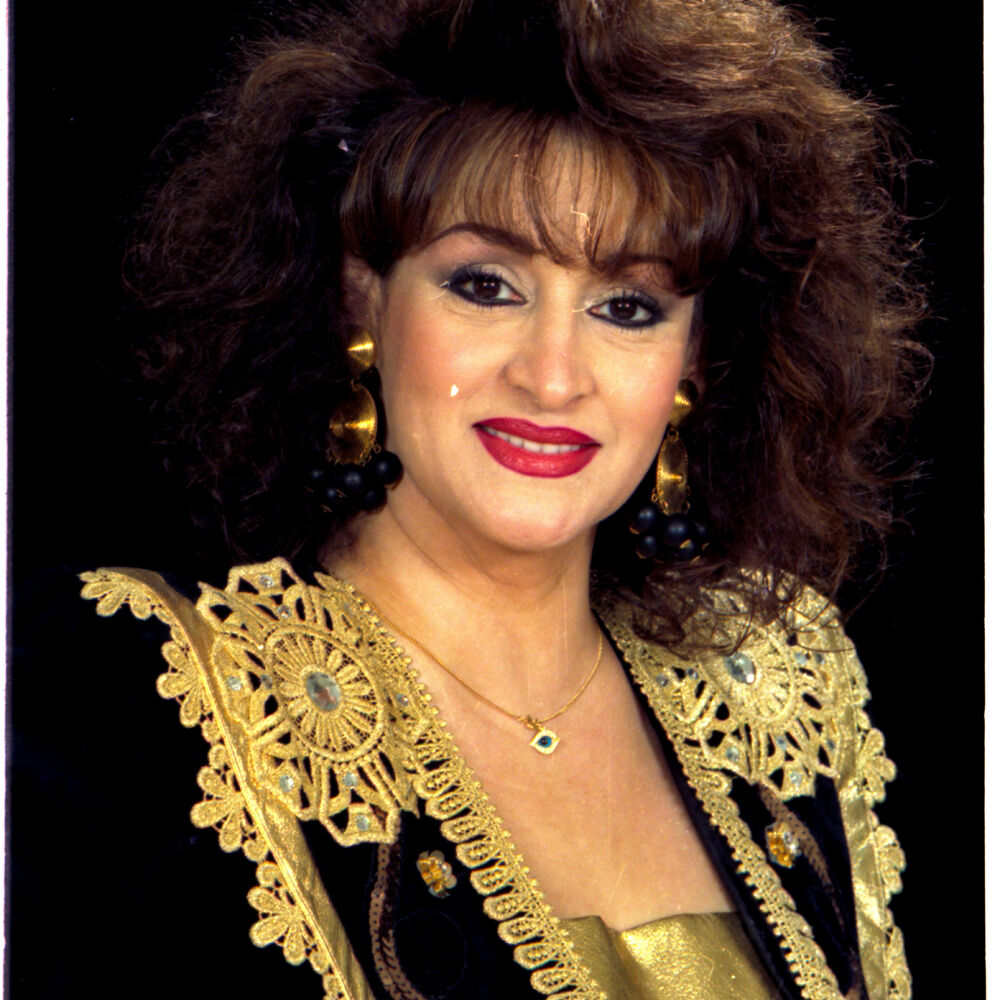
Warda Al-Jazairia, known mononymously as Warda, was an Algerian singer who became one of the Arab world's most beloved musical icons. Her career, spanning over four decades, was defined by a powerful voice and a vast catalogue that sold millions of records across the Middle East and North Africa.
Early career
Warda was born in 1939 in Paris to an Algerian father and a Lebanese mother, growing up immersed in Arab musical traditions. Her professional journey began remarkably early, with her first public performance on a Parisian stage at just eleven years old, catching the attention of the influential Algerian composer Mohamed El Kamel.
She recorded her first songs for the Egyptian label Sono Cairo in the late 1950s. However, her early momentum was interrupted by the Algerian War of Independence, leading to a period of relative quiet before her family relocated to Algeria following its liberation.
Breakthrough
Warda's true breakthrough arrived in the late 1960s after she moved to Egypt. There, she collaborated with the era's premier composers, including Mohammed Abdel Wahab and Baligh Hamdi. Her performance in the 1972 operetta "My Great Homeland" solidified her star status, leading to a prolific recording contract with the major label Sout El Phan.
Her albums for the label, rich with romantic and patriotic themes, achieved massive commercial success. While specific Western chart metrics are scarce, her releases consistently achieved gold and platinum certifications across Arab markets, with cassettes and LPs circulating in the millions.
Key tracks
Batwanes Beek — This timeless love song, composed by Baligh Hamdi, remains one of her signature hits and a staple of Arab radio.
Harramt Ahebbak — A classic collaboration with composer Mohammed Abdel Wahab, showcasing the depth and emotional range of her vocal delivery.
Al Watan Al Akbar — A powerful patriotic anthem that cemented her connection with audiences across the Arab world.
Awqati Btejri — This later-career hit demonstrated her enduring popularity and ability to adapt to contemporary musical arrangements.
Throughout the 1980s and 1990s, Warda's output remained prolific, and she became a fixture on pan-Arab television music programs. She collaborated with a new generation of composers like Salah El Sharnouby while maintaining her classic style. Her live performances were major events, often selling out large concert halls from the Gulf to the Maghreb.
Her influence extended beyond music into film, as she starred in several Egyptian musicals during the 1970s. Warda continued to record and perform until her passing in 2012, leaving behind a legacy of hundreds of songs that continue to define the sound of modern Arab pop and chaabi music.
For fans of Warda's emotive vocal style and orchestral Arab pop, the music of Umm Kulthum represents the foundational classicism of the genre. Fairuz shares a similar stature as a legendary voice with a vast, timeless catalogue. The contemporary Algerian chaabi sound can be explored through Cheb Khaled, who modernized the genre. Listeners may also appreciate the powerful ballads of Kazem Al Saher, a later icon of Arab music.
Warda's music maintains a constant presence on radio stations dedicated to Arab classics and international pop. Her songs are regularly featured on dedicated Arabic music FM stations, online international streams, and specialty programs focusing on legendary vocalists from the Middle East and North Africa.
You can hear the enduring music of Warda on radio stations featured right here on our website. Discover her iconic voice and vast discography by tuning into the Arabic pop and classic international stations available on onairium.com.
