

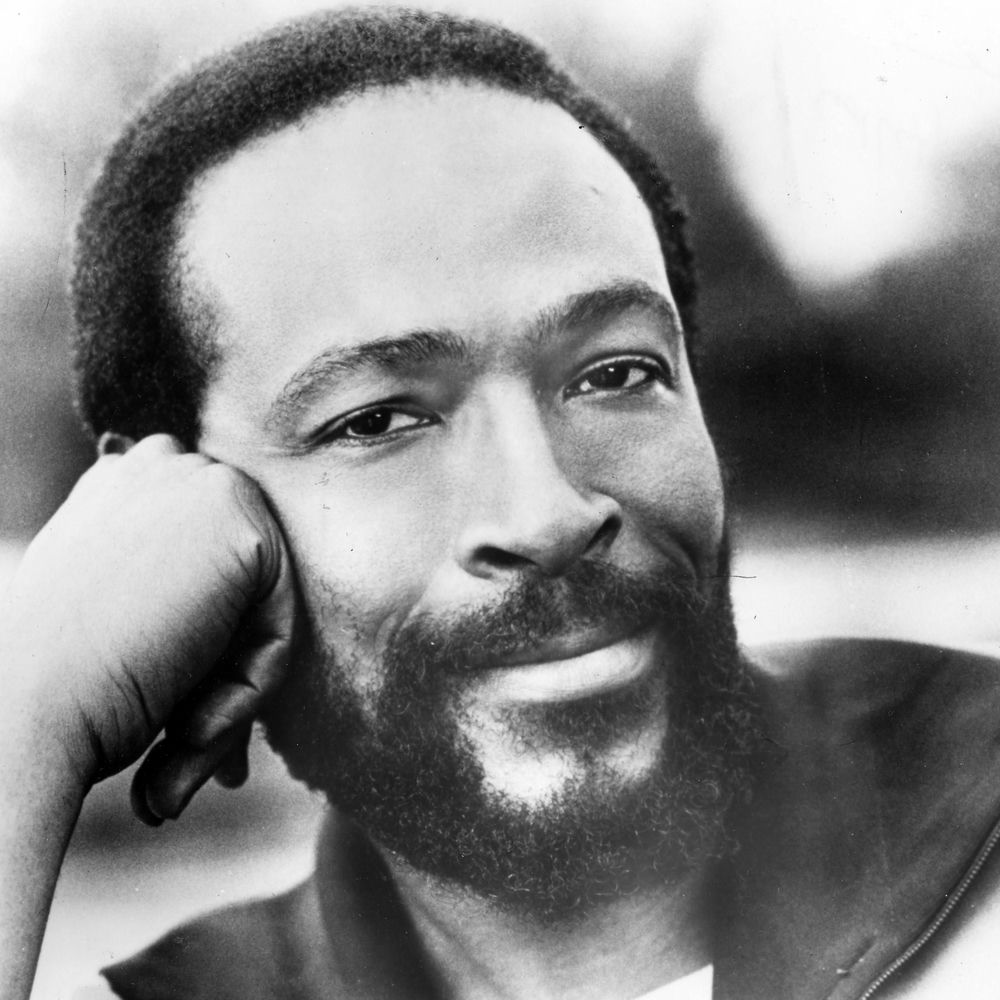
Marvin Gaye
Listen Marvin Gaye on radio stations:









Marvin Gaye: The Prince of Soul
Marvin Gaye was an American singer, songwriter, and record producer who became one of the most influential voices in Motown's history and popular music at large. Hailing from Washington, D.C., his career is defined by timeless hits like "What's Going On" and "I Heard It Through the Grapevine," along with landmark albums that reshaped the landscape of soul music.
Early Career
Marvin Gaye began his professional career in the late 1950s, initially performing in doo-wop groups before signing with the Tamla label, a subsidiary of Motown Records, in 1961. His early work at Motown saw him as a session drummer and backing vocalist, with his first solo releases finding moderate success as he helped establish the label's signature sound.
Breakthrough
Gaye's breakthrough into stardom came in the mid-1960s with a string of hit singles and successful duets. His 1968 single "I Heard It Through the Grapevine" became a massive international hit, topping the Billboard Hot 100 and cementing his status as a premier solo artist within the Motown roster and the soul genre.
Key Tracks
I Heard It Through the Grapevine - This 1968 single became his first number-one pop hit and one of Motown's best-selling singles, showcasing his powerful, emotive delivery.
What's Going On - The 1971 title track from his seminal album marked a profound artistic shift, addressing social issues with a sophisticated, layered soul sound.
Let's Get It On - This 1973 hit epitomized his move toward sensual, intimate soul music and became one of his most enduring and commercially successful songs.
Ain't No Mountain High Enough - His 1967 duet with Tammi Terrell became a defining classic of the Motown duet tradition and a staple of his early career.
Sexual Healing - His 1982 comeback single on the Columbia label won Grammy Awards and demonstrated his ability to adapt to the contemporary R&B and funk landscape.
In the 1970s, Marvin Gaye achieved unprecedented creative control, producing the landmark concept album *What's Going On* in 1971, which addressed war, poverty, and ecology. He continued to explore personal and social themes with albums like *Let's Get It On* (1973) and *I Want You* (1976), solidifying his legacy as an artist who transcended the pop-soul formula. His later work in the 1980s, including the album *Midnight Love* and the single "Sexual Healing," earned him critical and commercial renewal, along with multiple Grammy Awards.
Artists with a similar foundational influence on soul and R&B include Stevie Wonder, who also evolved from a Motown prodigy into a visionary album artist. The smooth, passionate delivery of Al Green shares a deep connection with Gaye's soulful style. The social consciousness in the music of Curtis Mayfield parallels Gaye's work on *What's Going On*.
Marvin Gaye's vast catalog of soul, R&B, and pop music remains a cornerstone of musical programming. His songs are frequently featured across various radio formats, from classic soul and Motown retrospectives to general pop and adult contemporary stations, ensuring his voice continues to reach new generations of listeners.
