introducing pgreflex - an open source convex alternative for postgres (gpn24)

introducing pgreflex - an open source convex alternative for postgres (gpn24)

Author: CCC media team June 6, 2026 Duration: 47:43
Convex is a TypeScript framework* that makes one promise: "if you change a value in the database, no matter how, it'll update in the frontend automatically." This is great - imagine writing a comment, and everyone with the page open sees it immideately. If you imagine the normal todo-list example for webdev, you checkmark a task in one tab, and it immediately updates for everyone. However, despite being open-source, convex is developed by a VC-backed company, and runs on a properitary database - you can only interface with it through their properitary libraries. Simple functions like COUNT aren't supported, and require hacky workarounds. You can't write a simple UPDATE statement. Migrations and schemas are loosely enforced. All of these restrictions led to me writing pgreflex - a fully free + open-source, community-driven postgres-based alternative. Instead of writing a custom database, pgreflex simply subscribes to postgres' write-ahead-log (WAL) via logical replication - and notifies the app server if something changed. No properitary lock-in, and only a simple, thin library you can use with your existing stack. * Note: Even for people who can't immediately use pgreflex (not writing TypeScript servers, ...) the underlying tech of "listen to WAL to invalidate queries and propagate changes" is powerful. I promise this talk could be useful if you write rust webapps, too. Or Go webapps. Or python. Or anything, really. It probably could work with mysql, too. In the talk, we'll cover: - Why doing what convex allows you do to is *really cool* from a UX perspective - How does pgreflex work (subscribe to WAL, invalidate) - Challenges and drawbacks of the approach, incl. complexity, latency, and computational overhead - How would you use it off-the-shelf in a TypeScript + tRPC + drizzle project - How other programming languages might implement the same Maybe: a couple of benchmarks (pgreflex vs. convex on same server), if I manage to finish those before GPN Community contributions welcome :) Licensed to the public under https://creativecommons.org/licenses/by/4.0/ about this event: https://cfp.gulas.ch/gpn24/talk/EGXV8L/

Tune into the Chaos Computer Club-recent events feed for a direct line to the forefront of digital culture and critical technology discourse. Curated by the CCC media team, this podcast channels the raw, insightful atmosphere of Europe's most influential hacker association, bringing you recordings from their major gatherings and community events. Each episode is a deep dive into talks and presentations from the last two years, covering topics from cryptography and privacy rights to hardware hacking, societal impacts of surveillance, and open-source philosophy. You'll hear from researchers, activists, and engineers who are actively shaping our digital future, offering perspectives rarely found in mainstream tech conversations. This isn't a produced show with hosts; it's an archival audio stream of genuine conference sessions, complete with audience questions and the spontaneous energy of the live event. For anyone interested in the technical details and ethical debates at the heart of modern technology, this feed serves as an essential, unfiltered resource. Subscribe to this podcast to keep your finger on the pulse of the Chaos Computer Club's ongoing dialogue, where complex ideas are broken down and the tools for a more empowered digital life are openly discussed.
Author: Episodes: 100

Chaos Computer Club - recent events feed
Podcast Episodes
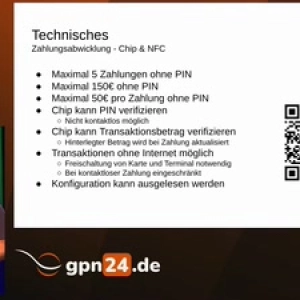
Was ist eine EC-Karte? (gpn24) [not-audio_url] [/not-audio_url]

Duration: 1:02:34
Während Corona wurden digitale Zahlungsmethoden deutlich verbreiteter. Mittlerweile hat sich jedoch eine neue Skepsis eingestellt, insbesondere aufgrund der Abhängigkeit von US-Unternehmen. Dieser Talk gibt dementspreche…
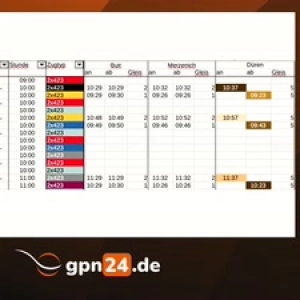
Warum produziert Köln Hbf Verspätungen? (gpn24) [not-audio_url] [/not-audio_url]

Duration: 52:20
Wer mit dem Zug nach Köln fährt, wird schonmal erlebt haben: der Zug hält auf der Hohenzollernbrücke vor dem Bahnhof. Grund: Gleis belegt. Aber warum passiert das so häufig? Der Frage bin ich auf ungewöhnlichem Wege nach…
Wie funktionieren Software-Synthesizer Part 1: Oszillatoren (gpn24) [not-audio_url] [/not-audio_url]

Duration: 51:18
Wir schauen uns die grundlegenden Bausteine eines Audio-Synthesizers an und wie man diese in Software umsetzen kann. In diesem Teil geht es zunächst um Oszillatoren: Wie entsteht der eigentliche Ton am Anfang der Signalk…
How to decompile a DSP architecture (gpn24) [not-audio_url] [/not-audio_url]

Duration: 59:24
About a year ago, a friend gave me a binary to reverse engineer to playtest for a CTF. As the architecture lacked the necessary tooling, I started developing a decompiler plugin. What started as a small side project for…
But Can It Run Fake News?! (gpn24) [not-audio_url] [/not-audio_url]

Duration: 58:39
Grafikkarten sind für Grafik?! Diese namensgebende Weisheit stimmt heute nicht mehr, stattdessen werden Grafikkarten für alles mögliche eingesetzt, von wissenschaftlichen Simulationen von Galaxiekollisionen bis ihn zu re…
Why Even Signal Calls Apple & Google (gpn24) [not-audio_url] [/not-audio_url]

Duration: 46:00
I just wanted Zulip notifications on my phone. So I started building something myself - and fell into a rabbit hole. This talk tells the story of how I tried to solve a problem - and in doing so, understood how push noti…
Energiewende.exe at the Chaos of Scale (gpn24) [not-audio_url] [/not-audio_url]

Duration: 59:43
Neue Regierung, neues Sondervermögen, da gibt es doch jetzt frischen Wind für die Energiewende in Deutschland, richtig? Leider ist das Gegenteil der Fall. Die politische Unterstützung auf Bundesebene für die Energiewende…
Encoding, wie funktioniert das eigentlich? (gpn24) [not-audio_url] [/not-audio_url]

Duration: 57:41
Kommunikation ist für Menschen mindestens genauso schwierig wie für Computer. Wir reisen von `ASCII` bis `UTF` und betrachten dabei (fast) alles dazwischen und *daneben*. Historische Anforderungen an unterschiedliche Met…