Wie steuert man eigentlich ein Museum? (gpn24)

Wie steuert man eigentlich ein Museum? (gpn24)

Author: CCC media team June 6, 2026 Duration: 1:00:10
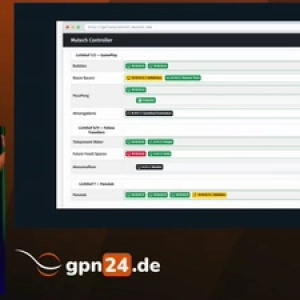
Ein Medienkunstmuseum besteht nicht aus Bildern an der Wand, sondern aus Projektoren, Rechnern, Sensoren, Servomotoren, Druckluft, Hochspannung und gelegentlich einer VM mit Windows XP. Vieles davon läuft 24/7 — never touch a running system. Anderes muss jeden Morgen pünktlich hochfahren und abends wieder runter. Wir erzählen, wie wir am ZKM den Alltag eines solchen Hauses am Laufen halten — und warum dabei über die Jahre eine ganze Werkstatt voll eigener Software entstanden ist. Das ZKM in Karlsruhe ist ein Haus für lebende Medienkunst — Werke aus Code, Hardware, Netzwerken und manchmal aus Druckluft. Projektoren an der Decke, Rechner hinter den Wänden, Windows-XP-VMs für Netzkunst von 2001, eine Jakobsleiter mit Hochspannung, ein Emulator des CM-2-Supercomputers mit einer LED-Wand als Replica. Niemand verkauft Software für „Steuere Projektoren von fünf Herstellern, davon einer ohne Netzwerkanschluss". Niemand verkauft ein System für „starte ein Kunstwerk, das sich nur per Mausklick auf einen Button starten lässt". Also bauen wir es selbst — fast immer als Antwort auf einen Bedarf aus einer Ausstellung. Der Talk zeigt, wie das im Alltag aussieht: - Was muss eigentlich gesteuert werden? Strom, Geräte, Rechner, Kioske, Tracking, Besucher — sechs Schichten, jede mit eigenen Protokollen, Macken und Failure-Modes. - Welche Probleme kommen immer wieder? Kunstwerke, die nicht starten wollen. Kunstwerke, die nicht aufhören wollen. Alte Kunst auf neuer Hardware. Schulklassen, die ALLES anfassen. Projektoren, die offline gehen. Ausstellungen, die jahrelang täglich laufen müssen. - Welche Lösungen entstehen daraus? Watchdogs, VMs mit Snapshot-Revert, ESP-Module die alte Fernbedienungen ersetzen, DNS-Filterung gegen Fortnite-Downloads, ein zentrales Kontrollsystem, das alles orchestriert. - Was davon ist Open Source und kann auch anderen Häusern helfen? Einiges. Aus Hacks für einzelne Ausstellungen sind über die Jahre wiederverwendbare Werkzeuge geworden. - Was haben wir auf dem Weg gelernt — über Architektur, über Künstler:innen, über das Publikum, und über Skripte, die „nur kurz" laufen sollten und dann jahrelang in Produktion stehen. Ein Blick aus der Maschinenraum-Perspektive auf den Alltag der Leute, die dafür sorgen, dass das Museum jeden Tag wieder funktioniert. Licensed to the public under https://creativecommons.org/licenses/by/4.0/ about this event: https://cfp.gulas.ch/gpn24/talk/73QXEV/

Tune into the Chaos Computer Club-recent events feed for a direct line to the forefront of digital culture and critical technology discourse. Curated by the CCC media team, this podcast channels the raw, insightful atmosphere of Europe's most influential hacker association, bringing you recordings from their major gatherings and community events. Each episode is a deep dive into talks and presentations from the last two years, covering topics from cryptography and privacy rights to hardware hacking, societal impacts of surveillance, and open-source philosophy. You'll hear from researchers, activists, and engineers who are actively shaping our digital future, offering perspectives rarely found in mainstream tech conversations. This isn't a produced show with hosts; it's an archival audio stream of genuine conference sessions, complete with audience questions and the spontaneous energy of the live event. For anyone interested in the technical details and ethical debates at the heart of modern technology, this feed serves as an essential, unfiltered resource. Subscribe to this podcast to keep your finger on the pulse of the Chaos Computer Club's ongoing dialogue, where complex ideas are broken down and the tools for a more empowered digital life are openly discussed.
Author: Episodes: 100

Chaos Computer Club - recent events feed
Podcast Episodes
Infrastructure Review & Closing (gpn24) [not-audio_url] [/not-audio_url]

Duration: 1:16:35
Große Zahlen und ganz viel WOW Licensed to the public under https://creativecommons.org/licenses/by/4.0/ about this event: https://cfp.gulas.ch/gpn24/talk/MTP7YB/
WAF: Wrong Approach Firewall (gpn24) [not-audio_url] [/not-audio_url]

Duration: 1:01:42
Web Application Firewalls (WAFs) for filtering based on HTTP and payload are omnipresent. In this talk an argument will be made that, in many cases, the wrong approach for implementing WAFs is chosen: They are implemente…
Building video games with 20 year old tech (gpn24) [not-audio_url] [/not-audio_url]

Duration: 19:10
The market is full of high-performance graphics APIs like Vulkan and fantastic engines like Unreal and Unity. So, why not use DirectX 9 and a self-built engine instead? ;) In this talk we'll take a quick stroll down memo…
Three Languages, Triple the Confusion (gpn24) [not-audio_url] [/not-audio_url]

Duration: 20:21
This code runs without errors, but still confuses. In this talk, we explore some subtle quirks of C, Python, and Java (and others) that catch even experienced developers off guard. No bugs, no typos - just the language d…
MMO-CHIP: From Microscope to Verilog in an hour (gpn24) [not-audio_url] [/not-audio_url]

Duration: 58:45
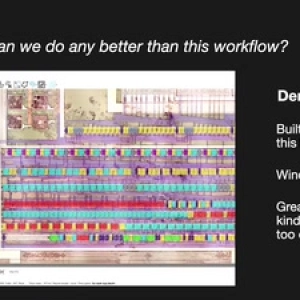
Reverse engineering old custom chips from microscope pictures is cool, but oh so painfully slow! Last time I did this (talk at 38C3), I spent two weeks waking up, annotating wires in Inkscape, going to bed, and then drea…
DI.Days as Anarchist Practice/Anarchist Practices for DI.Days (gpn24) [not-audio_url] [/not-audio_url]

Duration: 44:54
Digital Independence Days are a response to the growing monopolization of technology and the recent loss of trust in US-based tech firms after the USA's shift towards authoritarianism. The (communicated) goal is to prote…