226: Northern Spy and the Underground Railroad

226: Northern Spy and the Underground Railroad

Author: Ria Windcaller: Award-winning Cidermaker, Podcaster | Craft Beer Columnist June 3, 2020 Duration: 11:14

Northern Spy is a short story that weaves the tale of the early grafting of the apple known as the Northern Spy, Quaker values, and the Underground Railroad. Read and written by Ryan Monkman, for the new Cider Chat segment titled "Stories in Ciderville".

For additional reading and inspiration look to the children's book An Apple for Harriet Tubman.

Northern Spy

by Ryan Monkman

About 200 years ago, somewhere in Upstate New York, a boy ran through the woods. He hid in a bush under a tree. Then, when no one found him, he stood up and grabbed an apple above him. He bit the apple then spat it out. It was horribly acidic.

The boy ran back to town and convinced a friend to take a bite of the "wonderful" apple. Soon it was a game: try the apple, spit it out.

But the boy's father liked the acid. The two of them walked back to the forest and picked the tree clean. They put the apples in bins then put those bins in their root cellar. Everyday the father would have an apple with breakfast. Everyday the son would try to sucker a new friend.

After a few weeks in storage, the apples grew sweet. The father didn't like them anymore and the son's game grew boring. So the crates sat, untouched and unloved, next to the potatoes.

The boy's mother found the apples in mid Spring. Somehow they still looked and tasted like apples after months underground. She took them to a church picnic.

There's a tradition in Quaker communities; speak boldly when the Spirit calls you to. A neighbor spoke and the town listened. That summer they propagated the wild apple.

If you plant an apple seed, you'll get an apple tree but the fruit will be different. With each generation the seeds morph and mutate. The apple changes. If you want to preserve the beauty of a varietal, you have to take a cutting of the original tree and plant the cutting. That's what the town did.

They sent a team into the woods to collect small clippings of the wild tree. Each cut was only two inches long. Those cuttings were then slipped into a piece of root from another tree then the two were planted together. The bottom half rooted in the ground, the top half bearing identical fruit to the wild tree.

The grafted trees were divided throughout the town. Each family grew a handful of trees and the church planted an orchard. Eight years past. Then one day in May the town awoke to a bursting of pink flowers.

That Summer they saw their first fruit. That Fall they picked their first apples. The boy, now a man, loaded up a wagon and headed South. Then another wagon followed. And another. That Winter the town was empty.

The wagons would pull into a new town. The driver asked for the Station Master, dropped off a whack of apples, then left without another word. In each town the pattern repeated. When the wagon was empty the driver returned home, refilled, then hit the road again. By February the town was out of apples.

Traffic on the Underground Railroad surged that Spring. One of the first tastes of freedom was a piece of fruit that never seemed to rot.

Cloaked in secrecy, the apple earned a nickname; the Northern Spy.

by Ryan Monkman

Ryan lives in Prince Edward County, Ontario making and selling cider with his family and cider team at FieldBird Cider.

___________

Have a story to tell for the "Stories in Ciderville" segment?

  • Must be 3000 words or less or under 4 audio minutes
  • Apples and pommes must be integrated into the story line
  • Send your essay and a recording of yourself reading your essay to ria@ciderchat.com



There’s a whole world in a glass of cider, and Cider Chat is your invitation to explore it. Hosted by award-winning cidermaker and writer Ria Windcaller, this podcast travels far beyond the bottle to meet the people who make the global cider culture so vibrant. Each conversation is a journey-you might find yourself in a heritage orchard learning the history of forgotten apple varieties, in a bustling taproom with an importer explaining regional traditions, or in a kitchen with a chef pairing cider with unexpected foods. The discussions get into the delightful nuances, too, whether that’s the semantics of what we even call this drink or how the concept of terroir translates from soil to sip. It’s not just about production; it’s about the community, the travel, and the stories that fermentation unlocks. This is for anyone curious about the craft, history, and sheer enjoyment of fermented apple juice in all its forms. So, pour a glass and settle in for a series that feels like a wide-ranging, informative, and genuinely good-humored chat with friends who happen to be obsessed with cider. You’ll come away with a deeper appreciation for every effervescent, tart, or sweet sip, hearing directly from the growers, makers, and enthusiasts who are shaping this drink’s exciting present and future.
Author: Language: English Episodes: 501

Cider Chat
Podcast Episodes
498: Heeman's Cellar | Somewhere Cider from Ontario [not-audio_url] [/not-audio_url]

Duration: 1:12:05
In this episode of Cider Chat, we visit Heeman Cellars in Ontario, where a multi-generational strawberry farm expanded into cider and mead production focused on heritage apples, terroir, and experimentation. We taste ble…
496: Liberty Ciderworks | Spokane, WA [not-audio_url] [/not-audio_url]

Duration: 56:28
Liberty Ciderworks in Spokane, Washington is an urban cidery focused on traditional methods. While located in the city, their cider reflects deep agricultural roots. Cider maker and founder Rick Hastings ferments with wi…
495: Cider Barrels Speak | Bâtonnage & Barrel Aging [not-audio_url] [/not-audio_url]

Duration: 58:24
In this archive episode of Cider Chat, we go in a barrel cellar in Prince Edward County, Ontario, with Ryan Monkman of FieldBird Cider and Lee Baker of Keint-He Winery. Listening to Fermentation What Is Bâtonnage in Cide…
494: Humboldt Cider and the Historic Orchard of Albert Etter [not-audio_url] [/not-audio_url]

Duration: 1:00:53
In this episode of Cider Chat, we hear from Tom Hart of Humboldt Cider Company, located in Eureka, California along the rugged Pacific coastline behind what locals call the Redwood Curtain. We also discusses preserving t…
493: Cider as a Sport | Sidra in Asturias (Archive Edition) [not-audio_url] [/not-audio_url]

Duration: 55:28
What is Asturian cider? Asturian cider (sidra natural) is a traditionally fermented apple cider from Asturias, Spain, served through a high pour (escanciado) and shared socially in small servings called culines. This epi…
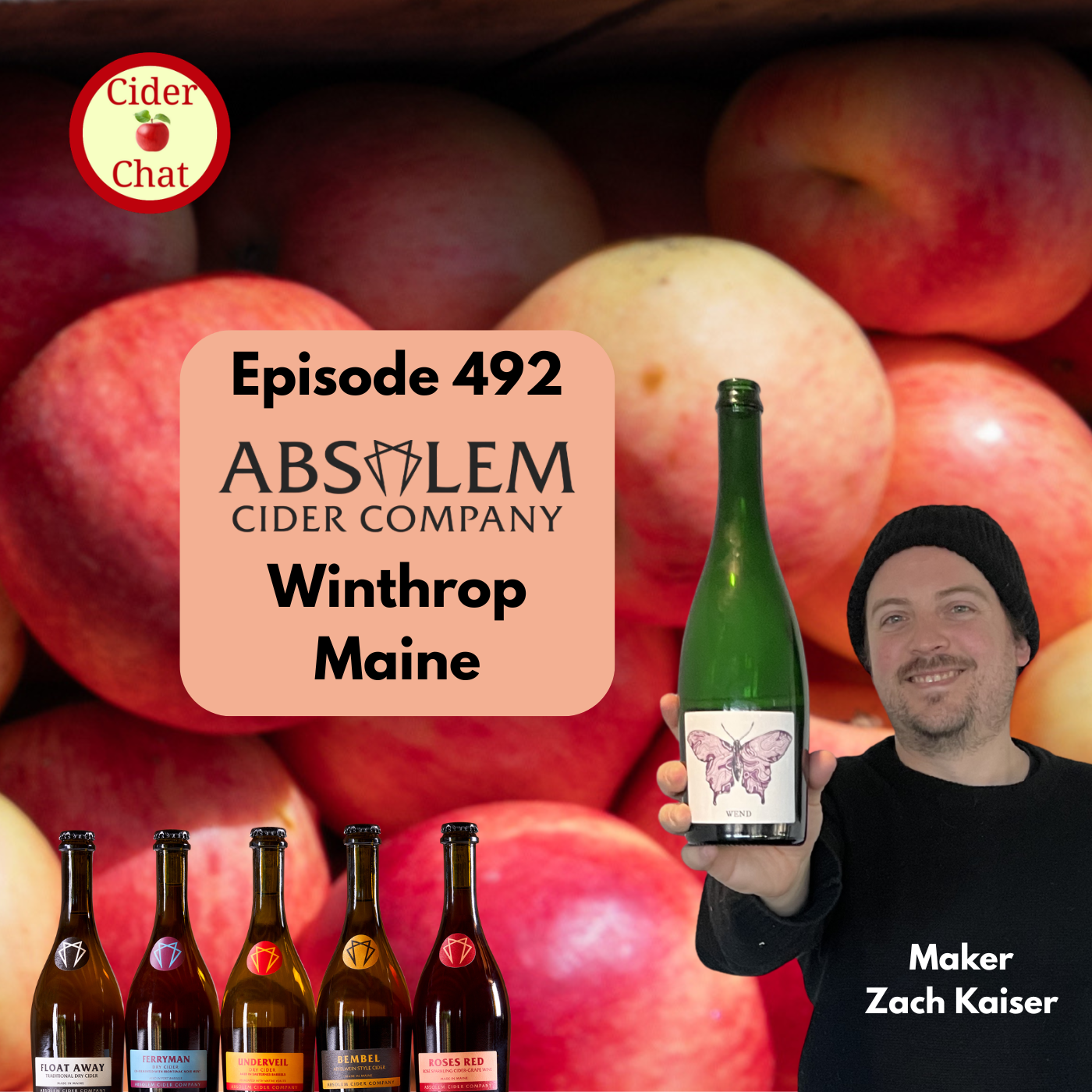
492: Absolem Cider Company | Maine Cider Energy [not-audio_url] [/not-audio_url]

Duration: 52:23
This episode of Cider Chat explores the growing Maine cider scene through Absolem Cider Company in Winthrop, a farm-based cidery helping shape New England's evolving cider identity. Located on a 60-acre farm in Winthrop,…
491: Revisiting Randall Grahm | Cider Exploration Without Hesitation [not-audio_url] [/not-audio_url]

Duration: 53:35
An early conversation that explored possibilities cider was only beginning to consider. As Cider Chat moves toward its 500th episode, we revisit conversations from the earliest seasons, taking a long view of the moments…
490: Let Cider Lead [not-audio_url] [/not-audio_url]

Duration: 22:32
An editorial on leadership, scarcity, and why cider no longer needs to borrow authority from beer or wine. In Let Cider Lead, host Ria Windcaller steps back from interviews to offer a clear-eyed reflection on the state o…
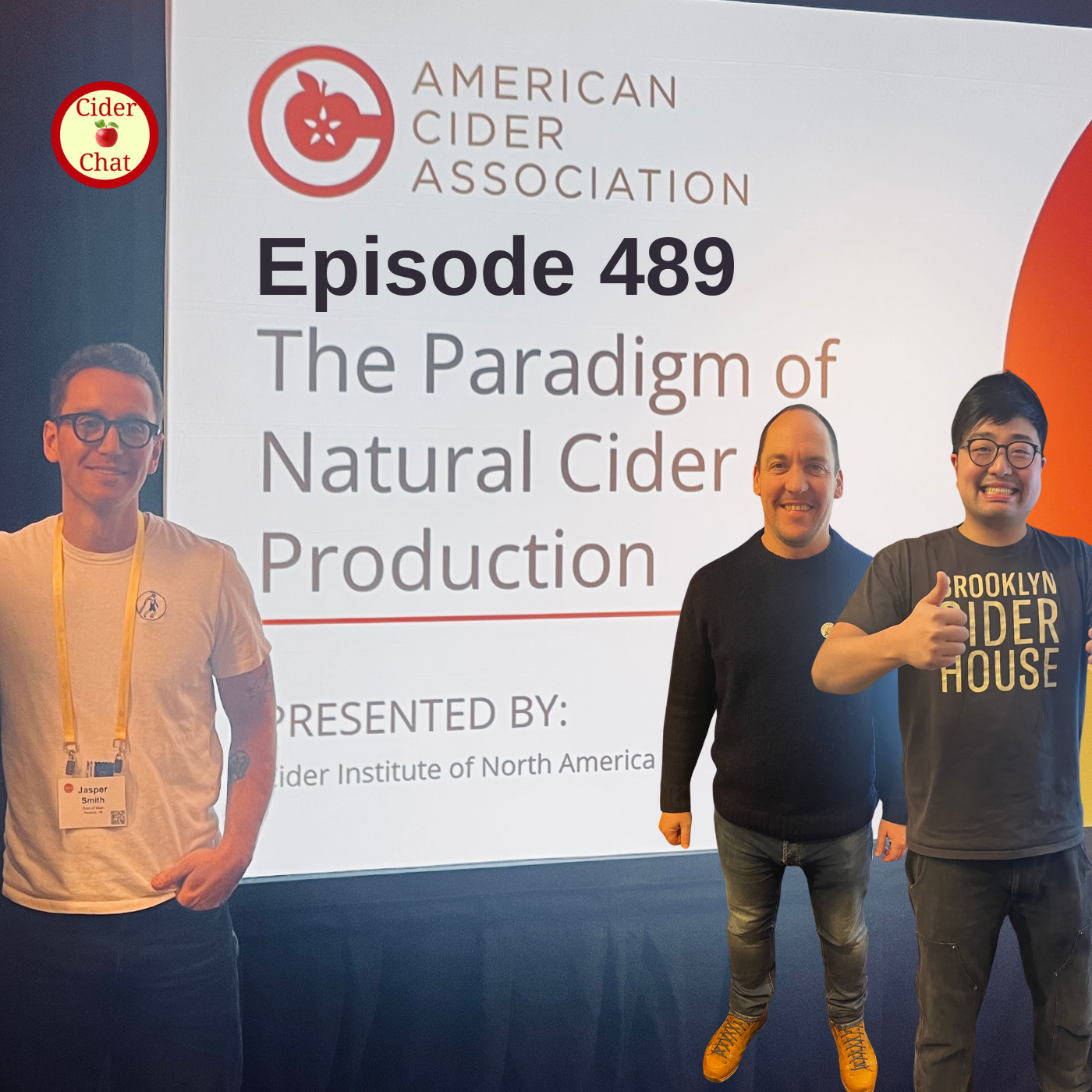
489: Natural Cider Production Seminar | CiderCon 2025 [not-audio_url] [/not-audio_url]

Duration: 1:10:53
Natural cider is often misunderstood as funky, volatile, or flawed. Recorded live at CiderCon 2025, this seminar reframes natural cider as a philosophy of low intervention, balance, and intentional care, not a free pass…