227 The Color of Cider

227 The Color of Cider

Author: Ria Windcaller: Award-winning Cidermaker, Podcaster | Craft Beer Columnist June 10, 2020 Duration: 24:57

The Color of Cider provides a snap shot of an early practices used to deter black farmers gaining true equality and the difficulties facing African Americans today who may view farming as a step back to the plantation.

We begin this episode with a quote from Booker T. Washington who born into slavery on April 5, 1856. He was able to learn to read and write despite the tendency of slave owners to not allow blacks to gain education. He help co-found the Tuskegee Institute.

On September 18, 1895 Washington gave a speech at the Cotton States and International Exposition in Georgia. He asserted that vocational education, which gave blacks an opportunity for economic security, was more valuable to them than social advantages, higher education, or political office. Washington asked blacks to "Cast down your buckets where you are" and focus instead on becoming agricultural and industrial laborers. In essence he was asking for blacks to not push against racial segregation. 

In turn for this act of accepting one's station in the black community, he asked for a guarantee that blacks would receive a basic education and due process in the law.

The largely white audience in attendance loved the speech. The fall back from the black community, who were  called at the time "Black Intellectuals" was immediate outrage. W.E.B. DuBois, also a famous black activist called Washington's speech, the"Atlanta Compromise."

Du Bois denounced Washington platform to accept ones position.

What was curious about Washington was that he asked Black Americans to accept their unequal position, while at the same time secretly funded litigation for civil rights cases.

Five years later, in 1900 Washington founded the National Negro Business League, with the mission of promoting the economic development of African Americans. He wrote a ground breaking auto biographical book called Up From Slavery.

One particular quote/story from B. T. Washington makes the case of why it was and so hard for Black to gain upward mobility. This comes from an article in the Country Gentleman magazine described as a journal for The Farm, The Garden and The Fireside.

"In one case I happen to remember a family that had three or four strong persons at work every day that was allowed to rent only about ten acres of land. When I asked the owner of the plantation why he did not let this family have more land he replied that the soil was so productive that if he allowed them to rent more they would soon be making such a profit that they would be able to buy land of their own and he would lose them as renters. This is one way to make the Negro inefficient as a laborer—attempting to discourage him instead of encouraging him."

One doesn't need to be a rocket scientist to see that Cider today is white because blacks did not have the same opportunity to own land and farm.

Washington died on November 14, 1915.

Today in 2020, we are witnessing an uprising of Black Lives Matter taking place not only in the US, but world wide. Today's Black Live Matters shows I believe that Washington's call for acceptance of one's status didn't work. Blacks have never been treated with a fair due process in the law. 

For our modern times, I recommend the following book.

Farming While Black : Soul Fire Farm's Practical Guide to Liberation on the Land

by, Leah Penniman

Published by Chelsea Green Printing
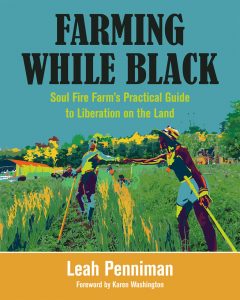
Farming While Black

Contact for Soul Fire Farm

Help Support Cider Chat Please donate today. Help keep the chat thriving!

Find this episode and all episodes at the page for Cider Chat's podcasts.


There’s a whole world in a glass of cider, and Cider Chat is your invitation to explore it. Hosted by award-winning cidermaker and writer Ria Windcaller, this podcast travels far beyond the bottle to meet the people who make the global cider culture so vibrant. Each conversation is a journey-you might find yourself in a heritage orchard learning the history of forgotten apple varieties, in a bustling taproom with an importer explaining regional traditions, or in a kitchen with a chef pairing cider with unexpected foods. The discussions get into the delightful nuances, too, whether that’s the semantics of what we even call this drink or how the concept of terroir translates from soil to sip. It’s not just about production; it’s about the community, the travel, and the stories that fermentation unlocks. This is for anyone curious about the craft, history, and sheer enjoyment of fermented apple juice in all its forms. So, pour a glass and settle in for a series that feels like a wide-ranging, informative, and genuinely good-humored chat with friends who happen to be obsessed with cider. You’ll come away with a deeper appreciation for every effervescent, tart, or sweet sip, hearing directly from the growers, makers, and enthusiasts who are shaping this drink’s exciting present and future.
Author: Language: English Episodes: 501

Cider Chat
Podcast Episodes
358: Apple History, Terroir and Cider of New York | CiderCon 2023 [not-audio_url] [/not-audio_url]

Duration: 1:02:14
Newtown Pippin, Northern Spy and Esopus Spitzenberg apples and cider in New York A pre-recorded seminar from CiderCon 2023 with 3 influential panelist based in New York. [caption id="attachment_8097" align="aligncenter"…
357: Purchase Cider Online | Press Then Press [not-audio_url] [/not-audio_url]

Duration: 51:09
Meet the Storie and Erik of Press Then Press Storie Madrid first connected with Ria at Cider Chat via Twitter. In this niche market it is easy to get close to people of similar interests and passions. Storie has recently…
356: Holistic Fruit Growers Roundtable | Maine Apple Camp [not-audio_url] [/not-audio_url]

Duration: 59:06
Discover Holistic Growing Practices Enjoy this roundtable discussion moderated by Glen Koehler with 4 holistic practitioners. This roundtable was recorded at Maine Apple Camp 2022. Holistic Panelist Eric Shatt - Redbyrd…
355: CiderCon Recap and Awards 2023 [not-audio_url] [/not-audio_url]

Duration: 46:15
Chicago Cider Week, Cider Tours, Interviews, Awards and Cider Summit The week of January 30th - February 4th was packed with cider related events all based in Chicago. CiderCon, the annual conference hosted by the Americ…
354: Preserving Historical Varieties of Apples & Pears [not-audio_url] [/not-audio_url]

Duration: 1:19:23
Are Historical Apple and Pears varieties at of becoming Extinct? It appears it is not a question of if, when historical varieties are no longer with us as climate change and other mitigation factors such as land developm…
353: Apple Historian John Bunker Q&A | Maine Apple Camp [not-audio_url] [/not-audio_url]

Duration: 58:59
Preservation Tips from an Apple Historian John Bunker is a self identified Apple Historian and an Apple Detective, Author of numerous books on the topic of Apples and Founder of FEDCO Trees. In the previous podcast episo…
352: Apples in Gravel? Maine Heritage Orchard | Part 1 [not-audio_url] [/not-audio_url]

Duration: 1:05:09
John Bunker on Maine Heritage Orchard: Successes and Challenges over the First Ten Years This is Part 1 with John Bunker, who is both an author, Founder of FEDCO Trees, an Apple Historian and a key person behind the Main…
351: Cidermakers' Roundtable | Maine Apple Camp [not-audio_url] [/not-audio_url]

Duration: 1:01:53
Enjoy this Roundtable Discussion w/4 makers from Maine Kris Hogg formally of Perennial Cider Bar in Maine moderates this panel discussion that was held at the Maine Apple Camp in August of 2022. The topics are wide rangi…
350th Episode Celebration at Cider Chat [not-audio_url] [/not-audio_url]

Duration: 49:22
Season 7 and the Episodes of Cider Chat This episode marks the 350th episode of this weekly podcast and the end of Season 7. The Nose and Ria sat down for a dinner chat and looked over the past season. The dinner was des…
349: Super Power of Bradford Pear with Eliza Greenman [not-audio_url] [/not-audio_url]

Duration: 1:05:02
Any relation to the Greenman's of Mystic, Connecticut? When fruit explorer and horticultural historian Eliza Greenman received a call from owners of an overgrown orchard asking if she was related to the Greenman's who pl…