240: To Rack or Not to Rack | Cidermaking Series Part 5

240: To Rack or Not to Rack | Cidermaking Series Part 5

Author: Ria Windcaller: Award-winning Cidermaker, Podcaster | Craft Beer Columnist September 23, 2020 Duration: 36:44

This chat provides a a sip of something for everyone, from makers who want to improve their skills to consumers who enjoy knowing why a cider tastes a particular way.

In this Cider Chat, we look at the next step after primary fermentation of cider and discuss the benefits of racking the cider over and why you may chose to not rack your cider.
If you are a newbie to cidermaking, I recommend that you first listen to Part 1 of the Cidermaking Series How to Make Cider at Home

Part 2-4 of the Cidermaking Series feature conversations with the Cider Team as Stormalong. These 3 chats are technical and help both DIY and commercial makers sort through cleaning techniques.

In this chat, I am going to lend my views and tips on Racking Cider.

What does it mean to Rack Cider?

  • Racking Cider is transferring cider from one vessel to another.
  • Racking does not fully stop fermentation. I consider it a slowing down of the fermentation.

Why should I rack the cider?

  • Racking is done to help clarify the cider.

When should I rack my cider?

  • Racking is done after primary fermentation.
  • Look for dead yeast cells and apple particles to fall to the bottom of the vessel.
  • I usually wait approximately 1 month after primary fermentation to do my initial rack. This time varies and could be up to 2 months.

What happens if I don't rack my cider?

The dead yeast cells which drop to the bottom of the vessel are called the lees. Lees left to sit for any extended period of time can give off flavors to your cider especially if you have to much head space.

Headspace is the gap between the liquid and the stopper. If the headspace is larger than 2 inches the cider can oxidized and develop off flavors. When cider is oxidized it can taste like cardboard and that is not desirable at all.

Leaving the lees in the cider and stirring them in is called Bâtonnage.

Bâtonnage is stirring the yeast into solution.

Benefits of Bâtonnage

From episode 233 with Ryan Monkman - Ask Ryan | Quarantine Quad Series Part 3

  • Nano proteins are the biggest benefit of Bâtonnage
    • They release into the cider providing a perception of sweetness and body with out the sugar
  • Need at least 9 months to a year to get the nano proteins

There are short term benefits.

  1. Yeast produces less carbon dioxide and bubbles.
    • They slow down after the first primary ferment.
    • Fermentation may have stopped but there is still sugar left.
  2. Lees absorb off aromas, except for H2S rotting egg smell.
  3. Bâtonnage helps to maintain a reductive state.
    • Full reduction - rotting smell is a type of reduction. Which helps protect the cider from oxidization and protect the flavor components.

Equipment needed to Rack Cider

  • Second vessel of equal size - make sure it is food grade and sanitize before racking
  • Food grade hose and racking cane
  • extra stopper and airlock for 2nd vessel
  • potassium metabisulfite

Mentions in this Chat

Listen to - Not all lees are Gross with Curt Sherrer

Help Support Cider Chat Please donate today. Help keep the chat thriving!

Find this episode and all episodes at the page for Cider Chat's podcasts.


There’s a whole world in a glass of cider, and Cider Chat is your invitation to explore it. Hosted by award-winning cidermaker and writer Ria Windcaller, this podcast travels far beyond the bottle to meet the people who make the global cider culture so vibrant. Each conversation is a journey-you might find yourself in a heritage orchard learning the history of forgotten apple varieties, in a bustling taproom with an importer explaining regional traditions, or in a kitchen with a chef pairing cider with unexpected foods. The discussions get into the delightful nuances, too, whether that’s the semantics of what we even call this drink or how the concept of terroir translates from soil to sip. It’s not just about production; it’s about the community, the travel, and the stories that fermentation unlocks. This is for anyone curious about the craft, history, and sheer enjoyment of fermented apple juice in all its forms. So, pour a glass and settle in for a series that feels like a wide-ranging, informative, and genuinely good-humored chat with friends who happen to be obsessed with cider. You’ll come away with a deeper appreciation for every effervescent, tart, or sweet sip, hearing directly from the growers, makers, and enthusiasts who are shaping this drink’s exciting present and future.
Author: Language: English Episodes: 501

Cider Chat
Podcast Episodes
498: Heeman's Cellar | Somewhere Cider from Ontario [not-audio_url] [/not-audio_url]

Duration: 1:12:05
In this episode of Cider Chat, we visit Heeman Cellars in Ontario, where a multi-generational strawberry farm expanded into cider and mead production focused on heritage apples, terroir, and experimentation. We taste ble…
496: Liberty Ciderworks | Spokane, WA [not-audio_url] [/not-audio_url]

Duration: 56:28
Liberty Ciderworks in Spokane, Washington is an urban cidery focused on traditional methods. While located in the city, their cider reflects deep agricultural roots. Cider maker and founder Rick Hastings ferments with wi…
495: Cider Barrels Speak | Bâtonnage & Barrel Aging [not-audio_url] [/not-audio_url]

Duration: 58:24
In this archive episode of Cider Chat, we go in a barrel cellar in Prince Edward County, Ontario, with Ryan Monkman of FieldBird Cider and Lee Baker of Keint-He Winery. Listening to Fermentation What Is Bâtonnage in Cide…
494: Humboldt Cider and the Historic Orchard of Albert Etter [not-audio_url] [/not-audio_url]

Duration: 1:00:53
In this episode of Cider Chat, we hear from Tom Hart of Humboldt Cider Company, located in Eureka, California along the rugged Pacific coastline behind what locals call the Redwood Curtain. We also discusses preserving t…
493: Cider as a Sport | Sidra in Asturias (Archive Edition) [not-audio_url] [/not-audio_url]

Duration: 55:28
What is Asturian cider? Asturian cider (sidra natural) is a traditionally fermented apple cider from Asturias, Spain, served through a high pour (escanciado) and shared socially in small servings called culines. This epi…
492: Absolem Cider Company | Maine Cider Energy [not-audio_url] [/not-audio_url]

Duration: 52:23
This episode of Cider Chat explores the growing Maine cider scene through Absolem Cider Company in Winthrop, a farm-based cidery helping shape New England's evolving cider identity. Located on a 60-acre farm in Winthrop,…
491: Revisiting Randall Grahm | Cider Exploration Without Hesitation [not-audio_url] [/not-audio_url]

Duration: 53:35
An early conversation that explored possibilities cider was only beginning to consider. As Cider Chat moves toward its 500th episode, we revisit conversations from the earliest seasons, taking a long view of the moments…
490: Let Cider Lead [not-audio_url] [/not-audio_url]

Duration: 22:32
An editorial on leadership, scarcity, and why cider no longer needs to borrow authority from beer or wine. In Let Cider Lead, host Ria Windcaller steps back from interviews to offer a clear-eyed reflection on the state o…
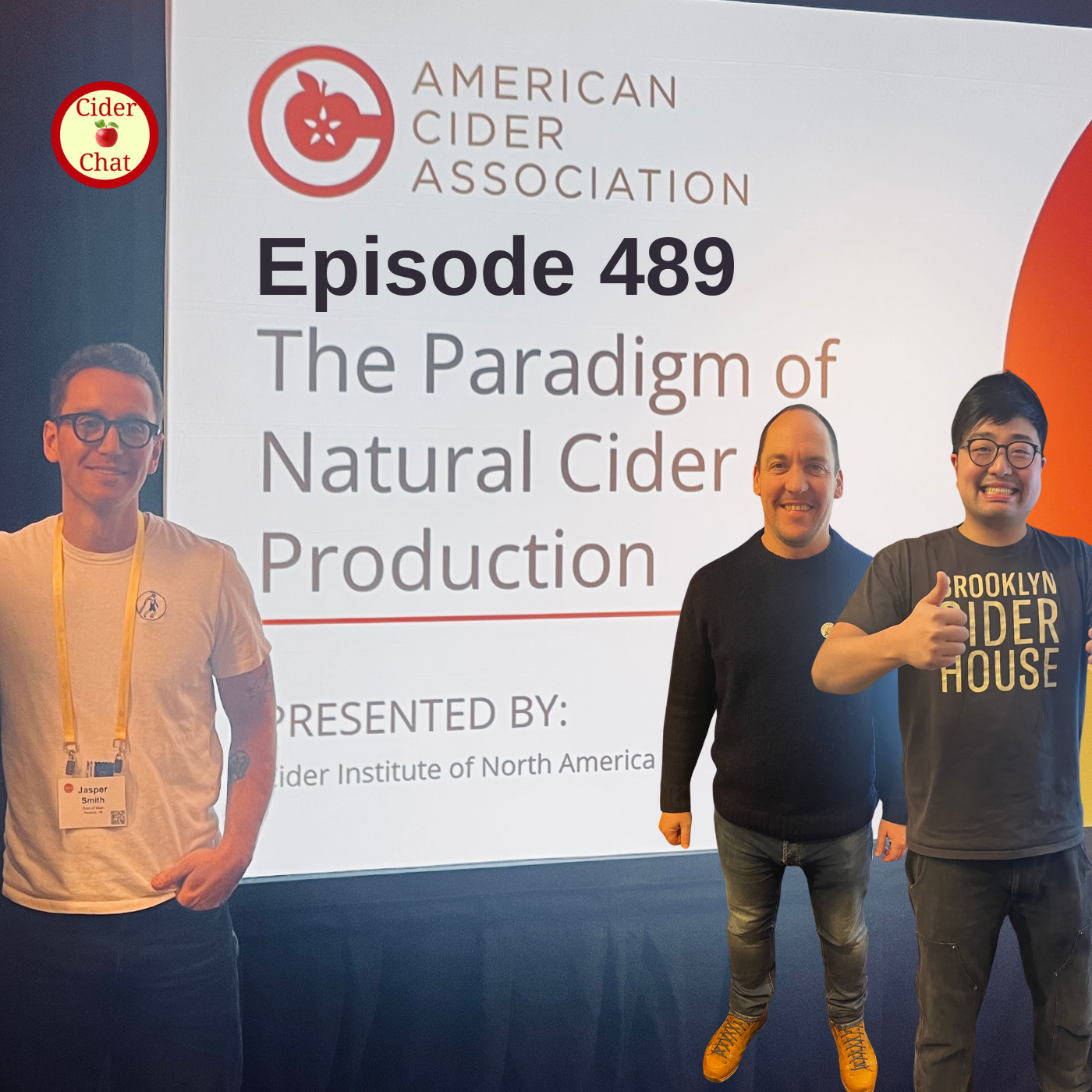
489: Natural Cider Production Seminar | CiderCon 2025 [not-audio_url] [/not-audio_url]

Duration: 1:10:53
Natural cider is often misunderstood as funky, volatile, or flawed. Recorded live at CiderCon 2025, this seminar reframes natural cider as a philosophy of low intervention, balance, and intentional care, not a free pass…