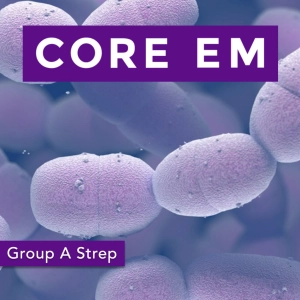
Episode 225: Group A Strep

Episode 225: Group A Strep

Author: Core EM July 14, 2026 Duration: 0:00

Group A strep in the pediatric ED: from strep throat to invasive disease and toxic shock.

Host:
Ellen Duncan, MD, PhD
Brian Gilberti, MD

Download Leave a Comment Tags: ,

Show Notes

Background

  • Group A strep = Streptococcus pyogenes — gram-positive organism that colonizes the pharynx, but also the perianal and genital mucosa (worth remembering when the source isn’t the throat).
  • Extremely common. The episode cites an estimated ~289 million cases/yr of strep pharyngitis in children 5–14 (NIH). For a U.S.-specific, verifiable anchor: the CDC estimates strep throat drives ~5.2 million outpatient visits/yr in people <65.
  • No true beta-lactam resistance. GAS remains uniformly susceptible to penicillin and amoxicillin. Note this is not true for macrolides/clindamycin — roughly 1 in 3 invasive isolates are now erythromycin/clindamycin resistant.

Pathophysiology — the throughline

  • Exotoxins (superantigens) tie the whole spectrum together — they drive scarlet fever, streptococcal toxic shock syndrome (STSS), and are implicated in the Kawasaki overlap discussed below.
  • The organism is the same from a sore throat to a life-threat; what changes is host response and toxin burden.

Clinical Presentation

  • Core findings: tonsillar inflammation/exudate, tender anterior cervical lymphadenopathy, fever.
  • Classic strep tells to hunt for:
    • Palatal petechiae
    • Strawberry tongue
    • Perioral pallor
  • Scarlet fever — fine, sandpapery rash, typically starts on the trunk and spreads outward; later desquamation of the fingers and toes.
  • Extrapharyngeal clues: kids commonly present with abdominal pain or headache even when the throat looks unimpressive. Low threshold to test with fever + abd pain or fever + headache.

Diagnosis / Workup

Centor / Modified (McIsaac) Score

  • Centor Score (Modified/McIsaac) — MDCalc
  • One point each: fever, tonsillar exudates, tender anterior cervical lymphadenopathy, absence of cough. The Modified (McIsaac) version adds age.
  • Developed and validated in adults (≥16). It is not reliable in young children — don’t lean on it in peds the way you would in an adult.
  • For reference, McIsaac culture-positive probabilities: ~2.5% (0 criteria), 6.5% (1), 15% (2), 32% (3), 56% (4).

Testing

  • Rapid PCR — high sensitivity and specificity; increasingly the front-line test.
  • Rapid antigen detection test (RADT) — highly specific but less sensitive. Per IDSA, a negative RADT in a child/adolescent should be backed up with a throat culture (culture is the more sensitive gold standard). Backup culture is not required in adults.

Who not to test

  • Generally don’t test/treat children <3 — acute rheumatic fever is rare in this group.
  • Exception: the symptomatic young child with a close contact recently diagnosed with strep.

Management

  • First-line: amoxicillin 50 mg/kg once daily, max 1 g/dose. GAS stays beta-lactam susceptible (penicillin and amoxicillin remain treatments of choice per IDSA 2012).
  • IM penicillin G / benzathine (bicillin) for kids who can’t tolerate oral meds — one shot, done.
  • Return to school: after one full day of treatment (~12–24 h), provided afebrile and feeling well.
  • Contact prophylaxis:
    • Pharyngitis — routine prophylaxis of asymptomatic contacts is not standard; consider it for households with recurrent infection or a history of rheumatic fever.
    • Invasive GAS — more aggressive. Prophylaxis is recommended for household contacts who are immunosuppressed, pregnant, post-recent-surgery, or have an open wound (CDC).

The Bounce-Back / Treatment Failure

The kid who finishes amox and is back a week later. Sort into three buckets:

  1. Chronic carrier — GAS carriage in children runs 2–20%. Carriers test positive but are asymptomatic, with low risk of transmission or complications. Don’t chase them.
  2. New infection.
  3. True treatment failure → ask why:
    • The shield effect — the throat is co-colonized with beta-lactamase producers (Staph aureus, H. influenzae, Moraxella) that degrade amoxicillin before it can act, effectively shielding the GAS.
    • This is NOT true resistance — the strep is still beta-lactam susceptible; the neighbors are the problem.
    • Fix: switch to a beta-lactamase–stable agent — amoxicillin-clavulanate or a first-generation cephalosporin.

Complications

  • Suppurative: peritonsillar abscess, sinusitis, meningitis, bacteremia.
  • Non-suppurative:
    • Acute rheumatic fever — typically 1–5 wks post-infection; Jones criteria (AHA 2015 revision · ACC summary · CDC).
    • Post-infectious glomerulonephritis (PIGN) — several weeks out; hematuria / “Coca-Cola” urine. Note strep impetigo can also seed PIGN.
  • The pearl: we treat strep to prevent rheumatic fever — but treatment does NOT prevent PIGN.

Invasive Group A Strep (iGAS)

Why it’s on the radar

  • Rates have been climbing since 2014, and preliminary 2023 data hit a 20-year high (CDC). A CDC/ABCs analysis flagged a roughly 3-fold pediatric increase in Colorado/Minnesota in late 2022 (MMWR).
  • Keep it in mind when a child isn’t following the typical strep course or just looks sicker than expected.

The spectrum

  • STSS, necrotizing fasciitis, meningitis, bacteremia, peritonitis.
  • Increasingly common and worth highlighting: bone and joint disease — septic arthritis, osteomyelitis — often traveling with pyomyositis.

The trap — nonspecific early presentation

  • Symptoms are often nonspecific: fever, “not acting like themselves,” localized pain.
  • Septic joint/osteo may show a limp or focal pain — but not always.
  • When your gut fires, cast a wide net.

Workup

  • Blood cultures, CBC, chemistries, CRP, ESR.
  • Imaging — tailor to the suspected site:
    • Suspected joint → start with X-ray + ultrasound.
    • Worried about osteomyelitis or pyomyositis → MRI (the recommended modality for pyomyositis per IDSA SSTI).

Management

  • Broad-spectrum: vancomycin + piperacillin-tazobactam (concordant with IDSA SSTI).
  • In shock / STSS: ADD clindamycin or linezolid for toxin suppression — this is on top of vanc/zosyn, not a coverage swap. (IDSA: penicillin plus clindamycin for documented GAS necrotizing infection; consider IVIG in STSS.)

The Kawasaki overlap

  • Meaningful overlap between iGAS and Kawasaki disease.
  • Proposed mechanism: strep superantigens activate a shared inflammatory (T-cell) pathway that may contribute to KD; some data suggest kids with iGAS may be at higher risk of developing Kawasaki.
  • Get rheumatology involved early — they’ll want those inflammatory markers and can help sort KD from mimics.

Take-Home Points

  1. Adult tools don’t translate to peds. Centor was built for ≥16 and is unreliable in young kids — diagnose on exam, the eponyms, and testing. Low threshold to swab the febrile kid with abdominal pain or headache.
  2. The bounce-back is a triage problem — carrier (2–20%) vs. new infection vs. true failure. True failure is usually the shield effect (beta-lactamase co-colonizers, not resistance) → switch to amox-clav or a first-gen cephalosporin.
  3. Treatment prevents rheumatic fever, NOT PIGN — and impetigo can cause PIGN too.
  4. iGAS is rising and hides behind nonspecific symptoms. When your gut fires, work it up broadly and escalate to MRI for osteo/pyomyositis. Treat with vanc + pip-tazo, and in shock add clindamycin/linezolid for toxin suppression. Keep Kawasaki in the differential and call rheum early.

Links & References

Calculators

Guidelines

  • Shulman ST, et al. Clinical Practice Guideline for the Diagnosis and Management of Group A Streptococcal Pharyngitis: 2012 Update. IDSA / Clin Infect Dis. 2012;55(10):e86–e102. — IDSA · Full text
  • Stevens DL, et al. Practice Guidelines for the Diagnosis and Management of Skin and Soft Tissue Infections: 2014 Update. IDSA / Clin Infect Dis. 2014;59(2):e10–e52. (necrotizing infection, STSS, clindamycin adjunct, MRI for pyomyositis) — IDSA · Full text
  • Gewitz MH, et al. Revision of the Jones Criteria for the Diagnosis of Acute Rheumatic Fever in the Era of Doppler Echocardiography. AHA / Circulation. 2015;131:1806–1818. — Circulation · ACC “10 Points to Remember”

CDC


Read More

There’s a particular kind of pressure that comes with working in an emergency department, where decisions need to be both swift and sound. Core EM-Emergency Medicine Podcast exists in that space, offering a direct line to the essential knowledge and clinical reasoning that emergency medicine demands. Created by the team at Core EM, each episode feels less like a formal lecture and more like a focused conversation with a trusted colleague. You’ll hear discussions that break down critical topics, from managing common presentations to unraveling complex, high-acuity cases, all grounded in current evidence and practical reality. This podcast serves as a reliable resource for physicians, residents, and advanced practice providers looking to solidify their foundation or stay sharp on the latest evidence. It’s about cutting through the noise to deliver core content that’s immediately applicable at the bedside. Tune in for a clear, concise, and always relevant dive into the principles that define emergency care, designed to fit into a busy clinician’s life between shifts or during a commute.
Author: Language: en-us Episodes: 50

Core EM - Emergency Medicine Podcast
Podcast Episodes
Episode 205: Family Presence during Resuscitation [not-audio_url] [/not-audio_url]

Duration: 0:00
We discuss the impact of family presence during resuscitations. Hosts: Ellen Duncan, MD, PhD Brian Gilberti, MD https://media.blubrry.com/coreem/content.blubrry.com/coreem/Family_Presence_During_Resuscitation.mp3 Downloa…
Episode 204: Necrotizing Fasciitis [not-audio_url] [/not-audio_url]

Duration: 9:12
We discuss the recognition and treatment of necrotizing fasciitis. Hosts: Aurnee Rahman, MD Brian Gilberti, MD https://media.blubrry.com/coreem/content.blubrry.com/coreem/Necrotizing_Fasciitis.mp3 Download Leave a Commen…
Episode 203: Acetaminophen Toxicity [not-audio_url] [/not-audio_url]

Duration: 0:00
We sit down with one of our toxicologists to discuss acetaminophen toxicity. Hosts: Marlis Gnirke, MD Brian Gilberti, MD https://media.blubrry.com/coreem/content.blubrry.com/coreem/Acetaminophen_Toxicity.mp3 Download One…
Episode 202: Sexually Transmitted Infections 2.0 [not-audio_url] [/not-audio_url]

Duration: 0:00
We review Sexually Transmitted Infections and pertinent updates in diagnosis and management. Hosts: Avir Mitra, MD Brian Gilberti, MD https://media.blubrry.com/coreem/content.blubrry.com/coreem/Sexually_Transmitted_Infec…
Episode 201: Migraines [not-audio_url] [/not-audio_url]

Duration: 0:00
We discuss migraines with one of the authorities in the field. Hosts: Benjamin Friedman, MD of Montefiore Brian Gilberti, MD https://media.blubrry.com/coreem/content.blubrry.com/coreem/Migraines.mp3 Download Leave a Comm…
Episode 200: Immune Checkpoint Inhibitors [not-audio_url] [/not-audio_url]

Duration: 0:00
We discuss a new class of medications, Immune Checkpoint Inhibitors, and their side effects. Hosts: Avir Mitra, MD Brian Gilberti, MD https://media.blubrry.com/coreem/content.blubrry.com/coreem/Immune_Checkpoint_Inhibito…
Episode 199: Ataxia in Children [not-audio_url] [/not-audio_url]

Duration: 0:00
We discuss a case of ataxia in children and how to approach the evaluation of these pts. Hosts: Ellen Duncan, MD, PhD Brian Gilberti, MD https://media.blubrry.com/coreem/content.blubrry.com/coreem/Ataxia_in_Children.mp3…
Episode 198: Hypernatremia [not-audio_url] [/not-audio_url]

Duration: 0:00
We discuss the approach to diagnosing and managing hypernatremia in the emergency department. Hosts: Abigail Olinde, MD Brian Gilberti, MD https://media.blubrry.com/coreem/content.blubrry.com/coreem/Hypernatremia.mp3 Dow…
Episode 197: Acute Agitation [not-audio_url] [/not-audio_url]

Duration: 0:00
We discuss an approach to the acutely agitated patient and review medications commonly used. Hosts: Jonathan Kobles, MD Brian Gilberti, MD https://media.blubrry.com/coreem/content.blubrry.com/coreem/Acute_Agitation.mp3 D…
Episode 196: The Critically Ill Infant [not-audio_url] [/not-audio_url]

Duration: 0:00
We discuss an approach to the critically ill infant. Hosts: Ellen Duncan, MD, PhD Brian Gilberti, MD https://media.blubrry.com/coreem/content.blubrry.com/coreem/The_Critically_Ill_Infant.mp3 Download Leave a Comment Tags…