Episode 226: Superwarfarin Toxicity

Episode 226: Superwarfarin Toxicity

Author: Core EM August 11, 2026 Duration: 13:54

Superwarfarin toxicity: recognition, reversal, and prolonged vitamin K therapy.

Hosts:
Mac Josh Reandelar, DO
Avir Mitra, MD

Download Leave a Comment Tags:

Show Notes

Toxicology & Pathophysiology

  • Long-acting vitamin K antagonists (LA-VKAs), developed as potent rodenticides
  • Examples: brodifacoum, bromadiolone, difenacoum, chlorophacinone
  • Much more potent + far longer acting than warfarin
  • MOA: inhibits VKORC1 → ↓ vitamin K recycling → impaired γ-carboxylation
  • ↓ factors II, VII, IX, X + proteins C/S
  • Highly lipophilic → extensive tissue/fat sequestration + slow redistribution
  • Effect can persist weeks-months; occasionally much longer
  • Not dialyzable
  • Exposure: large acute ingestion OR repeated low-dose exposure
  • Source may be unclear, concealed, or initially unknown

Presentation

  • Often delayed + insidious
  • Severe coagulopathy may precede obvious bleeding
  • Early: epistaxis, gingival bleeding, bruising/ecchymoses, hematuria
  • Classic clue: well-appearing pt + extraordinarily abnormal coagulation studies
  • Severe bleeding: RP hemorrhage, ICH, spinal hemorrhage, tamponade, major GI/GU bleeding
  • RP bleed → flank/back pain ± CVA tenderness

Labs & Diagnosis

  • PT/INR: profoundly elevated, sometimes beyond assay range
  • aPTT: may also be markedly prolonged with severe factor depletion
  • CBC/plts: often initially preserved unless major blood loss/other process
  • LFTs: often relatively normal
  • Profound INR + no warfarin + preserved liver function → think superwarfarin
  • CT based on bleeding site; CT A/P for suspected RP hemorrhage
  • Confirm: specialized serum/blood testing for long-acting anticoagulants, typically chromatography/mass spec
  • Do NOT delay resuscitation/treatment for confirmatory testing

Elevated INR: Differential

  • Superwarfarin exposure
  • Warfarin toxicity
  • Severe vitamin K deficiency: malnutrition, malabsorption, prolonged abx
  • Liver failure/cirrhosis
  • DIC
  • Acquired factor deficiency/inhibitor

Helpful discriminators

  • Liver dz → abnormal hepatic profile/clinical context
  • DIC → ↓ plts, ↓ fibrinogen, ↑ D-dimer
  • No warfarin + massive INR + relatively normal LFTs/plts → superwarfarin rises on the differential

ED Management

Major/Life-Threatening Bleeding

  • Goal: replace factors NOW + restore endogenous synthesis
  • 4F-PCC = preferred factor replacement
    • Fast, predictable correction
    • Small volume
    • No thawing/type matching
  • FFP if PCC unavailable
    • Slower + large volume/TACO risk
  • Give IV vitamin K concurrently
  • PCC = immediate bridge; vitamin K = sustained factor synthesis
  • Recheck INR + clinical bleeding response
  • Repeat PCC generally not routine; reassess before redosing

No Major Bleeding, Critical INR

  • Vitamin K is primary therapy
  • High-dose PO vitamin K often preferred when clinically stable
  • Avoid unnecessary PCC/FFP if no major bleeding
  • Serial INR monitoring essential

Poison Control

  • Call early
  • Helps with:
    • Confirmatory testing
    • Vitamin K dosing
    • Duration of therapy
    • Monitoring/taper strategy
    • Outpatient planning

The Long Game

  • This is NOT standard warfarin toxicity
  • Vitamin K requirements may persist for months
  • Discharge only when bleeding controlled + clinically stable on oral regimen
  • Close serial INR follow-up mandatory
  • Slowly taper vitamin K under laboratory guidance
  • Stopping too early → rebound INR elevation + recurrent bleeding

Take Home Points

  1. Massive unexplained INR + relatively normal liver function → think superwarfarin
  2. Major bleeding → 4F-PCC + IV vitamin K
  3. Expect prolonged vitamin K therapy + meticulous INR follow-up

Read More

There’s a particular kind of pressure that comes with working in an emergency department, where decisions need to be both swift and sound. Core EM-Emergency Medicine Podcast exists in that space, offering a direct line to the essential knowledge and clinical reasoning that emergency medicine demands. Created by the team at Core EM, each episode feels less like a formal lecture and more like a focused conversation with a trusted colleague. You’ll hear discussions that break down critical topics, from managing common presentations to unraveling complex, high-acuity cases, all grounded in current evidence and practical reality. This podcast serves as a reliable resource for physicians, residents, and advanced practice providers looking to solidify their foundation or stay sharp on the latest evidence. It’s about cutting through the noise to deliver core content that’s immediately applicable at the bedside. Tune in for a clear, concise, and always relevant dive into the principles that define emergency care, designed to fit into a busy clinician’s life between shifts or during a commute.
Author: Language: en-us Episodes: 50
Core EM - Emergency Medicine Podcast
Podcast Episodes
Episode 215: Marburg Virus and Global EM [not-audio_url] [/not-audio_url]

Duration: 0:00
Lessons from Rwanda’s Marburg Virus Outbreak and Building Resilient Systems in Global EM. Hosts: Tsion Firew, MD Brian Gilberti, MD https://media.blubrry.com/coreem/content.blubrry.com/coreem/Marburg_Virus.mp3 Download L…
Episode 214: Acute Pulmonary Embolism [not-audio_url] [/not-audio_url]

Duration: 0:00
We review the diagnosis, risk stratification, & management of acute pulmonary embolism in the ED. Hosts: Vivian Chiu, MD Brian Gilberti, MD https://media.blubrry.com/coreem/content.blubrry.com/coreem/Acute_Pulmonary_Embo…
Episode 213: Pneumothorax [not-audio_url] [/not-audio_url]

Duration: 0:00
We break down pneumothorax: risks, diagnosis, and management pearls. Hosts: Christopher Pham, MD Brian Gilberti, MD https://media.blubrry.com/coreem/content.blubrry.com/coreem/Pneumothorax.mp3 Download Leave a Comment Ta…
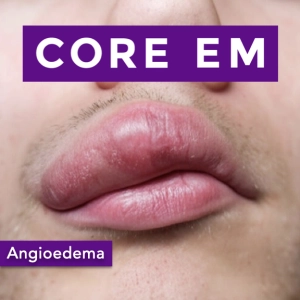
Episode 212: Angioedema [not-audio_url] [/not-audio_url]

Duration: 0:00
Angioedema – Recognition and Management in the ED Hosts: Maria Mulligan-Buckmiller, MD Brian Gilberti, MD https://media.blubrry.com/coreem/content.blubrry.com/coreem/Angioedema.mp3 Download Leave a Comment Tags: Airway S…
Episode 211: Granulomatosis with Polyangiitis [not-audio_url] [/not-audio_url]

Duration: 0:00
Granulomatosis with Polyangiitis (GPA) – Recognition and Management in the ED Hosts: Phoebe Draper, MD Brian Gilberti, MD https://media.blubrry.com/coreem/content.blubrry.com/coreem/GPA.mp3 Download One Comment Tags: Rhe…
Episode 210: Capacity Assessment [not-audio_url] [/not-audio_url]

Duration: 0:00
We discuss capacity assessment, patient autonomy, safety, and documentation. Hosts: Anne Levine, MD Brian Gilberti, MD https://media.blubrry.com/coreem/content.blubrry.com/coreem/Capacity_Assessment.mp3 Download One Comm…
Episode 209: Blast Crisis [not-audio_url] [/not-audio_url]

Duration: 0:00
We dive into the recognition and management of blast crisis. Hosts: Sadakat Chowdhury, MD Brian Gilberti, MD https://media.blubrry.com/coreem/content.blubrry.com/coreem/Blast_Crisis.mp3 Download 2 Comments Tags: Hematolo…
Episode 208: Geriatric Emergency Medicine [not-audio_url] [/not-audio_url]

Duration: 0:00
We explore the expanding field of Geriatric Emergency Medicine. Hosts: Ula Hwang, MD Brian Gilberti, MD https://media.blubrry.com/coreem/content.blubrry.com/coreem/Geriatric_Emergency_Medicine.mp3 Download One Comment Ta…
Episode 207: Smoke Inhalation Injury [not-audio_url] [/not-audio_url]

Duration: 0:00
We discuss the injuries sustained from smoke inhalation. Hosts: Sarah Fetterolf, MD Brian Gilberti, MD https://media.blubrry.com/coreem/content.blubrry.com/coreem/Smoke_Inhalation.mp3 Download Leave a Comment Tags: Envir…
Episode 206: Acute Back Pain [not-audio_url] [/not-audio_url]

Duration: 0:00
We discuss the evaluation of and treatment options for acute back pain. Hosts: Benjamin Friedman, MD Brian Gilberti, MD https://media.blubrry.com/coreem/content.blubrry.com/coreem/Acute_Back_Pain.mp3 Download Leave a Com…