Identity-focused classes: Experiments in cultural relevance

Identity-focused classes: Experiments in cultural relevance

Author: Ethical Schools October 1, 2020 Duration: 38:45

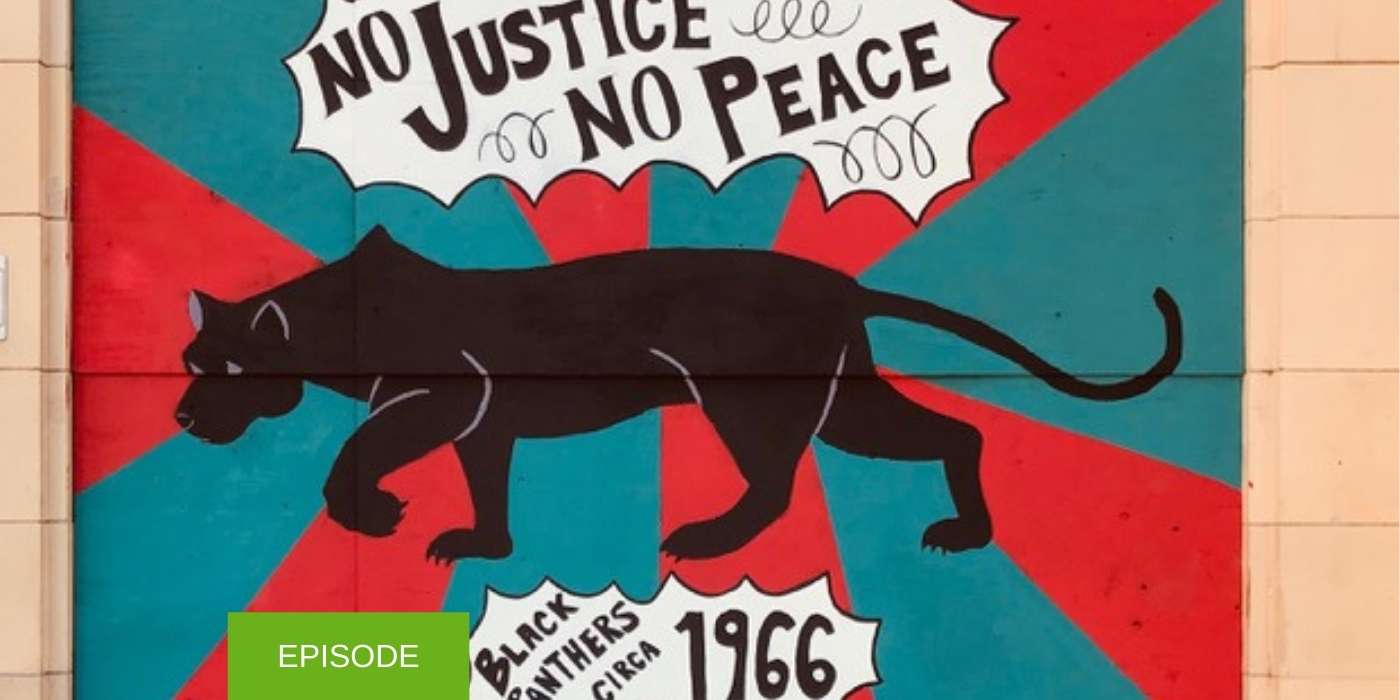
We speak with Dr. Emily Penner, who studied the impacts of two programs in which students delved into their respective races, ethnicities, and communities. San Francisco’s was designed for academically-struggling students of a range of ethnicities. Oakland’s was designed for young Black men across academic achievement levels, as part of the district’s  “targeted universalism” approach. The results, in both cases, were dramatic. 

Overview

00:00-00:30 Intros

00:30-01:32 San Francisco ethnic studies curriculum

01:32-03:01 Student selection

03:01-03:41 Students’ ethnicities and classrooms’ composition

03:41-04:19 Student voice and reflection

04:19-05:02 “Critical pedagogy”

05:02-12:40 Effects on student attendance and achievement

12:40-15:11 Teachers exercising their professional judgment

15:11-15:18 Professional development

15:18-18:01 Differentiating between impact of “great teachers” and the curriculum

18:01-19:49 “High fidelity context”

19:49-23:48 Oakland’s African American Male Achievement program

23:48-25:27 Targeted Universalism & working with a range of  groups of students

25:27-28:57 Outcomes and effects

28:57-29:21 Spillover effect on young Black women

29:21-30:24 Avoiding deficient orientation

30:24-31:42 Relationship to My Brother’s Keeper

31:42-35:19 Developments in ethnic studies in California

35:19-37:15 Qualitative resources about Oakland program

37:15-38:45


Conversations about education often focus on test scores and curriculum, but there’s a deeper layer that truly shapes a student’s experience. Ethical Schools digs into that layer, exploring what it means to build a learning community grounded in integrity and care. Each week, hosts Amy and Jon sit down with educators and innovators who are actively reimagining schools. You’ll hear specific, grounded discussions about the practical work of creating environments where every student feels safe and respected. The dialogue frequently addresses how to support young people dealing with trauma, moving beyond theory to share actionable strategies that teachers are using right now. More than just problem-solving, this podcast highlights how to empower students themselves to become advocates and changemakers in their own communities. It’s a series that connects philosophy with daily practice, looking at the social and cultural structures within schools through a lens of ethics. For anyone invested in the future of education-whether you’re a teacher, administrator, or simply a concerned community member-this podcast offers a thoughtful and necessary perspective on the foundational values that make education meaningful.
Author: Language: English Episodes: 240

Ethical Schools
Podcast Episodes
Creative problem solving: Developing solutionary thinkers [not-audio_url] [/not-audio_url]

Duration: 45:45
We welcome back Zoe Weil, of the Institute for Humane Education, along with Laura Trongard, Oceanside (NY) High School teacher to discuss how teachers are implementing IHE’s Solutionary program. Laura describes how stude…
Research in schools (Part 2): Safeguarding the data [not-audio_url] [/not-audio_url]

Duration: 20:00
We continue our conversation with Marianna Azar, director of NYC Department of Education’s Institutional Review Boards (IRBs). This week, Ms. Azar discusses the potential privacy dangers created by collection and dissemi…
Students as subjects: Ethical considerations of research in schools [not-audio_url] [/not-audio_url]

Duration: 41:41
We talk with Marianna Azar, Director and Chair of the NYC DOE’s Institutional Review Boards. The IRBs review all research proposals conducted through the schools to make sure they are conducted ethically and that the ben…
Ethical outreach: a parent coordinator anchors immigrant families [not-audio_url] [/not-audio_url]

Duration: 37:00
We speak with Herminia (Ita) Saldana, parent coordinator at MS 328, a middle school in Washington Heights, Manhattan. Every public school in NYC has a parent coordinator. Virtually all of the MS 328 students are current…
Making antiracist change: A template for educational leaders [not-audio_url] [/not-audio_url]

Duration: 36:00
We speak with Dr. Sarah Diem of University of Missouri and Dr. Anjalé Welton of University of Wisconsin, Madison. They discuss the seemingly neutral “colorevasive” policies that actually reinforce racial inequity. Drs. D…
Exacerbating inequality: Private money in public schools [not-audio_url] [/not-audio_url]

Duration: 43:30
We speak with Dr. Sue Winton of York University in Toronto about the effects of private money–much of it from parents–that replaces decreased public funding of schools. Fundraisers and fees for special programs benefit a…
Shared visions: Creating an abolitionist school culture [not-audio_url] [/not-audio_url]

Duration: 37:45
We continue our conversation with Grace Alli Brandstein, a school improvement and instructional coach supporting struggling high schools in the Bronx. This week, Ms. Brandstein focuses on humane, antiracist education, an…
The bigger picture: High school improvement in the Bronx [not-audio_url] [/not-audio_url]

Duration: 40:30
We speak with Grace Alli Brandstein, an improvement and instructional coach with the New York City Department of Education. Ms. Brandstein works with Bronx high schools that the State has designated as needing support. T…