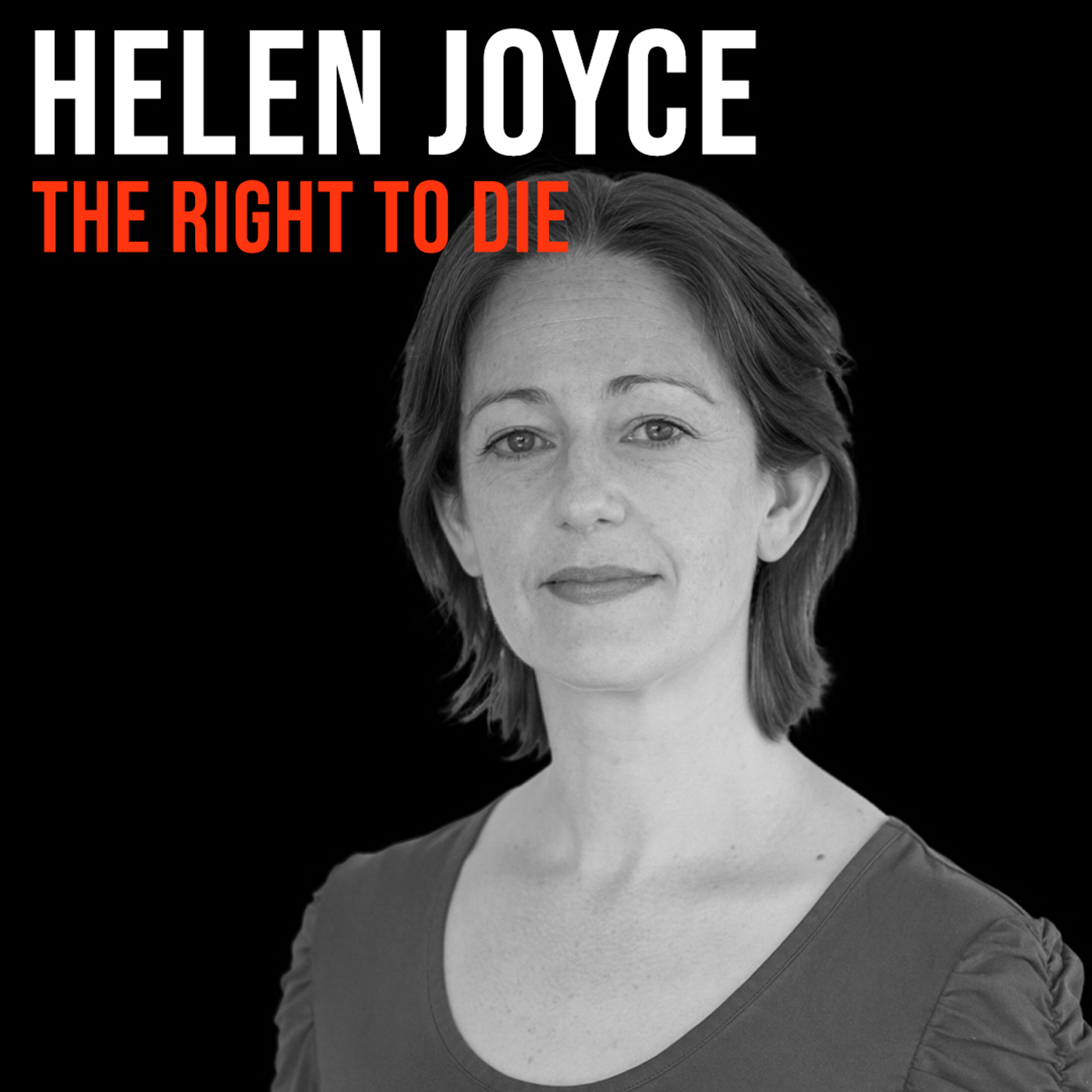
Helen Joyce (2015) | The Right To Die

Helen Joyce (2015) | The Right To Die

Author: Festival of Dangerous Ideas December 1, 2020 Duration: 41:43

Why is the right to doctor-assisted dying supported by so many and legal for so few? 

Helen Joyce became international editor of The Economist in January 2014 having previously served as International Education Editor and Sao Paulo bureau chief. Before joining The Economist she worked as editor of Plus, an online magazine about maths published by the University of Cambridge, and was founding editor for The Royal Statistical Society's quarterly magazine, Significance. 


For more than a decade, the Festival of Dangerous Ideas has curated a space where provocative thinking isn't just welcomed, it's the entire point. This podcast is a direct line to that stage, offering an archive of talks that deliberately unsettle comfortable opinions and interrogate the stubborn problems we often agree to ignore. Each episode captures a live conversation from Australia's original disruptive ideas festival, presenting arguments that can be exhilarating, uncomfortable, and vitally important. You’ll hear from a compelling roster of festival alumni-including leading experts, intellectual troublemakers, and visionary authors-who share perspectives that conventional discourse frequently sidelines. The discussions here aren't theoretical exercises; they grapple with the pressing and difficult issues shaping our society and culture right now. Tuning in means granting yourself access to a decade-long tradition of intellectual courage, where the core assumption is that some truths are only reached by first entertaining a dangerous idea. It’s a chance to listen as boundaries are pushed, not for shock value, but for clarity. The result is a consistently challenging and refreshing audio experience that complicates simple narratives and expands what feels possible to talk about.
Author: Language: English Episodes: 100

Festival of Dangerous Ideas
Podcast Episodes
FODI: The In-Between | 01.5 | Light Shines | B-Side [not-audio_url] [/not-audio_url]

Duration: 4:56
Sydney-based writer Tasnim Hossain records her written take on the meandering histories of Enlightenment discussed by Joya Chatterji and Stephen Fry, and the experimental sounds of the first known recordings of the human…
FODI: The In-Between | Trailer [not-audio_url] [/not-audio_url]

Duration: 1:08
FODI: The In-Between is an audio time capsule recording this moment in time. It asks: Are we in-between two eras? And if so, what does this mean about the past and the future? 8 conversations between 16 of the world's bi…
Elizabeth Pisani (2014) | Corruption Makes the World Go Round [not-audio_url] [/not-audio_url]

Duration: 1:00:54
When it comes to good governance, conventional wisdom has it that less corruption would translate into more economic growth, a healthier body politic and reduced likelihood of conflict. But what if this isn't always the…
A.C. Grayling (2015) | Bad Education [not-audio_url] [/not-audio_url]

Duration: 37:24
A.C. Grayling says "to read is to fly". The distinguished philosopher who has dedicated his life to examining knowledge believes we need a revolution in education. But many of us grapple with the question: what is educat…
Chris Berg (2015) | Nanny State [not-audio_url] [/not-audio_url]

Duration: 28:20
If we don't think our fellow citizens are capable of making the right choices about what they eat and drink, why do we think they are capable of voting? Since researcher Chris Berg presented this 2015 FODI talk, this que…
Erwin James (2013) | A Killer Can Be a Good Neighbour [not-audio_url] [/not-audio_url]

Duration: 1:00:21
When someone commits a crime, we want them punished. If wrongdoers go to prison more often and for longer, everyone seems happy. But we live in a system where people do eventually come out of prison and rejoin the commun…
Satyajit Das (2016) | The Bill Is Due [not-audio_url] [/not-audio_url]

Duration: 51:45
Today the human race faces existential challenges. Our prosperity has been built on unsustainable economic and environmental practices — but our social and political processes seem incapable of fixing anything. Why are w…