How Disability Reframes Humanity: Three Bible Stories to See Disability as the Site of Divine Revelation / Calli Micale

How Disability Reframes Humanity: Three Bible Stories to See Disability as the Site of Divine Revelation / Calli Micale

Author: Matthew Croasmun, Ryan McAnnally-Linz, Drew Collins, Miroslav Volf, Evan Rosa, Macie Bridge October 7, 2023 Duration: 45:45
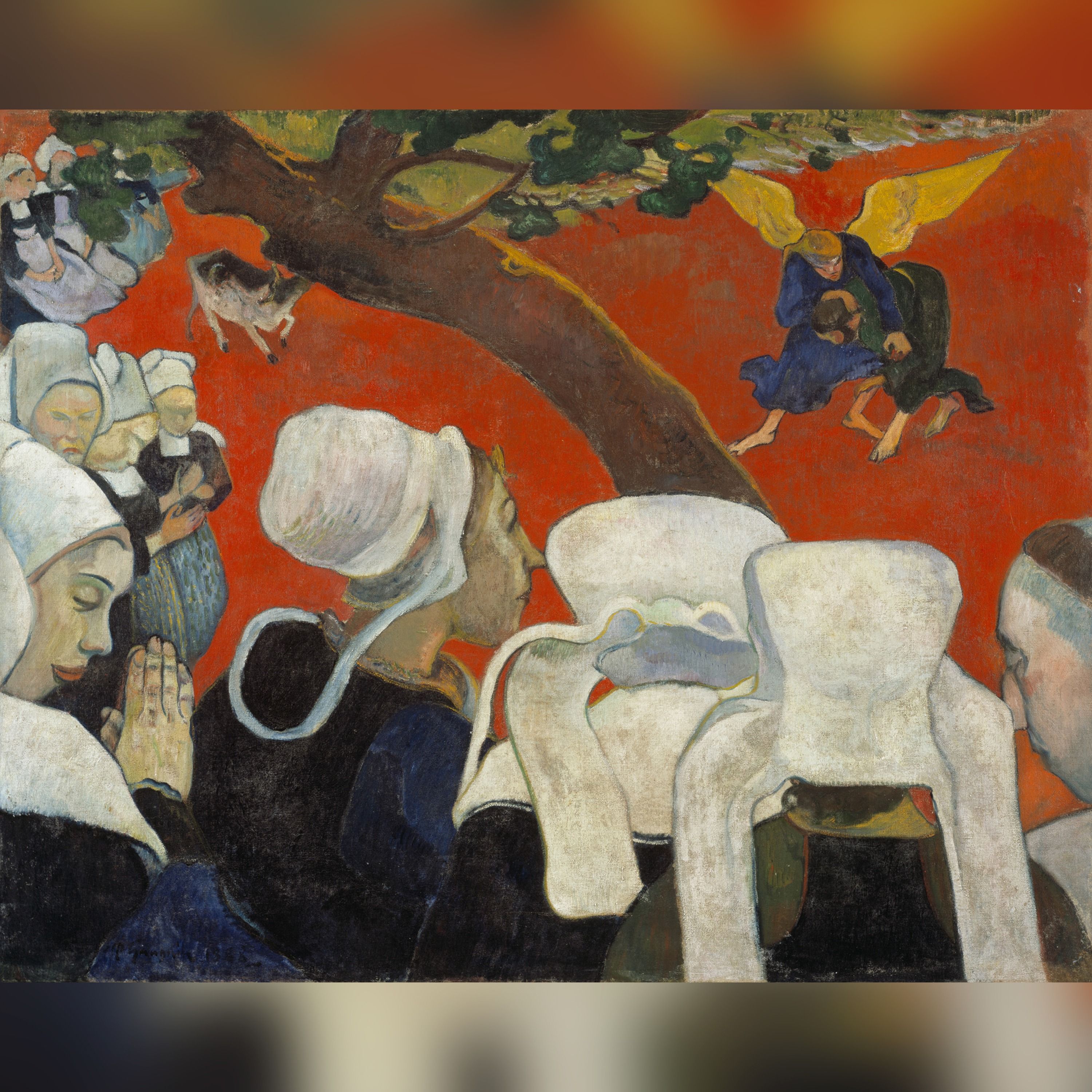
“Wrestling with oneself, with one’s past, with one’s relationships, with God … These stories push us to use disability to think about the human condition more broadly.” Longstanding narratives about disability shaped our emotional responses, our caregiving responses, and our social commentary, and our treatment of the disabled. But what if we saw disability as the site of divine revelation about God’s kingdom and our place in it? As an expression of power and wisdom and agency, rather than a merely a source of suffering and lack and ignorance. Calli Micale (Palmer Theological Seminary) joins Evan Rosa to discuss how disability reframes our humanity in the Bible. They reflect on three passages: starting in the Old Testament—in Genesis 32—with the story of Jacob wrestling with the Angel, and walking away with much more than a limp and a new name. Continuing with the Gospel, John 9, the story of the Man Born Blind, famous for at least two reasons: the utter stupidity of the disciples to assume “Rabbi, who sinned that this man was born blind?” and the utter visceral of having Jesus make mud with his spit and rub it in the man’s eyes. And finally The Gospel of Mark, chapter 5, the story of the bleeding woman—a story of reaching out in desperate faith, an act of incredible agency and audacity, to touch the edge of Jesus’s garment and be healed. Whether its intellectual disability or physical disability, and regardless of how its acquired, disability plays a role in what we might call God’s subversive kingdom. God’s upside-down-ness (or, maybe we should say human upside-down-ness). The least of these in the eyes of human society are chosen by God to communicate the good news of shalom and justice and salvation—that even those who are already “whole” can be saved. This episode was made possible in part by the generous support of the Tyndale House Foundation. For more information, visit tyndale.foundation.

What does it mean to live well, not just for ourselves but for the world around us? For the Life of the World / Yale Center for Faith & Culture explores this profound question through conversations that blend deep theological insight with sharp cultural analysis. Hosted by scholars and thinkers like Matthew Croasmun, Ryan McAnnally-Linz, Drew Collins, Miroslav Volf, Evan Rosa, and Macie Bridge, each episode delves into the complexities of faith, philosophy, and everyday practice. You’ll hear discussions that move from abstract ideas to tangible guidance, examining how ancient wisdom intersects with modern challenges in society, education, and personal spirituality. This isn’t about easy answers, but about the harder, more rewarding work of discerning what constitutes a flourishing life-for individuals and communities alike. The podcast serves as an audio extension of the Yale Center for Faith & Culture’s mission, offering thoughtful content for anyone curious about how belief shapes and is shaped by culture. Tune in for a consistently engaging exploration of what it means to seek a life truly worthy of our shared humanity.
Author: Language: English Episodes: 100

For the Life of the World / Yale Center for Faith & Culture
Podcast Episodes
How to Read Simone Weil, Part 3: The Existentialist / Deborah Casewell [not-audio_url] [/not-audio_url]

Duration: 1:05:43
“All the natural movements of the soul are controlled by laws analogous to those of physical gravity. Grace is the only exception.” … “It is necessary to uproot oneself. To cut down the tree and make of it a cross, and t…
How to Read Simone Weil, Part 2: The Activist / Cynthia Wallace [not-audio_url] [/not-audio_url]

Duration: 1:11:26
“What are you going through?” This was one of the central animating questions in Simone Weil’s thought that pushed her beyond philosophy into action. Weil believed that genuinely asking this question of the other, partic…
How to Read Simone Weil, Part 1: The Mystic / Eric O. Springsted [not-audio_url] [/not-audio_url]

Duration: 59:24
This episode is the first of a short series exploring How to Read Simone Weil. The author of *Gravity and Grace*, *The Need for Roots*, and *Waiting for God*—among many other essays, letters, and notes, Weil has been an…
Open the Gates: Immigration & the Book of Revelation / Yii-Jan Lin [not-audio_url] [/not-audio_url]

Duration: 43:08
Why do we have countries? Why do we mark this land and these people as distinct from that land and those people? What are countries for? Yii-Jan Lin (Associate Professor of New Testament, Yale Divinity School) joins Matt…
Letters to a Future Saint / Brad East & Drew Collins [not-audio_url] [/not-audio_url]

Duration: 54:00
“For those of us who are drawn into church history and church tradition and to reading theology, there is very little as transformative as realizing that history is populated by women and men like us who tried to follow…
How to Read Henry David Thoreau / Lawrence Buell [not-audio_url] [/not-audio_url]

Duration: 1:00:19
"I went to the woods because I wished to live deliberately, to front only the essential facts of life, and see if I could not learn what it had to teach, and not, when I came to die, discover that I had not lived. I did…
How to Read Teresa of Ávila / Carlos Eire [not-audio_url] [/not-audio_url]

Duration: 52:53
St. Teresa of Ávila (1515-1582) was a sixteenth-century Spanish nun and one of the most influential mystics in all of Church history, writing two spiritual classics still read today: The Way of Perfection and The Interio…
History Speaks the Spirit of Justice / Jemar Tisby [not-audio_url] [/not-audio_url]

Duration: 46:20
History reveals a lot of things about human nature: our innate drive towards progress, discovery, relationship, community. Often motivated by a drive to feel safe and flourish. But despite this instinct, history also sho…
Unity in Diversity, Empathic Wisdom / Christy Vines [not-audio_url] [/not-audio_url]

Duration: 56:20
In our American quest for a more perfect union, we often mistake unity for sameness. We mistake unity for conformity. But the functional unity of a system—seems to actually *require* diversity, distinction, and differenc…
