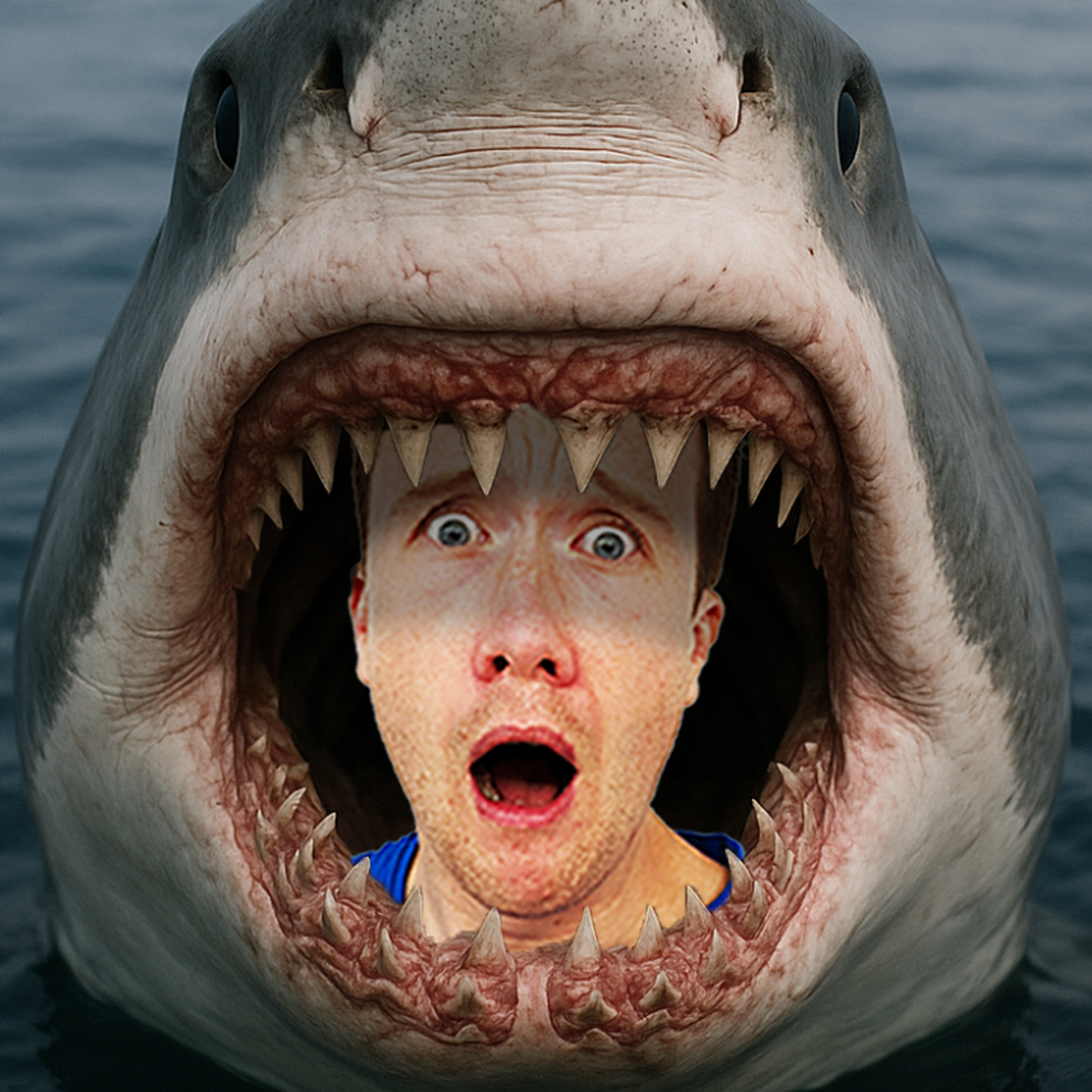
SHARK ATTACK: How the Ocean’s Ultimate Predator Rules the Seas 🦈🌊

SHARK ATTACK: How the Ocean’s Ultimate Predator Rules the Seas 🦈🌊

Author: Fun Kids October 18, 2025 Duration: 34:04

Get ready for another deep dive into the wild, weird, and wonderful world of science on this week’s Fun Kids Science Weekly!

This week, we’re answering your burning science questions, uncovering mind-blowing discoveries, and exploring how sharks became the ocean’s ultimate predators.

In Science in the News, we discover how stress can actually make your nose colder, celebrate the green turtle’s comeback from the brink of extinction, and meet Dr. Fred Jordan, whose team is creating mini human brains to help power the computers of the future.

Then we dive into your questions: Kubi wants to know how chameleons change colour, and David Chappell explains the science behind echoes — those mysterious sounds that bounce right back at you!

Dangerous Dan is back too, and this week he’s introducing us to the Blue-tailed skink, a small but speedy reptile with some seriously cool defences.

And in Battle of the Sciences, Dan takes a trip beneath the waves with megalodon expert Jack Cooper, who reveals how sharks evolved into the world’s most efficient predators.

What do we learn about?
· How stress makes your nose colder
· The green turtle’s rescue from extinction
· Mini human brains that could power computers
· How chameleons change colour
· What causes echoes
· The blue-tailed skink lizard
· And the mighty shark, nature’s ultimate ocean hunter!

All that and more on this week’s Fun Kids Science Weekly!

Join Fun Kids Podcasts+: https://funkidslive.com/plus

See omnystudio.com/listener for privacy information.


Ever wondered what sound a dinosaur really made or how astronauts eat breakfast in zero gravity? Fun Kids Science Quest digs into those brilliant, messy, and mind-bending questions. Hosted by Dan, this lively podcast turns curiosity into adventure, journeying from the ancient past to the far reaches of the universe. It’s not just a list of facts; it’s a proper exploration designed for young minds and their families to enjoy together. Every episode brings something different, whether it’s a story from the Deep Space High series, a trip back to the Age of the Dinosaurs, or a visit with the clever Professor Hallux. You’ll also hear from special guests and real experts who tackle listeners' trickiest science questions with clear, engaging answers. The whole idea is to make the huge world of science feel accessible, fun, and genuinely surprising. So if you’re looking for a science podcast that’s as entertaining as it is educational, full of stories and conversations that spark real wonder, this is the quest to join. New episodes arrive weekly, ready to turn any car journey or quiet afternoon into a mini scientific expedition.
Author: Language: en-gb Episodes: 100

Fun Kids Science Quest
Podcast Episodes
MIDWEEKLY: How Long Does It Take To Climb Mt. Everest?🏔️🥾 [not-audio_url] [/not-audio_url]

Duration: 11:31
This Week’s Big Questions! You’ve been sending in your brilliantly curious questions, and this week… 🤧 Raphael wants to know: Why do we close our eyes when we sneeze?🌀 Sam is wondering: How many dimensions are there?😮‍💨…
SPACE SECRETS: Astronaut Tim Peake Reveals All 🧑‍🚀🚀 [not-audio_url] [/not-audio_url]

Duration: 26:15
Get ready to kick off the New Year with an out-of-this-world episode of Science Weekly! We’re docking with the International Space Station as world-famous astronaut Tim Peake joins us to reveal what life is really like i…
MIDWEEKLY: How Many Earths Fit Inside the Sun?🌍☀️ [not-audio_url] [/not-audio_url]

Duration: 10:38
This Week’s Big Questions! You’ve been sending in your questions, and this week… 🌿 Herbie wants to know: Do plants have muscles?🌞 Finn is wondering: How many Earths fit inside the Sun?🧼 Ashlyn asks: How does soap clean y…
ANCIENT EGYPT: Understanding How Hieroglyphics Really Worked🐫📜 [not-audio_url] [/not-audio_url]

Duration: 30:41
Get ready for another BIG and BRILLIANT journey through time, space, and the human mind on this week’s Science Weekly! We’re heading back to Ancient Egypt to unlock the secrets of hieroglyphics, a mysterious language tha…
MIDWEEKLY: Why Are We Scared of Spiders? 🕷️😱 [not-audio_url] [/not-audio_url]

Duration: 10:28
This Week’s Big Questions! You’ve been sending in your questions, and this week… 🕷️ Olivia wants to know: Why are some people scared of spiders?🌎 Gabriel is wondering: Why did Pangea separate?⭐ Karl asks: What’s the rare…
ROAR POWER: Why Lions Make Earth-Shaking Sounds 🦁🌍 [not-audio_url] [/not-audio_url]

Duration: 30:16
Get ready for another BIG and BRILLIANT journey into science on this week’s Science Weekly! We’re uncovering the amazing science that gets planes off the ground and diving deep into the ocean to explore one of the most e…
MIDWEEKLY: Why Does Our Hair Turn Grey?🧑‍🦳❓ [not-audio_url] [/not-audio_url]

Duration: 10:55
This Week’s Big Questions! You’ve been sending in your questions, and this week… 🛗 Caroline wants to know: How do elevators work?🌍 Astrid is wondering: If we left Earth, where would we go?👵 Ella asks: Why does our hair t…
ANCIENT GIANTS: Discover Earth’s Oldest Living Residents🌳🌍 [not-audio_url] [/not-audio_url]

Duration: 33:00
Get ready for another action-packed adventure into the world of science on this week’s Science Weekly. We’re travelling back to the dawn of time to uncover how Earth was created and meeting some of the planet’s oldest an…
MIDWEEKLY: What Would Happen to a Human Body in Space?👩‍🚀🌌 [not-audio_url] [/not-audio_url]

Duration: 12:40
This Week’s Big Questions! You’ve been sending in your brilliantly curious questions, and this week… 🩸 Alex wants to know: What makes blood cells?🌌 Imogen is wondering: What would happen to a human in space?🎢 Jack asks:…
ASTRONAUT TIM PEAKE: Life On The International Space Station 🚀 🌌 [not-audio_url] [/not-audio_url]

Duration: 29:13
Get ready for another BIG and BRILLIANT journey into the world of science on this week’s Science Weekly! We’re asking a huge question… we talk about science every week, but what actually is it? In Science in the News, re…