What Lies Beneath Ceres | Dr. Samuel Courville

What Lies Beneath Ceres | Dr. Samuel Courville

Author: John Michael Godier November 9, 2025 Duration: 43:43

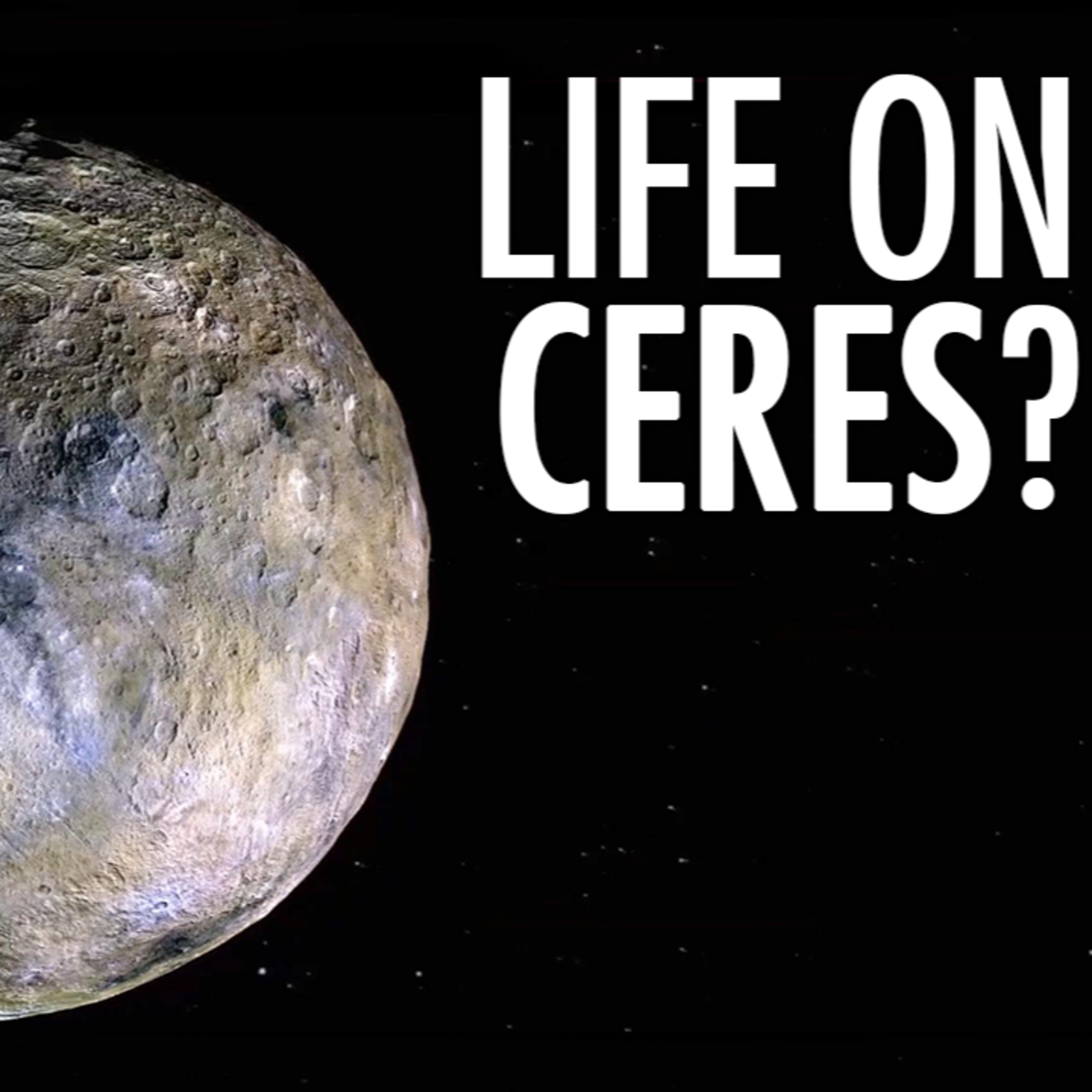
New evidence suggests that Ceres may still harbor subsurface brine, cryovolcanic activity, and internal heat sources capable of sustaining habitable environments. The discussion explores how radioactive decay, methanogenesis, and chemical energy could support life beneath its surface, what salt deposits reveal about ancient liquid water, and whether asteroids like Ceres could have delivered Earth’s oceans—and possibly life itself—featuring Dr. Samuel Courville with John Michael Godier.Links:https://www.science.org/doi/10.1126/sciadv.adt3283https://www.jpl.nasa.gov/news/nasa-ceres-may-have-had-long-standing-energy-to-fuel-habitability/https://www.seti.org/news/hidden-habitability-on-ceres-what-dawn-discovered-beneath-ceres-icy-crust/Podcast: hhttps://creators.spotify.com/pod/show/john-michael-godier/subscribeApple: https://apple.co/3CS7rjTMore JMG https://www.youtube.com/c/JohnMichaelGodierWant to support the channel?Patreon: https://www.patreon.com/EventHorizonShowFollow us at other places!@JMGEventHorizon


00:00 Intro01:12 Why Ceres is stranger than expected03:25 Radioactive decay and internal heating over billions of years06:05 Could hydrothermal brines still exist beneath the surface?08:45 Methane, CO₂, and chemical energy for microbial life11:35 The “follow the salt” mystery and bright spots on Ceres14:05 Evidence that briny liquids reached the surface16:20 How Ceres differs from other asteroids and preserved its history19:10 Links to carbonaceous chondrite meteorites and organic chemistry22:15 Comparing Ceres to icy moons like Enceladus and Europa25:00 Could small early worlds have spawned life?28:05 Delivery of Earth’s water and the panspermia question31:00 What Bennu and Ryugu reveal about parent bodies33:15 The frost line, timing of formation, and habitability conditions36:00 Impacts, fractures, and evidence of cryovolcanism38:25 Why NASA sees Ceres as a sample-return priority40:10 Are Ceres’ microbes going extinct?41:00 Closing and Mars previewMusic:https://stellardrone.bandcamp.com/https://migueljohnson.bandcamp.com/https://leerosevere.bandcamp.com/https://aeriumambient.bandcamp.com/FOOTAGE:NASAESA/HubbleESO - M.KornmesserESO - L.CalcadaESO - Jose Francisco Salgado (josefrancisco.org)NAOJUniversity of WarwickGoddard Visualization StudioLangley Research CenterPixabay


Curiosity about the cosmos often starts with a simple question, and that's where John Michael Godier's Event Horizon finds its rhythm. Hosted by author and futurist John Michael Godier, this podcast delves into the profound and the perplexing at the edges of our understanding. Each episode builds a narrative, weaving together discussions on astronomy, astrophysics, and the latest space science news with broader themes of technology, history, and futurism. The conversations are grounded by special guests who bring expertise and diverse perspectives, turning complex ideas into engaging explorations. You'll find the dialogue moves from the concrete details of scientific discovery to the speculative implications for our future, all with a thoughtful and accessible tone. This isn't just a recap of headlines; it's a deep dive into the context and consequences of what we're learning about the universe. For anyone who looks up at the night sky and wonders about black holes, the potential for life elsewhere, or where our technology might take us next, this podcast offers a compelling space to linger on those big ideas. The production emphasizes clarity and depth, making even the most daunting topics feel within reach. Tune in for a regular journey to the frontiers of science and human thought.
Author: Language: en-us Episodes: 100

John Michael Godier's Event Horizon
Podcast Episodes
What is it like working for Fermilab? with Dr. James Annis [not-audio_url] [/not-audio_url]

Duration: 33:07
Get 50% off NordPass! Only $2.49/mo, plus you get an additional month FREE at: https://nordpass.com/eventhorizonUse Coupon code: eventhorizonCan Neutrinos be used as deep space communications?Dr. James Annis is a Senior…
Mathematical SETI with Dr. Claudio Maccone [not-audio_url] [/not-audio_url]

Duration: 48:59
How does SETI search for intelligent life?What is radio SETI?SETI is becoming a complicated business as our capabilities to search increase, but the payoff increases. Dr. Claudio Maccone has worked on a mathematical way…
Has Planet 9 Been Found? w/ Prof. Michael Rowan-Robinson [not-audio_url] [/not-audio_url]

Duration: 40:48
Planet nine found? Emeritus Professor Michael Rowan-Robinson of Imperial College London new paper, A search for Planet 9 in the IRAS data, is the result of having narrowed down a search in the IRAS data to one possible c…
How Exotic is Oumuamua? with Dr. Sergey Mashchenko [not-audio_url] [/not-audio_url]

Duration: 30:31
A look at the many possible shapes and explanations for the unusual nature of our first interstellar visitor Oumuamua. Including evidence for torque and disc-like shape as John Michael Godier is joined by Dr. Sergey Mash…
