So how can The Dude and The Boss save America? According to the cultural critic, David Masciotra, Jeffrey "The Dude" Lebowski and Bruce “The Boss” Springsteen, represent the antithesis of Donald Trumps’s illiberal authoritarianism. Masciotra’s thesis of Lebowski and Springsteen as twin paragons of American liberalism is compelling. Both men have a childish faith in the goodness of others. Both offer liberal solace in an America which, I fear, is about to become as darkly surreal as The Big Lebowski.
Transcript:
“[Springsteen] represents, as cultural icon, a certain expression of liberalism, a big-hearted, humanistic liberalism that exercises creativity to represent diverse constituencies in our society, that believes in art as a tool of democratic engagement, and that seeks to lead with an abounding, an abiding sense of compassion and empathy. That is the kind of liberalism, both with the small and capital L, that I believe in, and that I have spent my career documenting and attempting to advance.” -David Masciotra
AK: Hello, everybody. We're still processing November the 5th. I was in the countryside of Northern Virginia a few days ago, I saw a sign, for people just listening, Trump/Vance 2024 sign with "winner" underneath. Some people are happy. Most, I guess, of our listeners probably aren't, certainly a lot of our guests aren't, my old friend John Rauch was on the show yesterday talking about what he called the "catastrophic ordinariness" of the election and of contemporary America. He authored two responses to the election. Firstly, he described it in UnPopulist as a moral catastrophe. But wearing his Brookings hat, he's a senior fellow at the Brookings Institute, described it as an ordinary election. I think a lot of people are scratching their head, trying to make sense of it. Another old friend of the show, David Masciotra, cultural writer, political writer. An interesting piece in the Washington Monthly entitled "How Francis Fukuyama and The Big Lebowski Explain Trump's Victory." A very creative piece. And he is joining us from Highland Indiana, not too far from Chicago. David. The Big Lebowski and Francis Fukuyama. Those two don't normally go together, certainly in a title. Let's talk first about Fukuyama. How does Fukuyama explain November the 5th?
DAVID MASCIOTRA: In his. Well, first, thanks for having me. And I should say I watched your conversation with Jonathan Rauch, and it was quite riveting and quite sobering. And you talked about Fukuyama in that discussion as well. And you referenced his book, The End of History and the Last Man, a very often misinterpreted book, but nonetheless, toward its conclusion, Fukuyama warns that without an external enemy, liberal democracies may indeed turn against themselves, and we may witness an implosion rather than an explosion. And Fukuyama said that this won't happen so much for ideological reasons, but it will happen for deeply psychological ones, namely, without a just cause for which to struggle, people will turn against the just cause itself, which in this case is liberal democracy, and out of a sense of boredom and alienation, they'll grow increasingly tired of their society and cultivate something of a death wish in which they enjoy imagining their society's downfall, or at least the downfall of some of the institutions that are central to their society. And now I would argue that after the election results, we've witnessed the transformation of imagining to inviting. So, there is a certain death wish and a sense of...alienation and detachment from that which made the United States of America a uniquely prosperous and stable country with the ability to self-correct the myriad injustices we know are part of its history. Well now, people--because they aren't aware of the institutions or norms that created this robust engine of commerce and liberty--they've turned against it, and they no longer invest in that which is necessary to preserve it.
AK: That's interesting, David. The more progressives I talk to about this, the more it--there's an odd thing going on--you're all sounding very conservative. The subtitle of the piece in the Washington Monthly was "looking at constituencies or issues misses the big point. On Tuesday, nihilism was on display, even a death wish in a society wrought by cynicism." Words like nihilism and cynicism, David, historically have always been used by people like Allan Blum, whose book, of course, The Closing of the American Mind, became very powerful amongst American conservatives now 40 or 50 years ago. Would you accept that using language like nihilism and cynicism isn't always associated--I mean, you're a proud progressive. You're a man of the left. You've never disguised that. It's rather odd to imagine that the guys like you--and in his own way, John Rauch too, who talks about the moral catastrophe of the election couple of weeks ago. You're all speaking about the loss of morality of the voter, or of America. Is there any truth to that? Making some sense?
DAVID MASCIOTRA: That's a that's a fair observation. And Jonathan Rauch, during your conversation and in his own writing, identifies a center right. I would say I'm center left.
AK: And he's--but what's interesting, what ties you together, is that you both use the L-word, liberal, to define yourselves. He's perhaps a liberal on the right. You're a liberal on the left.
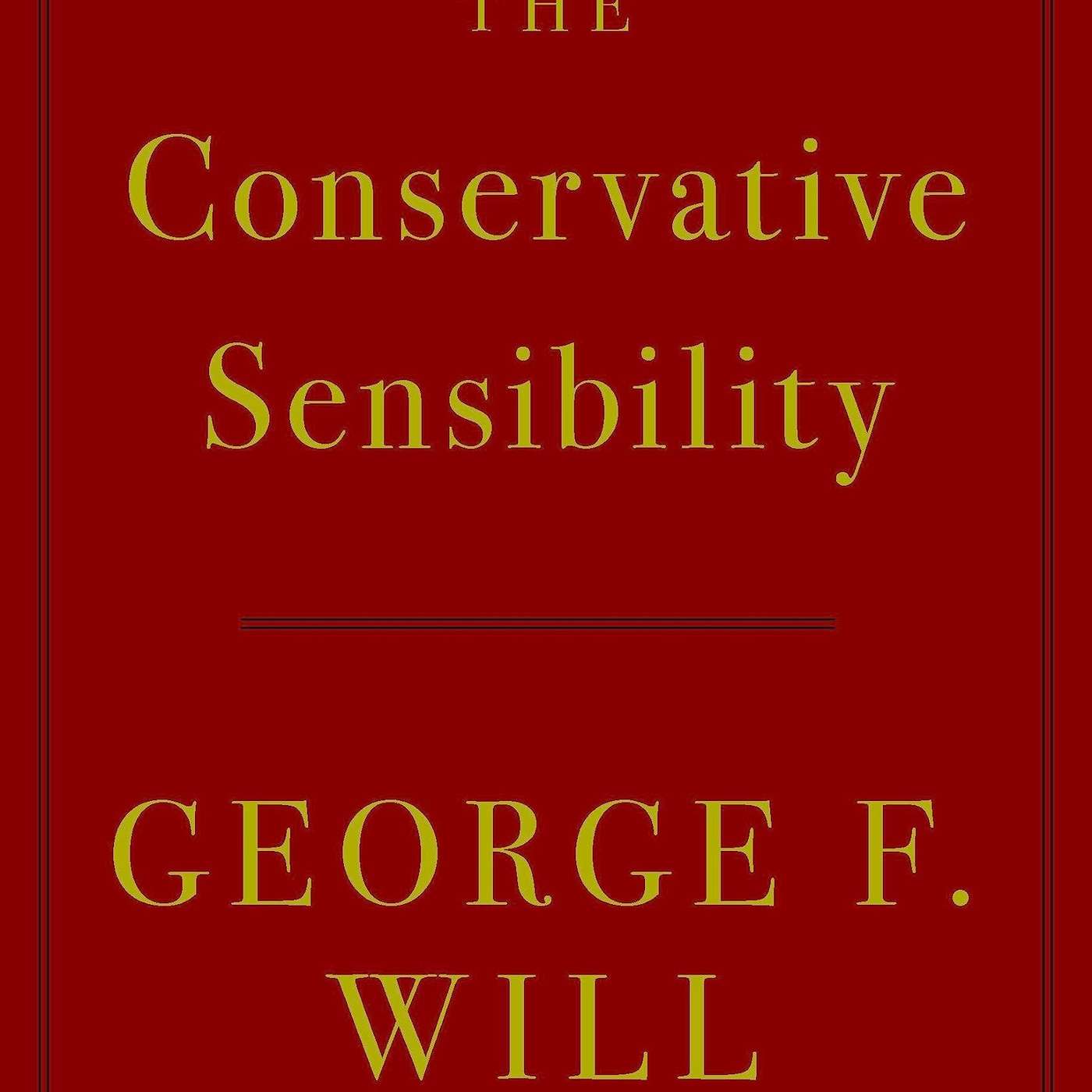
DAVID MASCIOTRA: Yes. And I think that the Trump era, if we can trace that back to 2015, has made thoughtful liberals more conservative in thought and articulation, because it forces a confrontation and interrogation of a certain naivete. George Will writes in his book, The Conservative Sensibility, that the progressive imagines that which is the best possible outcome and strives to make it real, whereas the conservative imagines the worst possible outcome and does everything he can to guard against it. And now it feels like we've experienced, at least electorally, the worst possible outcome. So there a certain revisitation of that which made America great, to appropriate a phrase, and look for where we went wrong in failing to preserve it. So that kind of thinking inevitably leads one to use more conservative language and deal in more conservative thought.
AK: Yeah. So for you, what made America great, to use the term you just introduced, was what? Its morality? The intrinsic morality of people living in it and in the country? Is that, for you, what liberalism is?
DAVID MASCIOTRA: Liberalism is a system in and the culture that emanates out of that system. So it's a constitutional order that creates or that places a premium on individual rights and allows for a flourishing free market. Now, where my conception of liberalism would enter the picture and, perhaps Jonathan Rauch and I would have some disagreements, certainly George Will and I, is that a bit of governmental regulation is necessary along with the social welfare state, to civilize the free market. But the culture that one expects to flow from that societal order and arrangement is one of aspiration, one in which citizens fully accept that they are contributing agents to this experiment in self-governance and therefore need to spend time in--to use a Walt Whitma...