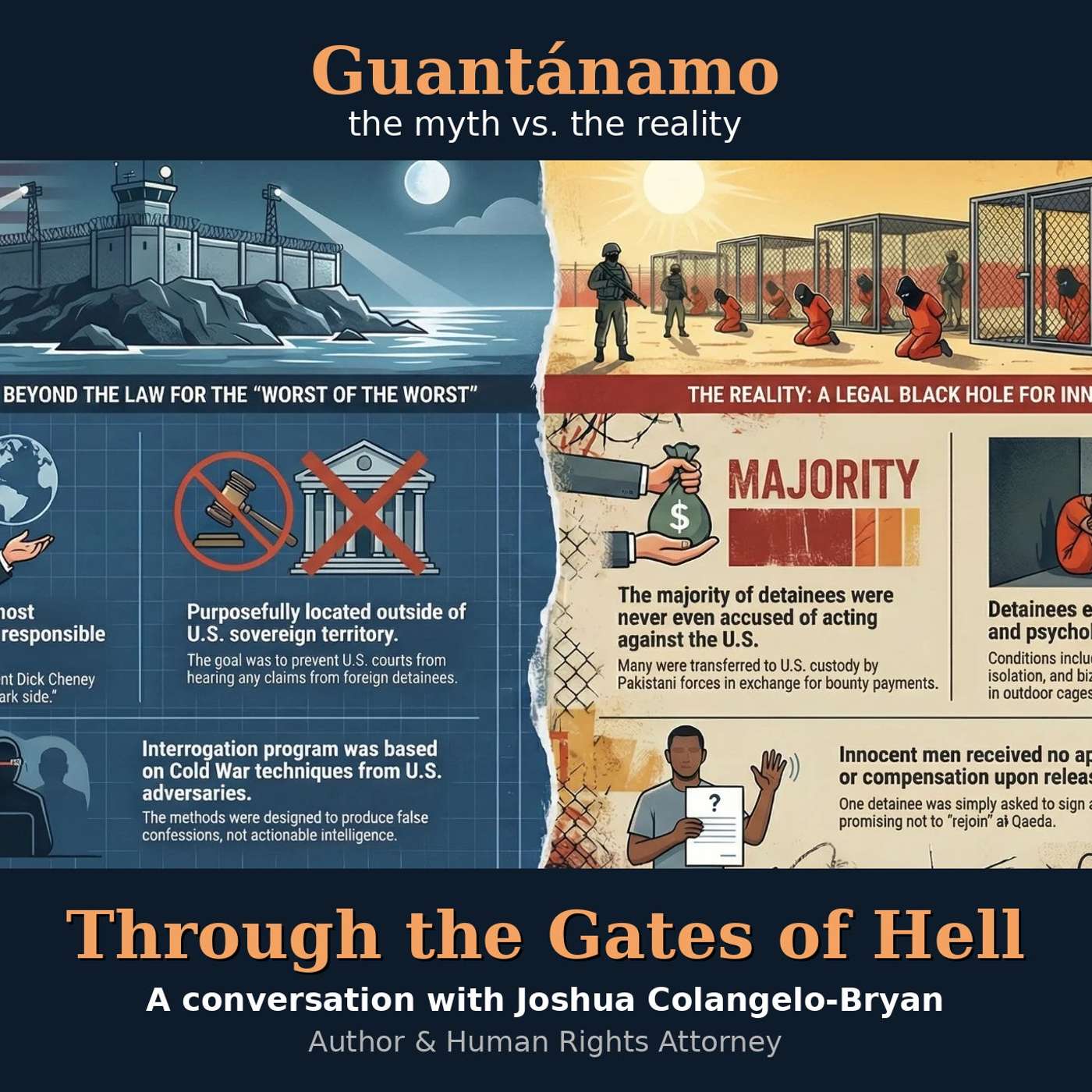

Guantanamo: The Myth vs the Reality
Dick Cheney died four weeks ago, but his dark legacy lives on—quite literally—at Guantanamo Bay. The human rights lawyer Joshua Colangelo-Bryan was among the first attorneys to enter the notorious prison in 2004, and what he found there shattered every official justification for its existence. The “worst of the worst”? Most detainees were never even accused of acting against America. Many were simply sold to the Americans for bounties. The sophisticated interrogation program? Techniques copied from Chinese and Soviet methods designed to extract false confessions, not intelligence. In his new book Through the Gates of Hell, Colangelo-Bryan tells the story of his unlikely friendship with Jaber Mohammed, a Bahraini detainee who spent years in captivity for the crime of being an Arab man in the wrong place (Afghanistan) at the wrong time (post 9/11). Released without apology or compensation—just a form asking him not to “rejoin” organizations he’d never belonged to—Jaber now lives in Saudi Arabia with four children, focusing less on bitterness and more on those rare moments when American guards showed him unexpected kindness. As the Trump administration revives the “worst of the worst” rhetoric against immigrants and once again sends people to Guantanamo, Colangelo-Bryan’s account is a warning from recent history: demonize a racial or religious group, and you will inevitably destroy innocent lives. The gates of hell have once again been opened. Will they ever be closed?
This is a public episode. If you'd like to discuss this with other subscribers or get access to bonus episodes, visit keenon.substack.com/subscribe
01.20.23: That Was The Week in Tech
GEORGE KENNAN: A Life Caught Between the United States and the Soviet Union
Curtis White on Transcendence: How Art and Dharma Can Save Us in a Time of Collapse
Can an Updated Version of Dale Carnegie's 20th Century Help Us Fix Our 21st Century Future
Why the Best Lessons in Life are Experienced rather than Learned
The Revolt against Humanity: Adam Kirsch Imagines a Future Without Humanity"
LIFE ON MARS: IMAGINING THE FIRST CITY ON THE RED PLANET
Jacqueline Jones: What Does the Plight of Boston's Black Workers in the Civil War Era Tells Us About the Struggle Today of All Americans For an Honest Living?
Jayne Ann Krentz: Genre Fiction Matters Because It Enables Writers to Address Perennial Moral Issues Like Honor and How to Distinguish Between Right and Wrong
Pico Iyer: Why Travel Writing is a Form of Memoir and How Covid Has Changed How We See the World
Jared Yates Sexton: Midnight in America? Why the Coming Crisis in the Republic Offers Hope For a Better Future
Angela Stent: Why 2023 Probably Won't Bring An End to the War in Ukraine and Other Unpalatable Truths From the Putin World
Corinne Sawers: Why the Pro-Market American Model of Confronting Today's Climate Emergency Might Offer the Most Realistic Way to Get to Net Zero