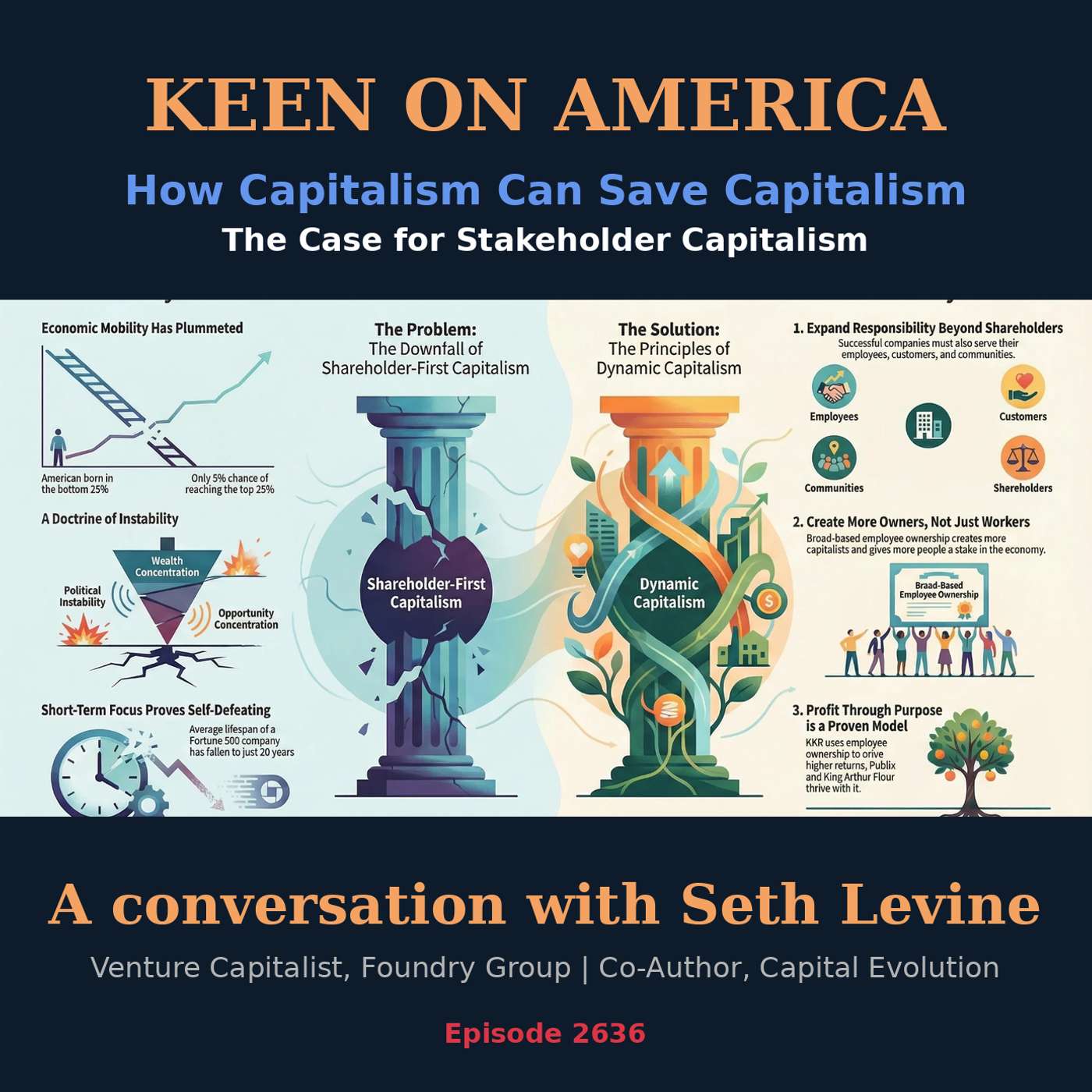
How Capitalism Can Save Capitalism: The Case for Stakeholder Capitalism
The American economy is a numbers game and those numbers are becoming more and more unfair. “30 years ago, if you were born in the bottom 25th percentile of wealth, you had about a 25% chance of dying in the top 25th percentile.” notes the venture capitalist Seth Levine. “Today you’ve got a 5% chance.” So what to do? What Levine wants is more rather than less capitalism. As he argues in his new co-authored (with Elizabeth MacBride) book, Capital Evolution, “if we want more people to have a stake in the economy, more people have to have a stake in the economy.” Thus the case for what he calls stakeholder capitalism. Only capitalism can save capitalism, Levine argues. Whether that’s Davos-style tautology or the way to right the wrongs of American capitalism is a more complicated question.
This is a public episode. If you'd like to discuss this with other subscribers or get access to bonus episodes, visit keenon.substack.com/subscribe
Episode 2221: Talia Lavin on how the Christian Right is Taking Over America
Episode 2220: Nobel Prize Winning Economist Simon Johnson on Technology & Inequality
Episode 2219: Joel Edward Goza on why Reparations is the Central Civil Rights Issue of the 2020s
Episode 2218: Timothy Shenk explains the fate of liberal politics in the illiberal age of Harris and Trump
Episode 2217: Why Google should hire Chris Lehane, Silicon Valley's Master of the Message
Episode 2216: Neal Baer on the Promise and Peril of CRISPR
Episode 2215: Tavis Smiley on why black men are more likely to vote for Donald Trump than black women
Episode 2214: Arlie Russell Hochschild on How to Listen to America
Episode 2213: Charles and Lily Bock on fathers, daughters and missing mothers
Episode 2212: Jim Wallis on the False White Gospel threatening America
Episode 2211: Why in the AI Age, Big Tech is going to get significantly BIGGER
Episode 2210: Carissa Carter and Scott Doorley explain how to design the future
Episode 2209: Michael Morris on how the cultural instincts that divide us can also help bring us together