How Capitalism Can Save Capitalism: The Case for Stakeholder Capitalism
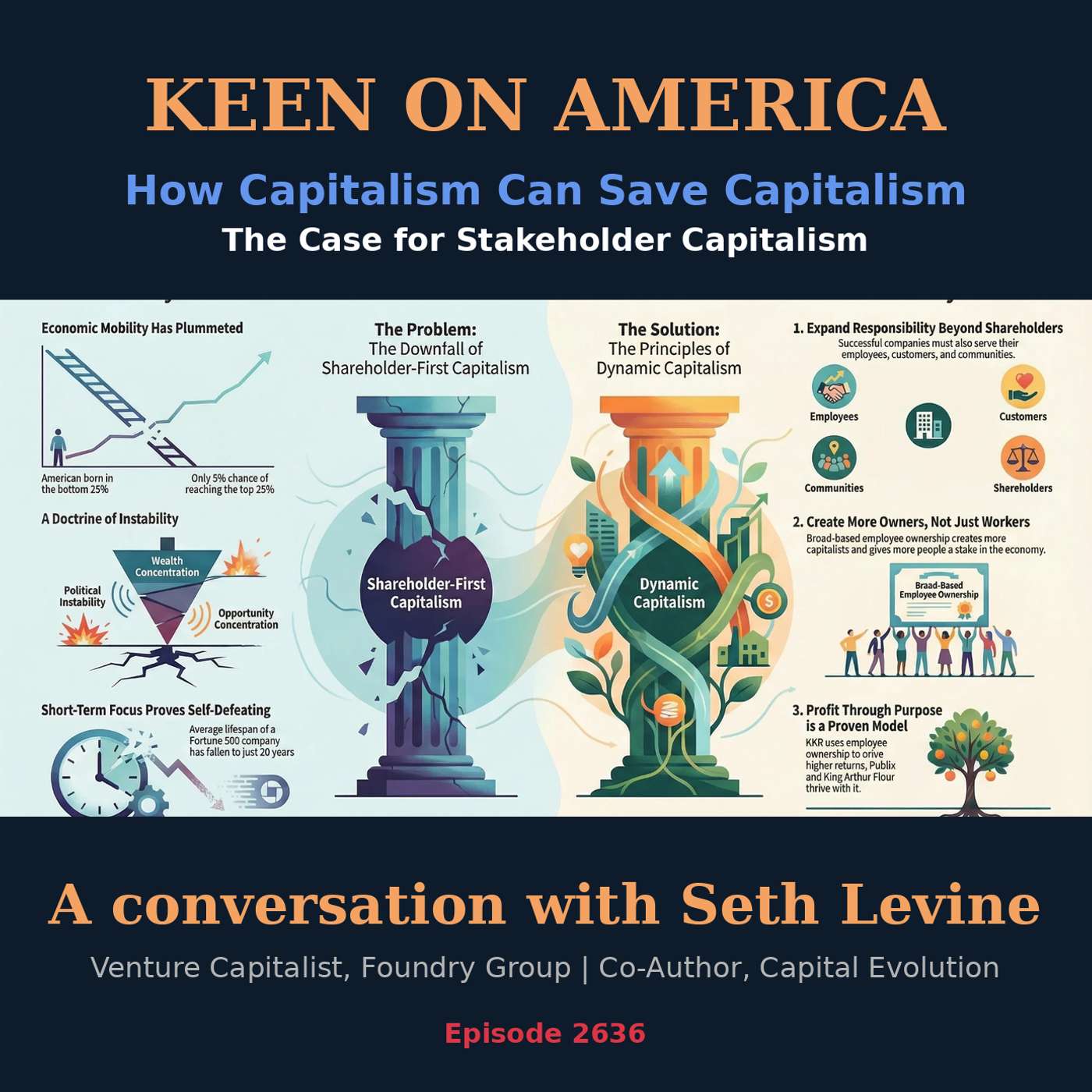
The American economy is a numbers game and those numbers are becoming more and more unfair. “30 years ago, if you were born in the bottom 25th percentile of wealth, you had about a 25% chance of dying in the top 25th percentile.” notes the venture capitalist Seth Levine. “Today you’ve got a 5% chance.” So what to do? What Levine wants is more rather than less capitalism. As he argues in his new co-authored (with Elizabeth MacBride) book, Capital Evolution, “if we want more people to have a stake in the economy, more people have to have a stake in the economy.” Thus the case for what he calls stakeholder capitalism. Only capitalism can save capitalism, Levine argues. Whether that’s Davos-style tautology or the way to right the wrongs of American capitalism is a more complicated question.
This is a public episode. If you'd like to discuss this with other subscribers or get access to bonus episodes, visit keenon.substack.com/subscribe
Episode 2162: Bethanne Patrick on the Hypocrite, Hitler's People and Hum
Episode 2061: Mimi Casteel explains the how to fix America, one sip of wine at a time
Episode 2160: Steve Benen on how the Republicans have become the Orwellian Party of Big Brother
Episode 2159: Richard J. Evans on how leading Nazis were, in some ways, just ordinary middle class Germans
Episode 2158: Robin Bernstein on the Marriage of American Capitalism with the American Prison System
Episode 2157: Lindsey Cormack on How to Raise a Citizen
Episode 2156: James Muldoon exposes the hidden human labor powering the AI revolution
Episode 2155: David Daley Gets Inside the Far Right's 50-Year Plot to Control American Elections
Episode 2154: Shad White on Brett Favre's Mississippi Swindle
Episode 2153: Lola Milholland on Group Living and Other Deliciously Polyamorous Recipes
Episode 2152: Peter Wehner on the Fate of "His" Republican Party
Episode 2151: Edmund Fawcett compares the Futures of Liberalism and Conservatism
Episode 2150: Jonathan Taplin on why American Exceptionalism lies in its Powers of Creativity