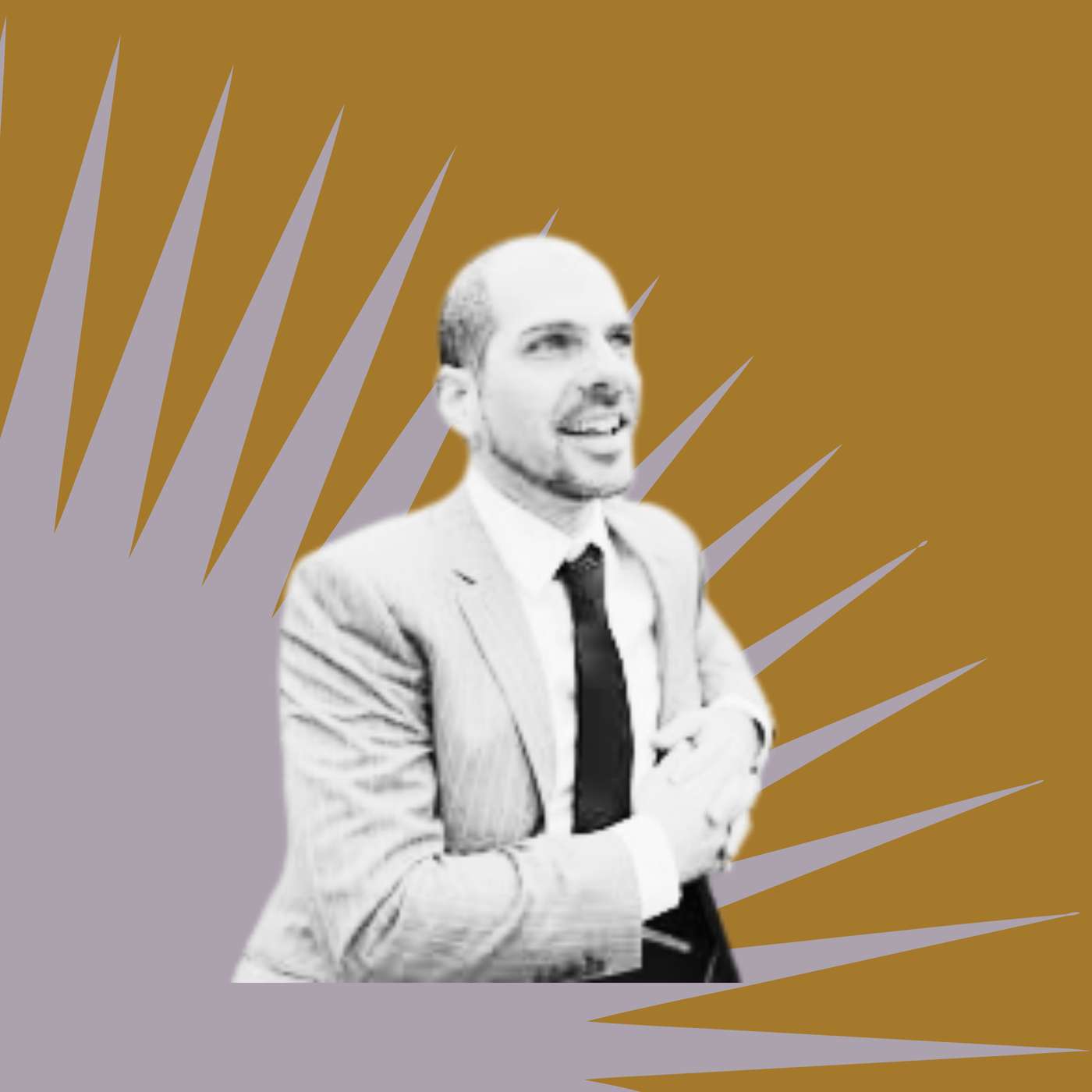
"We are still dealing with a system which tolerates rampant abuse of accused people." — Emily Galvin Almanza
Back in April 2024, we interviewed Thelton Henderson, one of the first African American federal judges in America. What disturbed me about our conversation was that even though Henderson grew up in the late Jim Crow era, he didn't seem to think that America is a profoundly more just place now than it was back then. Today's guest clerked for Judge Henderson, and her new book suggests he's right.
Emily Galvin Almanza is a public defender turned activist, and The Price of Mercy is her data-driven indictment of a criminal justice system that, as she puts it, "tolerates rampant abuse of accused people, tolerates the blatantly racist application of the law, and tolerates a total lack of transparency." According to Almanza, the numbers are damning: 80% of cases are misdemeanors. 80% of people prosecuted are poor enough to need a public defender. 70% of people in jail haven't been convicted—they just can't afford bail. California's gang database was 99% people of color, she says, and famously included literal babies listed as having "admitted their gang affiliation."
And here's both the good and bad news: crime is actually down. If you're under 50, she notes, you're living through the safest period of your lifetime. The solutions aren't mysterious either—housing reduces arrest rates by 80%, after-school programs cut youth violent crime in half. That's all good news for us. But it remains bad for those being unjustifiably prosecuted. We just lack the political will to implement what works. And as Galvin Almanza points out, this isn't a federal issue: 87% of prisoners are in jail on state charges. Change happens at the local level—DAs, sheriffs, state legislatures. The fixes, she says, are realizable. We just need the collective political will. That's the price of mercy in America today.
About the Guest
Emily Galvin Almanza is Executive Director of Partners for Justice and teaches at Stanford Law School. A former public defender, she clerked for Judge Thelton Henderson. Her new book is The Price of Mercy: Unfair Trials, a Violent System, and a Public Defender's Search for Justice in America (2026).
References
People mentioned:
● Thelton Henderson was one of the first African American federal judges in America, a civil rights pioneer for whom Galvin Almanza clerked.
● Michelle Alexander, author of The New Jim Crow, blurbed the book. Galvin Almanza agrees "without hesitation" that we're living in a new Jim Crow system.
● Alec Karakatsanis coined the term "copaganda" for media narratives that undermine smarter criminal justice solutions.
● Clara Shortridge Foltz was a 19th-century lawyer who coined the phrase "free and equal justice" and pioneered the public defender system.
● Andrew Ferguson of GW University appeared on the show recently with a book warning about surveillance.
Key statistics from the book:
● 80% of cases in the system are misdemeanors—trespassing, driving without a license, fare evasion.
● 80% of people prosecuted are poor enough to be assigned a public defender.
● 70% of people in jail haven't been convicted—they're awaiting trial and can't afford bail.
● 87% of prisoners are there on state charges, not federal—making this a local issue.
● Every year of incarceration shaves two years off a person's expected lifespan.
● Being incarcerated cuts a person's expected lifetime earnings in half.
● Giving an unhoused person housing reduces their chances of future arrest by 80%.
● After-school programs can reduce youth involvement in violent crime by 50%.
Concepts discussed:
● Cash bail is a $2 billion per year industry in America. Most civilized countries don't allow you to buy your freedom back from the government.
● "Failure to protect" laws criminalize women who are present while an abusive partner also abuses their child—charging victims as perpetrators.
● Self-defense laws were "designed with two men fighting in an alley in mind"—making them nearly useless for abused women who fight back.
● Gang databases in California were 99% people of color and included babies listed as having "admitted their gang affiliation."
About Keen On America
Nobody asks more awkward questions than the Anglo-American writer and filmmaker Andrew Keen. In Keen On America, Andrew brings his pointed Transatlantic wit to making sense of the United States—hosting daily interviews about the history and future of this now venerable Republic. With nearly 2,800 episodes since the show launched on TechCrunch in 2010, Keen On America is the most prolific intellectual interview show in the history of podcasting.
Website
Substack
YouTube
Apple Podcasts
Spotify
Chapters:
- (00:00) - Introduction: Thelton Henderson
- (02:22) - Has anything changed since the 1960s?
- (03:31) - Why isn't there more outrage?
- (05:46) - Michelle Alexander and the New Jim Crow
- (08:52) - Why is the system this way?
- (10:49) - Democrats vs. Republicans on criminal justice
- (13:14) - Breaking the cycle of poverty and criminalization
- (16:53) - Crime is actually going down
- (19:15) - Peeing on your stoop is a sex crime
- (19:59) - Women in the system: failure to protect
- (23:09) - Moving past punishment
- (26:06) - Nobody wants to marginalize the police
- (28:16) - Black Lives Matter and the march toward justice
- (29:32) - The Minneapolis killings
- (33:04) - Two Americas: Epstein and cash bail
- (39:10) - Can technology help?
- (41:20) - The price of mercy