The China Paradox: Chris Schroeder on what America is Missing
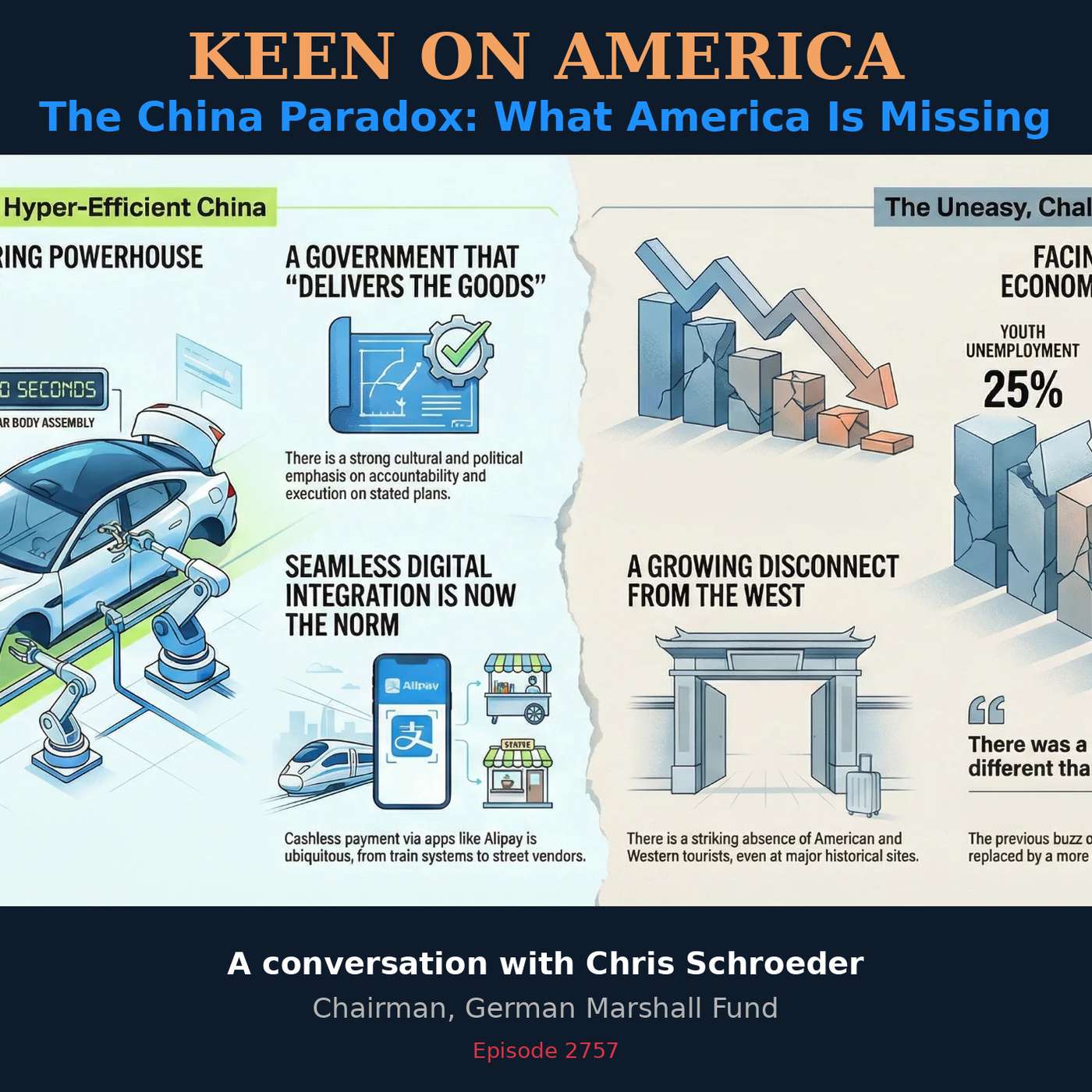
According to the German Marshall Fund chair Chris Schroeder, China both goes to bed and wakes up thinking of China rather than America. How does the Washington DC based Schroeder know? Because, unlike almost all Americans, he actually made the effort of visiting China this year and seeing this vast and paradoxical country for himself. “Curiosity has never been more valuable,” Schroeder warns. “If you are not on the ground, you have no sense of nuance. You get caught in a narrative which is much more macro." And that’s exactly what the global investor and entrepreneur did. He got on the ground - talked to young Chinese entrepreneurs, traveled on high speed rail, saw an entire car assembled in twenty seconds. Americans might not want to obsess over the China paradox. But they should probably occasionally spare a thought for this remarkable country before going to bed or waking up in the morning.
According to German Marshall Fund chair Chris Schroeder, China goes to bed and wakes up thinking about China — not America. How does the Washington, DC-based Schroeder know? Because, unlike almost all Americans, he actually made the effort of visiting China this year and seeing this vast and paradoxical country for himself. “Curiosity has never been more valuable,” he warns. “If you are not on the ground, you have no sense of nuance. You get caught in a narrative which is much more macro.” And that’s exactly what the global investor and entrepreneur did — he talked to young Chinese entrepreneurs, traveled on high-speed rail, saw an entire car assembled in 20 seconds. Americans don’t need to think about China every night or morning. But they would be advised to listen to nuanced and on-the-ground stories of curious travelers like Chris Schroeder.
This is a public episode. If you'd like to discuss this with other subscribers or get access to bonus episodes, visit keenon.substack.com/subscribe
Burn Baby Burn: M.R. O'Connor on the life-giving force of fire to regenerate nature
Ten Years that Didn't Change the World: Vincent Bevins on the global mass protests of 2010-2020 that failed to change anything
The Canceling of the American Mind: Rikki Schlott on why she believes cancel culture is an existential threat to the free speech of both conservatives and progressives
The American Ant King who transformed our understanding of animal behavior: Richard Rhodes on E.O. Wilson and his scientific life in nature
Being less anxious about today's epidemic of anxiety: David Rosmarin on why anxiety is both normal and healthy and how we can thrive with it
The Big Fail or A Big Success? Bethany McLean on what the Covid pandemic reveals about strengths and weaknesses of American healthcare, innovation and capitalism.
It's a Horrible Situation..... I Wish I Could Sound More Cheerful: Former British Ambassador Alexander Hall Hall on Israel, Gaza and the New Global Disorder
The Care Economy as the Highest Stage of Capitalism: Premilla Nadasen explains why we need to bring care back to what she calls the "care" economy of healthcare and teaching
How to get to a regenerative future before we blow ourselves up: Trond Undheim on averting the end of the world by 2075
An obscure 1722 naval battle off the coast of West Africa which had a monumental impact on the history of America: Angela C. Sutton on the battle of Cape Lopez and the birth of chattel slavery as an American institution
Placing African-Americans at the center of their own story: Dylan Penningroth excavates the hidden histories of Black civil rights in 19th and 20th century America
Why cheap food isn't really cheap: Will Harris on the repellant nature of industrial farming and why the future of food should be local
What makes writing, speaking and computer programming similarly human activities: Michael Littman on why all humans, in our AI age, should learn a little programming