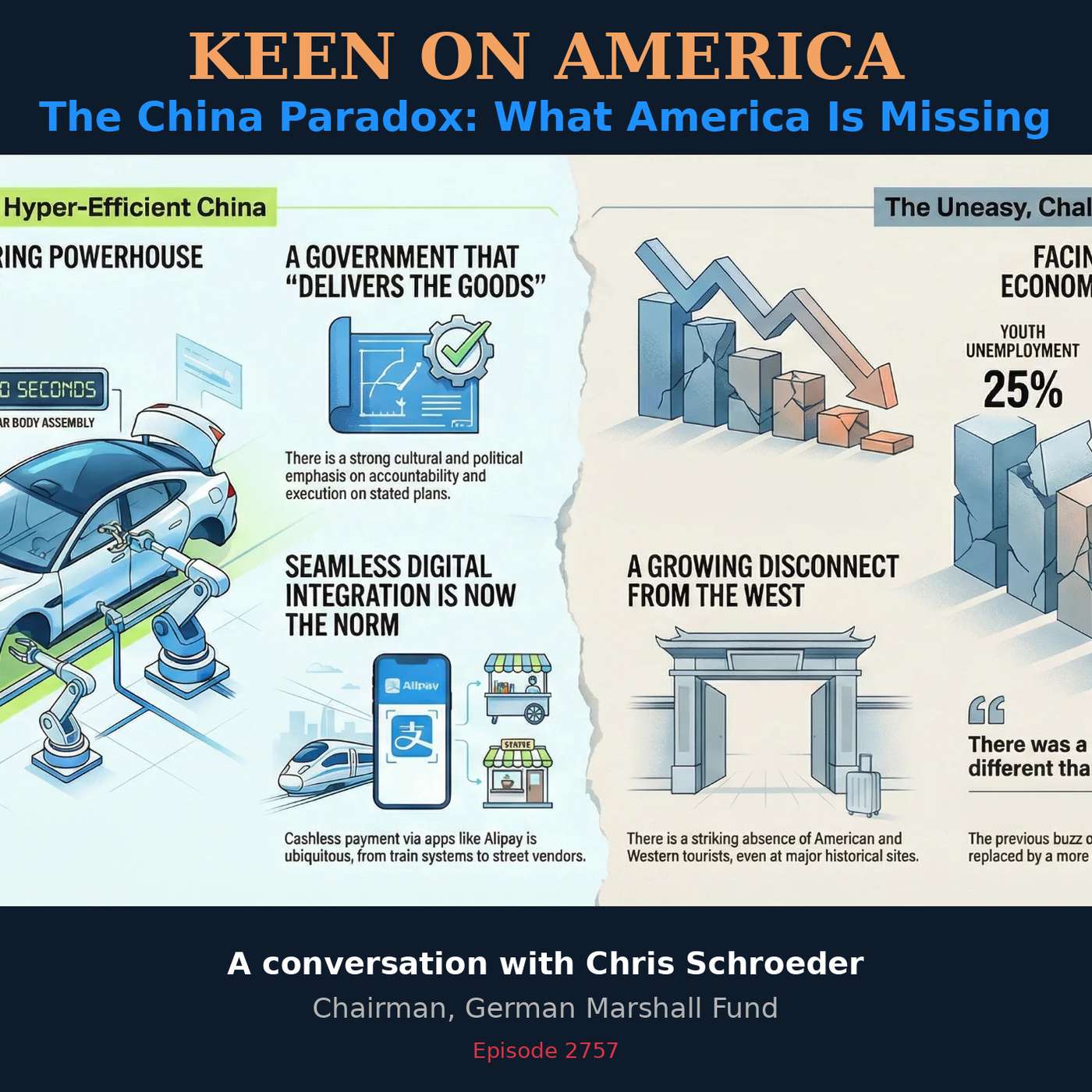
According to the German Marshall Fund chair Chris Schroeder, China both goes to bed and wakes up thinking of China rather than America. How does the Washington DC based Schroeder know? Because, unlike almost all Americans, he actually made the effort of visiting China this year and seeing this vast and paradoxical country for himself. “Curiosity has never been more valuable,” Schroeder warns. “If you are not on the ground, you have no sense of nuance. You get caught in a narrative which is much more macro." And that’s exactly what the global investor and entrepreneur did. He got on the ground - talked to young Chinese entrepreneurs, traveled on high speed rail, saw an entire car assembled in twenty seconds. Americans might not want to obsess over the China paradox. But they should probably occasionally spare a thought for this remarkable country before going to bed or waking up in the morning.
According to German Marshall Fund chair Chris Schroeder, China goes to bed and wakes up thinking about China — not America. How does the Washington, DC-based Schroeder know? Because, unlike almost all Americans, he actually made the effort of visiting China this year and seeing this vast and paradoxical country for himself. “Curiosity has never been more valuable,” he warns. “If you are not on the ground, you have no sense of nuance. You get caught in a narrative which is much more macro.” And that’s exactly what the global investor and entrepreneur did — he talked to young Chinese entrepreneurs, traveled on high-speed rail, saw an entire car assembled in 20 seconds. Americans don’t need to think about China every night or morning. But they would be advised to listen to nuanced and on-the-ground stories of curious travelers like Chris Schroeder.
This is a public episode. If you'd like to discuss this with other subscribers or get access to bonus episodes, visit
keenon.substack.com/subscribe