Karen Hao has been warning us about Sam Altman’s OpenAI for a while now. In her bestselling Empire of AI, she argues that the Silicon Valley startup is a classic colonial power, akin to Britain’s East India Company. Like those colonial merchants and policy makers who wrapped profit-seeking in civilizing missions, OpenAI cloaks its relentless scaling ambitions behind the noble goal of "ensuring artificial general intelligence benefits all of humanity." But as Hao reveals, this pursuit comes at enormous cost—environmental devastation, exploited labor, and the extraction of data from communities worldwide. The parallels are striking: a private corporation accumulating unprecedented resources and power, operating with minimal oversight while externalizing the harms of its empire-building to those least able to resist.
Five Key Takeaways
1. OpenAI is a Modern Corporate Empire Hao argues OpenAI operates like the British East India Company—a private corporation wrapped in a "civilizing mission" that extracts resources globally while externalizing costs to vulnerable communities. The company's stated goal of "benefiting all humanity" serves as ideological cover for profit-driven expansion.
2. AI Development Didn't Have to Be This Destructive Before OpenAI's "scaling at all costs" approach, researchers were developing smaller, more efficient AI models using curated datasets. OpenAI deliberately chose quantity over quality, leading to massive computational requirements and environmental damage that could have been avoided.
3. The Climate and Social Costs Are Staggering McKinsey estimates global energy grids need to add 2-6 times California's annual consumption to support AI infrastructure expansion. This means retired coal plants staying online, new methane turbines in working-class communities, and data centers consuming public drinking water in drought-prone areas.
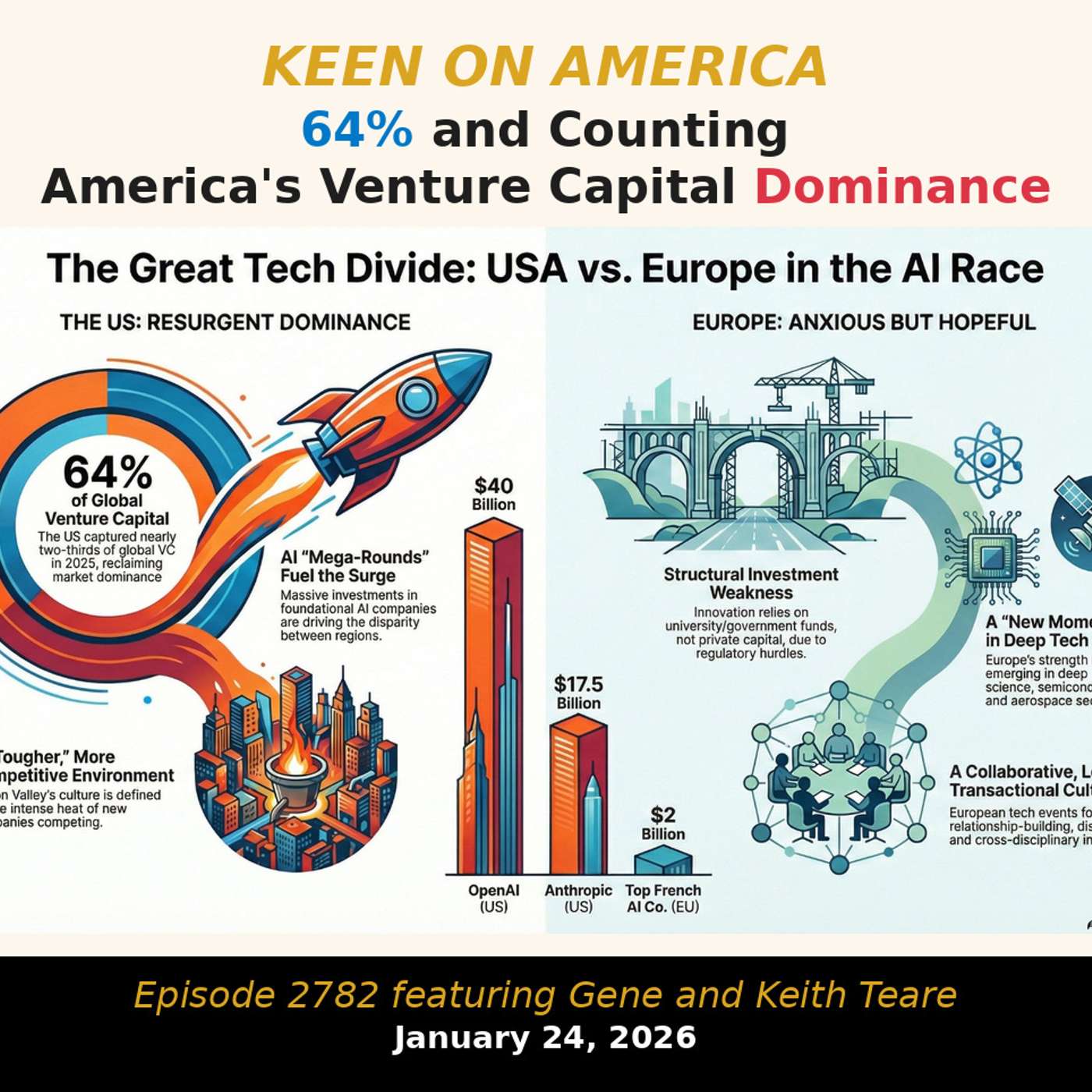
4. The Business Model May Be Unsustainable Despite raising $40 billion (Silicon Valley's largest private investment), OpenAI hasn't demonstrated how to monetize at that scale. Subscriptions don't cover operational costs, leading to considerations of thousand-dollar monthly fees or surveillance-based advertising models.
5. Resistance is Possible and Already Happening Communities worldwide are successfully pushing back—from Chilean residents stalling Google data centers for five years to artists suing over intellectual property theft. Hao argues collective action across AI's supply chain can force a shift toward more democratic, community-centered development.
Karen Hao is an award-winning journalist covering the impacts of artificial intelligence on society. She writes for publications including The Atlantic and leads the Pulitzer Center’s AI Spotlight Series, a program training thousands of journalists around the world on how to cover AI. She was formerly a reporter for the Wall Street Journal, covering American and Chinese tech companies, and a senior editor for AI at MIT Technology Review. Her work is regularly taught in universities and cited by governments. She has received numerous accolades for her coverage, including an American Humanist Media Award and American National Magazine Award for Journalists Under 30. She received her Bachelor of Science in mechanical engineering from MIT.
Named as one of the "100 most connected men" by GQ magazine, Andrew Keen is amongst the world's best known broadcasters and commentators. In addition to presenting the daily KEEN ON show, he is the host of the long-running How To Fix Democracy interview series. He is also the author of four prescient books about digital technology: CULT OF THE AMATEUR, DIGITAL VERTIGO, THE INTERNET IS NOT THE ANSWER and HOW TO FIX THE FUTURE. Andrew lives in San Francisco, is married to Cassandra Knight, Google's VP of Litigation & Discovery, and has two grown children.
Keen On America is a reader-supported publication. To receive new posts and support my work, consider becoming a free or paid subscriber.
This is a public episode. If you'd like to discuss this with other subscribers or get access to bonus episodes, visit
keenon.substack.com/subscribe