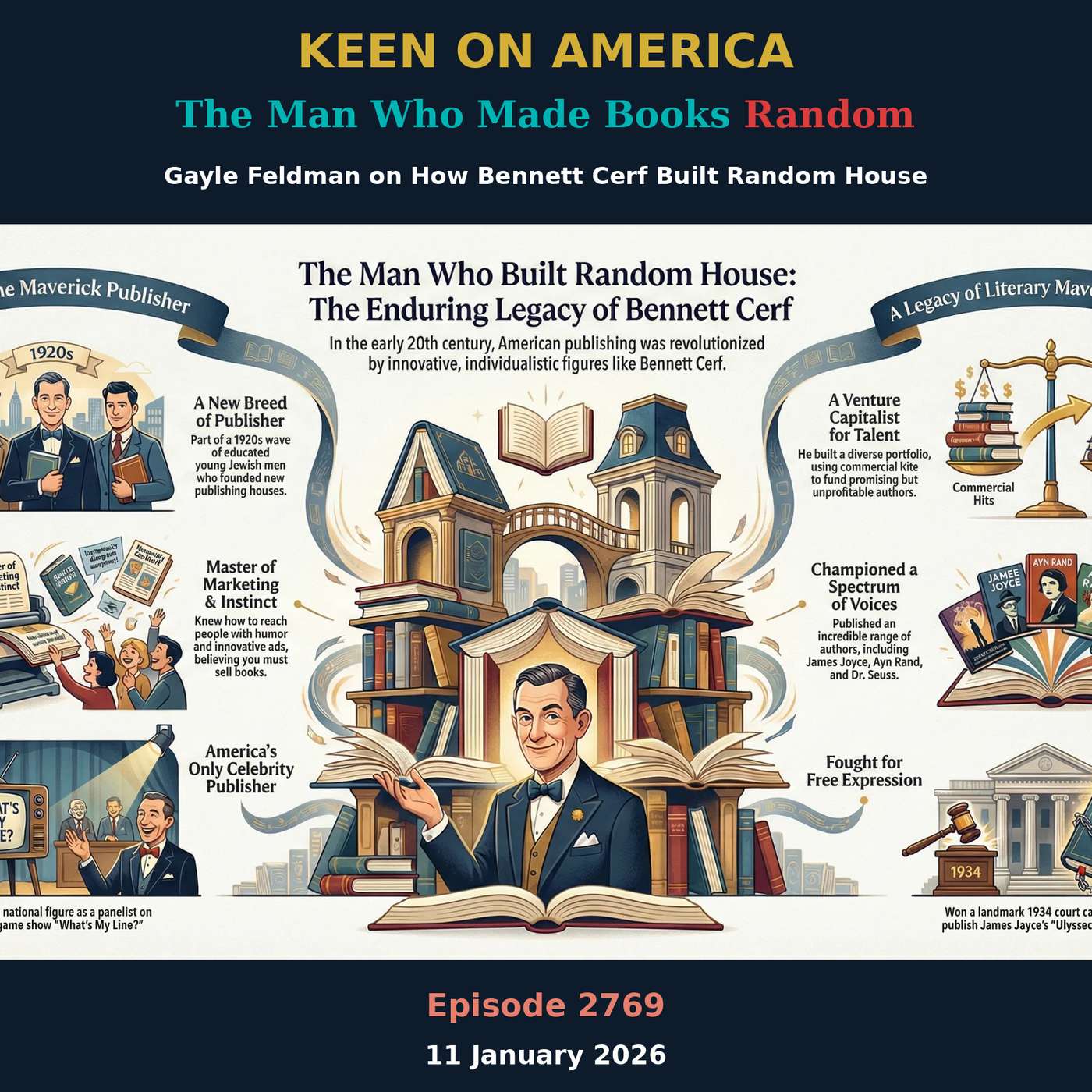

The Man Who Made Books Random
There was a time in the mid 20th century, the literary historian Gayle Feldman reminds us, when the book business was cool. Back then, New York publishing resembled Silicon Valley tech and the Mark Zuckerberg of his day was the Random House founder Bennett Cerf. In her new biography of Cerf, Nothing Random, Feldman tells the story of this celebrity entrepreneur, noting that he helped pioneer the publishing industry’s venture capitalist style business model which enabled hit authors like Ayn Rand or Dr Seuss to finance start-up writers like Cormac McCarthy. Those were the days, a slightly wistful Feldman reminisces. She’s right. If only today’s corporate publishing industry could recapture some of that Cerfian magic. Then books might become cool again.
Keen On America is a reader-supported publication. To receive new posts and support my work, consider becoming a free or paid subscriber.
This is a public episode. If you'd like to discuss this with other subscribers or get access to bonus episodes, visit keenon.substack.com/subscribe
Jo-Ann Mort: How Poets Could Bring Peace to Israel and Palestine
Michael Blanding: Was Shakespeare a Plagiarist?
Charles Dellheim: How Jews Made the Art World Modern
Vegard Skirbekk: Why We Need to Bring Down Global Birth Dates and Have Fewer Children
Rowan Hooper: How to Save the World For Just a Trillion Dollars
Levi Vonk: The Moral Case for Demilitarizing the Southern Border
Nick Marx: Can Conservatives Be Funny?
Danica Roem: Why We Should Judge All Politicians Through the Prism of Authenticity
Sam W. Haynes: How Everyone—Left and Right—Has Misrepresented the History of Texas
Alice Sherwood: Should We Really Want to Reclaim "Reality" in Our Counterfeit World?
Tripp Mickle: How Apple Appears to Have Lost Its Soul in the Post-Steve Jobs Era
Scott Hershovitz: How to Nurture the Philosopher In All Our Kids
John A. List: Why Quitting Good Ideas Is Often a Winning Strategy