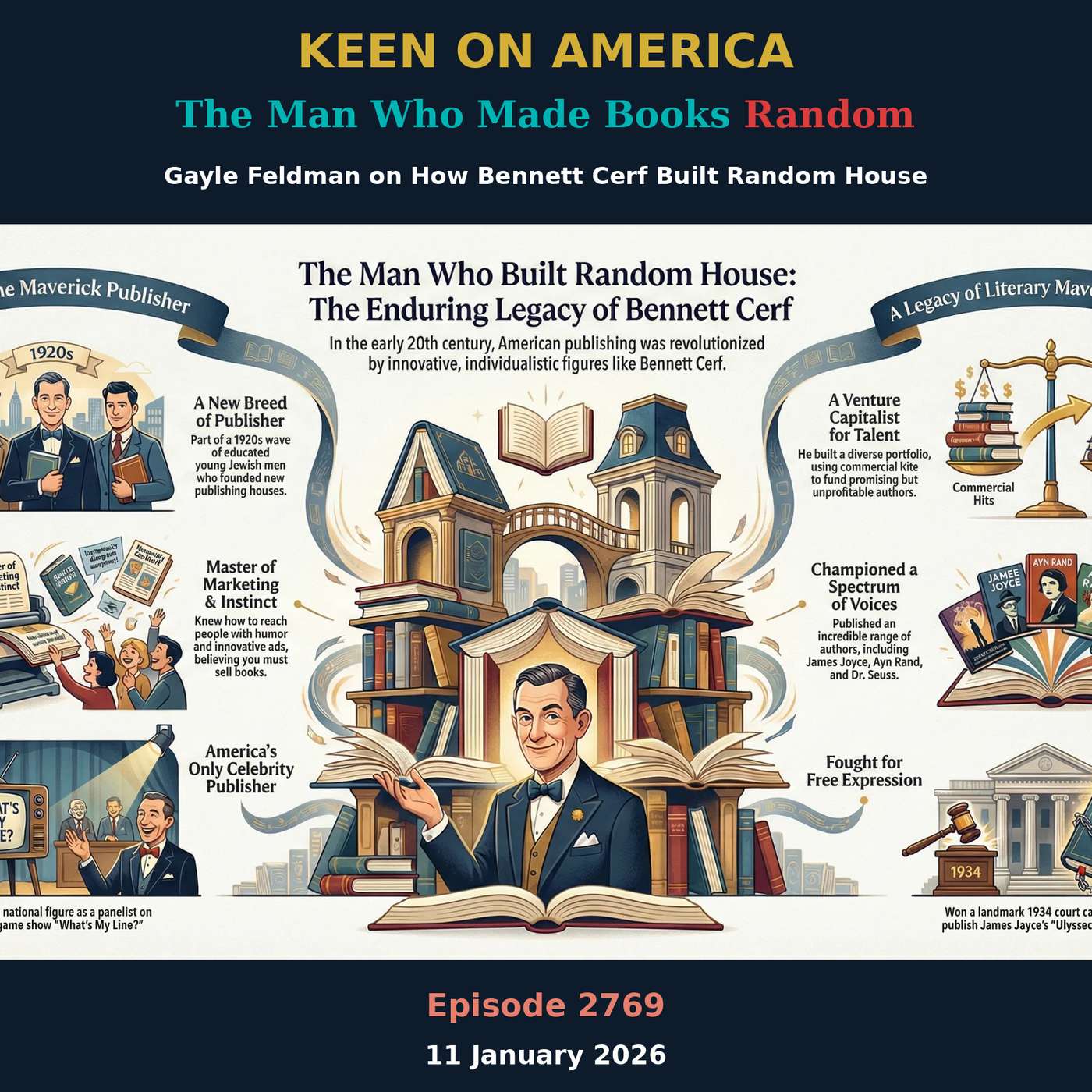

The Man Who Made Books Random
There was a time in the mid 20th century, the literary historian Gayle Feldman reminds us, when the book business was cool. Back then, New York publishing resembled Silicon Valley tech and the Mark Zuckerberg of his day was the Random House founder Bennett Cerf. In her new biography of Cerf, Nothing Random, Feldman tells the story of this celebrity entrepreneur, noting that he helped pioneer the publishing industry’s venture capitalist style business model which enabled hit authors like Ayn Rand or Dr Seuss to finance start-up writers like Cormac McCarthy. Those were the days, a slightly wistful Feldman reminisces. She’s right. If only today’s corporate publishing industry could recapture some of that Cerfian magic. Then books might become cool again.
Keen On America is a reader-supported publication. To receive new posts and support my work, consider becoming a free or paid subscriber.
This is a public episode. If you'd like to discuss this with other subscribers or get access to bonus episodes, visit keenon.substack.com/subscribe
Sy Montgomery: How Hawks Teach Us a Different Way to Love
Rebecca Schiller: How to Write a Literary Memoir About Neurodivergency
Edward Sullivan: How Authentic Conversation Can Unlock Our Creativity, Our Purpose, and Our Happiness
Lis Wiehl: Why Robert Hanssen Was America's Most Damaging Spy
Toni Bentley on George Balanchine, the Man Who Loved Women
David Kirkpatrick: From Tragedy to Farce: On the Changing Story of Facebook
Joel Simon: How the Infodemic Is Making the World Sicker and Less Free
Richard Overy: Has the Second World War Ended Yet?
Viktor Mayer-Schönberger: Why Free Access Is the Key to Fixing Big Tech Monopolies
John Thornhill: What Do Startup Entrepreneurs and Authors Have in Common?
Mickey Huff: Can We Trust Anything We Read in the Media These Days?
C. Fred Bergsten: Why Trump and Biden Are Dangerously Wrong About China
Introducing Storybound