Why Today's AI Boom Is No Dot-Com Bubble
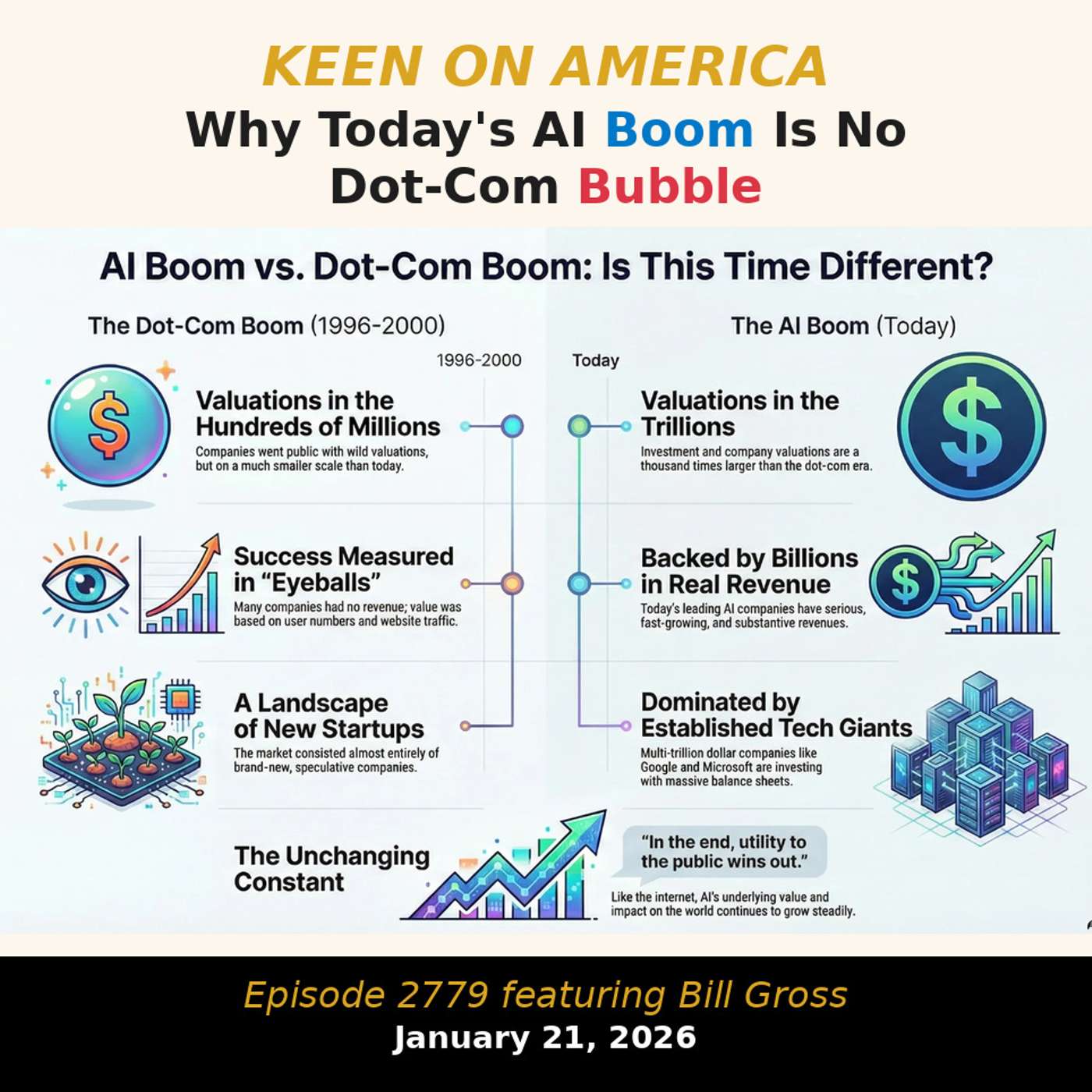
Few people experienced the Dot-Com bubble with more vertiginous intensity than Bill Gross, the Pasadena-based founder of Idealab and many many other internet startups over the last 30 years. So when I sat down with Gross at DLD, I couldn’t resist opening with the boom/bubble gambit. How, I asked him, does today’s AI hysteria compare with the Web 1.0 madness of the Nineties? While Gross - whose current ProRata.ai play is focused on protecting creativity in the age of generative AI - doesn’t believe that today’s boom is akin to the Dot-Com bubble, there are similarities. We are at what Gross calls a “Napster moment” in terms of making the big LLMs accountable for all the content they are illegally crawling (ie: stealing). And to get beyond this moment, he says, everyone from Google and OpenAI to Perplexity and Anthropic, needs to move to a “Spotify model” that fairly shares revenue with the human creators of knowledge.
Keen On America is a reader-supported publication. To receive new posts and support my work, consider becoming a free or paid subscriber.
This is a public episode. If you'd like to discuss this with other subscribers or get access to bonus episodes, visit keenon.substack.com/subscribe
How to direct the power of digital technology into economic and political progress: Simon Johnson on what we can learn from our 1000-year struggle over technology and prosperity to make our age of Generative AI more equitable
On the science of failing well: Amy Edmondson explains why we need to take smart risks which will result in more, rather than fewer, failures
Don't Look Away: Alexander Batthyany on terminal lucidity, the "soul" and our final journey when we cross over the border from life to death
Extremely Socially Online: Taylor Lorenz on the untold story of fame, influence, and power on the internet
How to break free of "equality feminism": Marcie Bianco on the lie of equality and the feminist fight for freedom
Taming the Street then and now: Diana Henriques on the New Deal, FDR's fight to regulate American capitalism and its relevance in Joe Biden's America today
Was Richard Nixon really a Southern Californian paragon of cheerfulness , hard work and decency? Paul Carter's defense of the only US President born and raised in California
The Dirty Secrets of our Material World: Ed Conway on the six physical commodities underpinning the global extractive economy
An Un-Whitewashed Story of America: Michael Harriot on AF History, Black Twitter and how he "discovered" America at 8.00 pm on November 4, 1980
Eight great non-fiction reads for the Fall: LA Times book critic Bethanne Patrick on new books about video-gaming writers, Roman emperors, Rastafarian fathers, Jerusalem murders, American guns and the genealogy of the female body
Why money now is the most valuable commodity in Silicon Valley: Keith Teare explains how cash has become king for both tech investors and entrepreneurs
When fictional characters turn out to be more authentic than real people: Lang Leav on anti Asian racism in Australia and her love of the early internet as a place where she could escape how she looks
How Bill Clinton betrayed progressive ideas and capitulated to the right: Nelson Lichtenstein on the failure of the Clinton presidency and the transformation of American capitalism