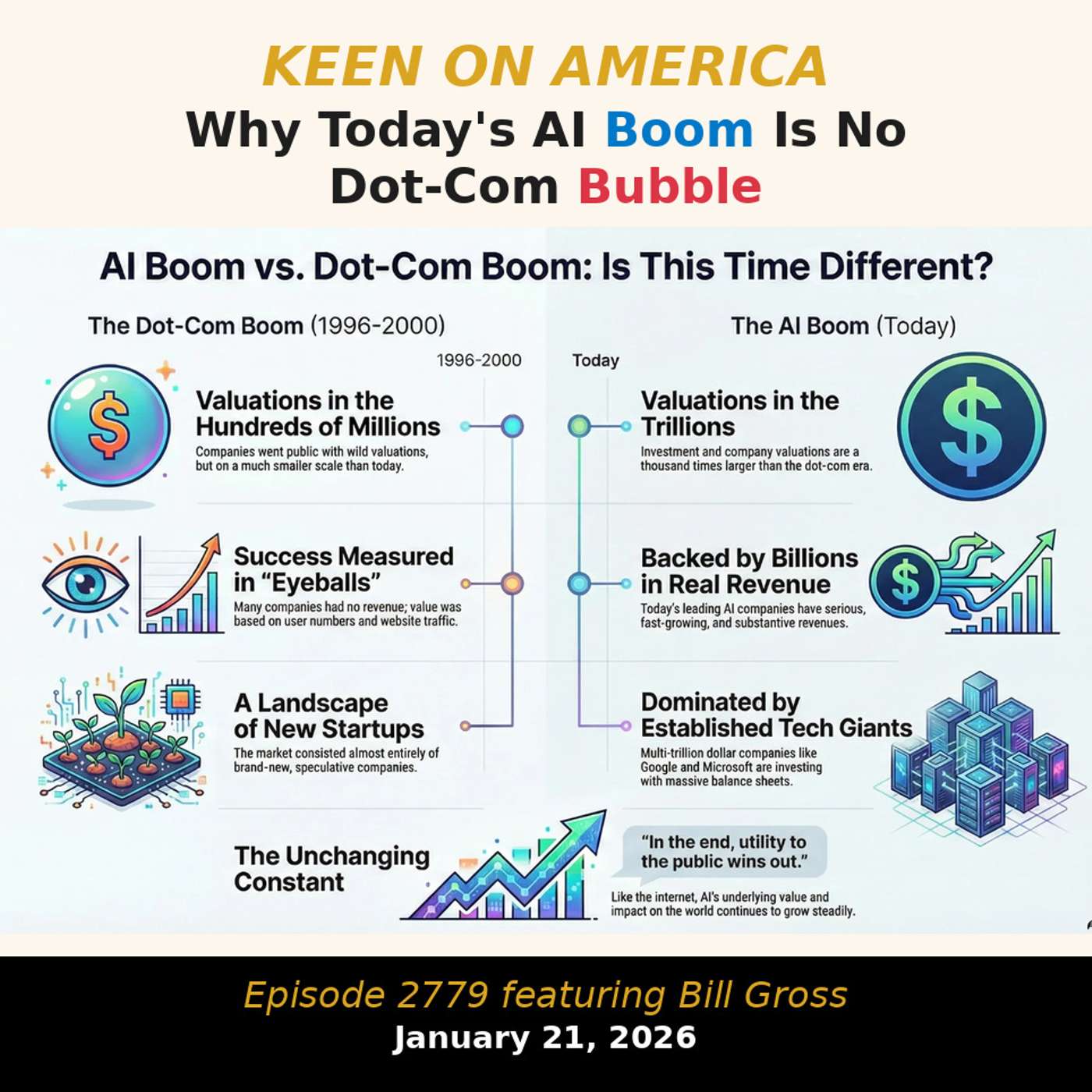

Why Today's AI Boom Is No Dot-Com Bubble
Few people experienced the Dot-Com bubble with more vertiginous intensity than Bill Gross, the Pasadena-based founder of Idealab and many many other internet startups over the last 30 years. So when I sat down with Gross at DLD, I couldn’t resist opening with the boom/bubble gambit. How, I asked him, does today’s AI hysteria compare with the Web 1.0 madness of the Nineties? While Gross - whose current ProRata.ai play is focused on protecting creativity in the age of generative AI - doesn’t believe that today’s boom is akin to the Dot-Com bubble, there are similarities. We are at what Gross calls a “Napster moment” in terms of making the big LLMs accountable for all the content they are illegally crawling (ie: stealing). And to get beyond this moment, he says, everyone from Google and OpenAI to Perplexity and Anthropic, needs to move to a “Spotify model” that fairly shares revenue with the human creators of knowledge.
Keen On America is a reader-supported publication. To receive new posts and support my work, consider becoming a free or paid subscriber.
This is a public episode. If you'd like to discuss this with other subscribers or get access to bonus episodes, visit keenon.substack.com/subscribe
The Case for "Regime Change" in Iran: Majid Sadeghpour on why the Current Iranian Theocracy can't be Reformed
How to Kick Addictive Ideologies: Dr Emily Bashah on ending violence in Israel/Palestine
The Return of the Dissident Academic Model: Balazs Trencsenyi on the Invisible University for Ukraine
Eleanor Shearer on RIVER SING ME HOME: A post-slavery West Indian novel celebrating motherhood and female resilience.
When Everyone Leads: Julia Fabris McBride on what she claims as a "revolutionary approach" to fixing our toughest challenges
The Revolution WILL Be Podcasted: Zencastr founder Josh Nielsen on the democratization of professional podcasting
Will Donald Trump EVER Go to Jail? Elie Honig on Trump's Houdini-like Ability To Get Away With It
Why the Second World War Still Hasn't Ended in the Netherlands: Nina Siegal on Dutch Moral Complicity in the Nazi Persecution of Holland's Jews
Dean Koontz on how to Sell 500 Million Books and Why AI Engines like ChatGPT Will Never Replicate the Human "Soul"
What Will Things Be like in 60,000 Years time? Annalee Newitz imagines the future of species, real-estate, love and dogs who shun humans
The Death of Unicorns, the birth of AI and the irrelevance of social media: That Was the Week in Tech for 1.27.23
Journeys of a Humanitarian: How Jane Olson Emulated her Heroine Eleanor Roosevelt to Become a World Citizen
In the Nation's Service: Philip Taubman on George P. Shultz's UnTrumpian Role in Ending the Cold War