Understanding the Mechanics of Due Process: A Deep Dive
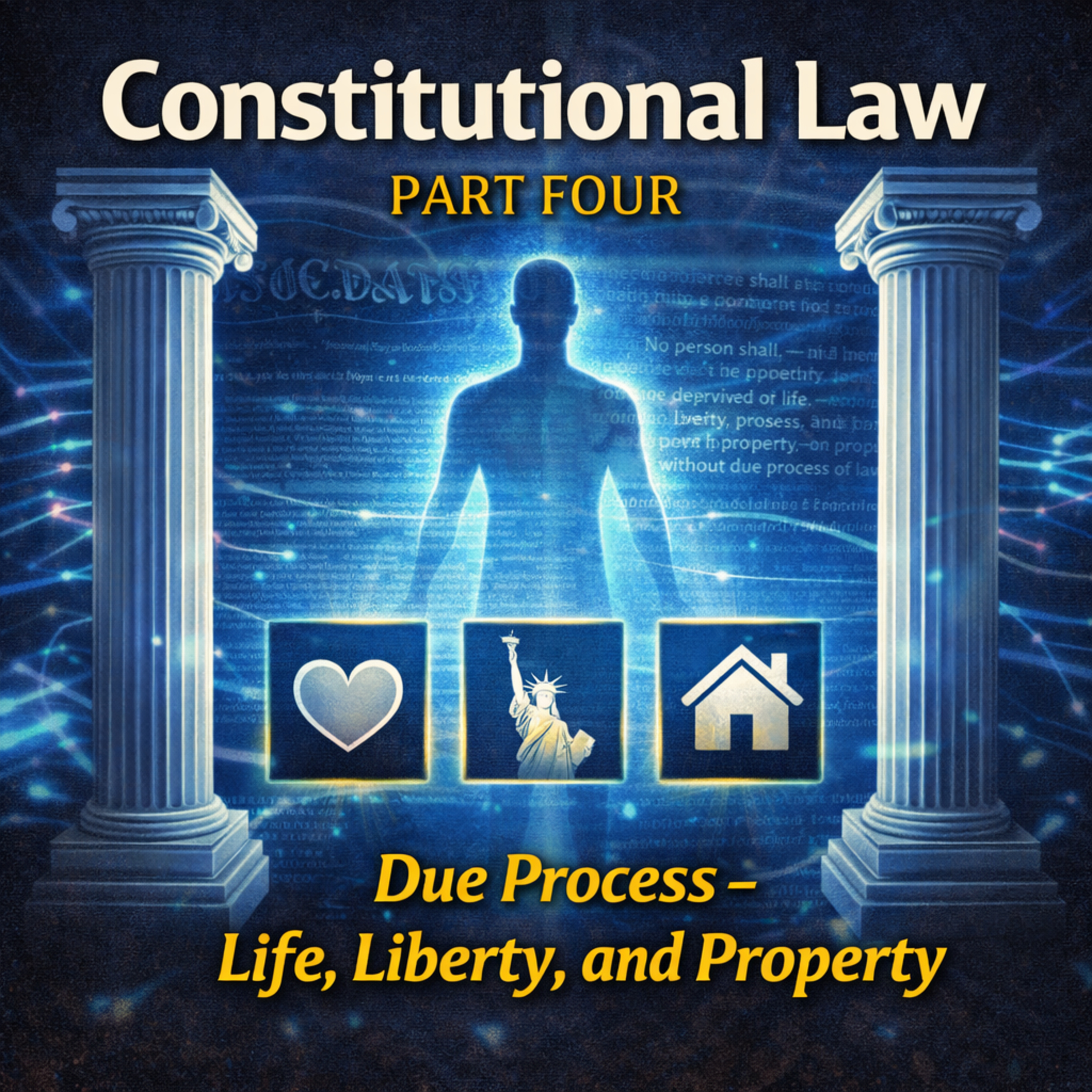
In this episode of the deep dive, the hosts explore the intricate mechanics of the U.S. Constitution, focusing specifically on the due process clauses found in the Fifth and Fourteenth Amendments. He emphasizes the importance of understanding these clauses for law students and bar exam candidates, as they serve as the foundation for constitutional litigation. The discussion begins with a breakdown of due process, highlighting its role as a gatekeeper for government intervention in personal liberties. The hosts elaborate on the distinction between procedural and substantive due process, explaining how each operates within the legal framework and the implications for individual rights.
The episode delves into the complexities of procedural due process, detailing the necessary steps for legal analysis, including the Matthews v. Eldridge balancing test. The hosts also address substantive due process, tracing its historical evolution and the criteria for determining fundamental rights. He discusses landmark cases that have shaped the understanding of these rights, such as Griswold v. Connecticut and Lawrence v. Texas, while also touching on the ongoing debate surrounding the interpretation of liberty in constitutional law. The episode concludes with a synthesis of the key concepts, providing listeners with a roadmap for approaching due process issues in legal examinations.
In the realm of constitutional law, mastering the intricacies of procedural and substantive due process is essential for any law student or legal professional. This blog post delves into the fundamental aspects of due process, exploring its significance in the US Constitution and its application in legal proceedings.
Procedural Due Process: The How
Procedural due process is all about the fairness of the procedures used by the government when it takes away someone's life, liberty, or property. It ensures that individuals receive notice and an opportunity to be heard before any governmental deprivation. The key is to determine whether a protected interest is at stake and what kind of process is required. The Matthews v. Eldridge balancing test is crucial here, weighing the individual's interest, the risk of error, and the government's interest.
Substantive Due Process: The What
Substantive due process, on the other hand, questions the legitimacy of the law itself. It asks whether the government has a compelling reason to regulate a particular aspect of life. This doctrine has evolved over time, with the court recognizing various fundamental rights related to privacy and personal autonomy. The bifurcated standard of review—strict scrutiny for fundamental rights and rational basis for non-fundamental rights—guides the analysis.
Understanding the distinction between procedural and substantive due process is vital for navigating constitutional law. By following the structured framework and applying the appropriate tests, legal professionals can effectively analyze due process issues. As the legal landscape continues to evolve, the tension between historical precedent and evolving liberty remains a central theme in constitutional law.
Takeaways
Due process is the bedrock of constitutional litigation.
The Fifth Amendment applies to federal actions, while the Fourteenth Amendment applies to state actions.
Procedural due process focuses on the fairness of the procedures used by the government.
due process, constitutional law, Fifth Amendment, Fourteenth Amendment, procedural due process, substantive due process, law school, bar exam, legal analysis, fundamental rights