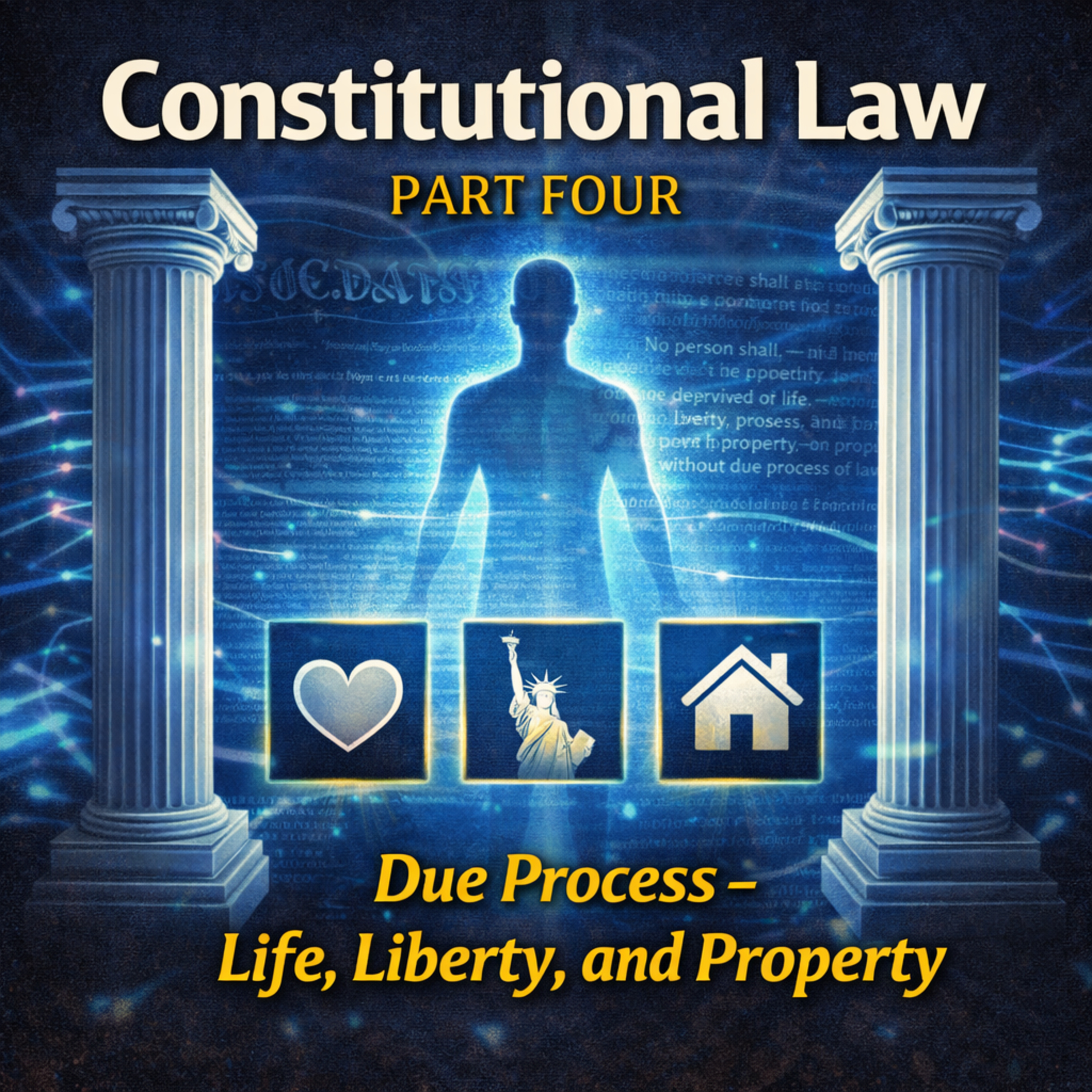
Constitutional Law Part Four: Due Process - Life, Liberty, and Property

Constitutional Law Part Four: Due Process - Life, Liberty, and Property

Author: The Law School of America January 22, 2026 Duration: 42:17

Understanding the Mechanics of Due Process: A Deep Dive


In this episode of the deep dive, the hosts explore the intricate mechanics of the U.S. Constitution, focusing specifically on the due process clauses found in the Fifth and Fourteenth Amendments. He emphasizes the importance of understanding these clauses for law students and bar exam candidates, as they serve as the foundation for constitutional litigation. The discussion begins with a breakdown of due process, highlighting its role as a gatekeeper for government intervention in personal liberties. The hosts elaborate on the distinction between procedural and substantive due process, explaining how each operates within the legal framework and the implications for individual rights.


The episode delves into the complexities of procedural due process, detailing the necessary steps for legal analysis, including the Matthews v. Eldridge balancing test. The hosts also address substantive due process, tracing its historical evolution and the criteria for determining fundamental rights. He discusses landmark cases that have shaped the understanding of these rights, such as Griswold v. Connecticut and Lawrence v. Texas, while also touching on the ongoing debate surrounding the interpretation of liberty in constitutional law. The episode concludes with a synthesis of the key concepts, providing listeners with a roadmap for approaching due process issues in legal examinations.


In the realm of constitutional law, mastering the intricacies of procedural and substantive due process is essential for any law student or legal professional. This blog post delves into the fundamental aspects of due process, exploring its significance in the US Constitution and its application in legal proceedings.


Procedural Due Process: The How

Procedural due process is all about the fairness of the procedures used by the government when it takes away someone's life, liberty, or property. It ensures that individuals receive notice and an opportunity to be heard before any governmental deprivation. The key is to determine whether a protected interest is at stake and what kind of process is required. The Matthews v. Eldridge balancing test is crucial here, weighing the individual's interest, the risk of error, and the government's interest.


Substantive Due Process: The What

Substantive due process, on the other hand, questions the legitimacy of the law itself. It asks whether the government has a compelling reason to regulate a particular aspect of life. This doctrine has evolved over time, with the court recognizing various fundamental rights related to privacy and personal autonomy. The bifurcated standard of review—strict scrutiny for fundamental rights and rational basis for non-fundamental rights—guides the analysis.


Understanding the distinction between procedural and substantive due process is vital for navigating constitutional law. By following the structured framework and applying the appropriate tests, legal professionals can effectively analyze due process issues. As the legal landscape continues to evolve, the tension between historical precedent and evolving liberty remains a central theme in constitutional law.


Takeaways

Due process is the bedrock of constitutional litigation.

The Fifth Amendment applies to federal actions, while the Fourteenth Amendment applies to state actions.

Procedural due process focuses on the fairness of the procedures used by the government.


due process, constitutional law, Fifth Amendment, Fourteenth Amendment, procedural due process, substantive due process, law school, bar exam, legal analysis, fundamental rights

Ever wondered how the law really works but felt intimidated by dense textbooks and jargon? Law School, from The Law School of America, is here to change that. This podcast approaches legal education like a series of engaging conversations, breaking down the foundational principles of the American legal system into clear, manageable segments. Each episode focuses on a specific concept or area, building your comprehension step-by-step without overwhelming you. You'll hear straightforward explanations that connect theory to real-world application, making complex topics accessible whether you're a student, a professional in a related field, or simply a curious citizen. The goal is to demystify the law, transforming it from an abstract subject into a practical understanding you can use. By consistently tuning in, you gradually construct a solid framework of legal knowledge. This isn't about quick tricks; it's about dedicated, cumulative learning. The structure of the podcast is designed for steady progress, allowing listeners to absorb information at their own pace and truly integrate it. Think of it as an audio companion for your intellectual journey into jurisprudence, offering clarity and insight one episode at a time.
Author: Language: en-us Episodes: 100

Law School
Podcast Episodes
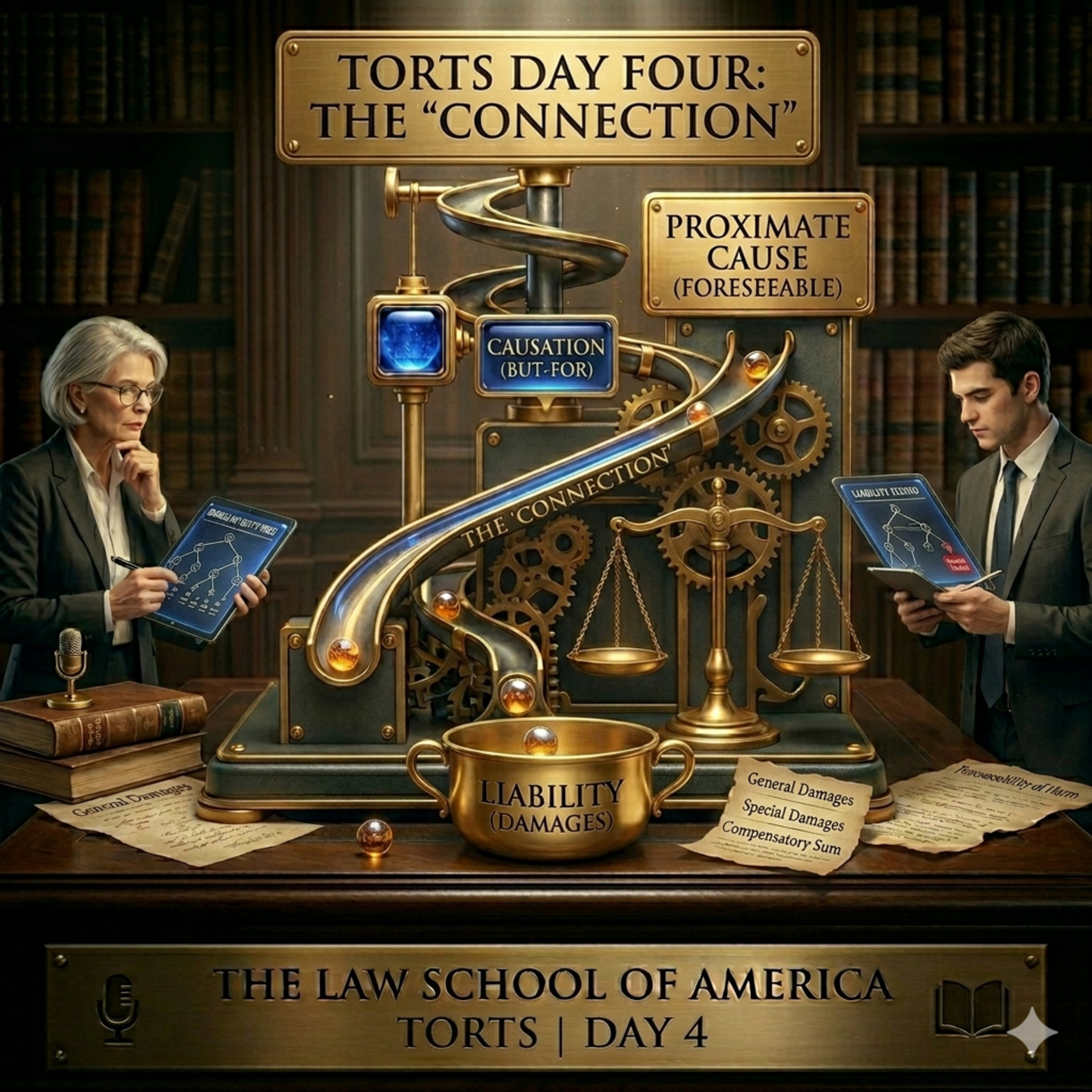
Torts Day Four: The "Connection" [not-audio_url] [/not-audio_url]

Duration: 58:32
In this episode, we explore the core principles and intricate mechanics of tort law, focusing on how courts connect careless acts to injuries and assign responsibility. From the factual causation to the nuanced doctrines…
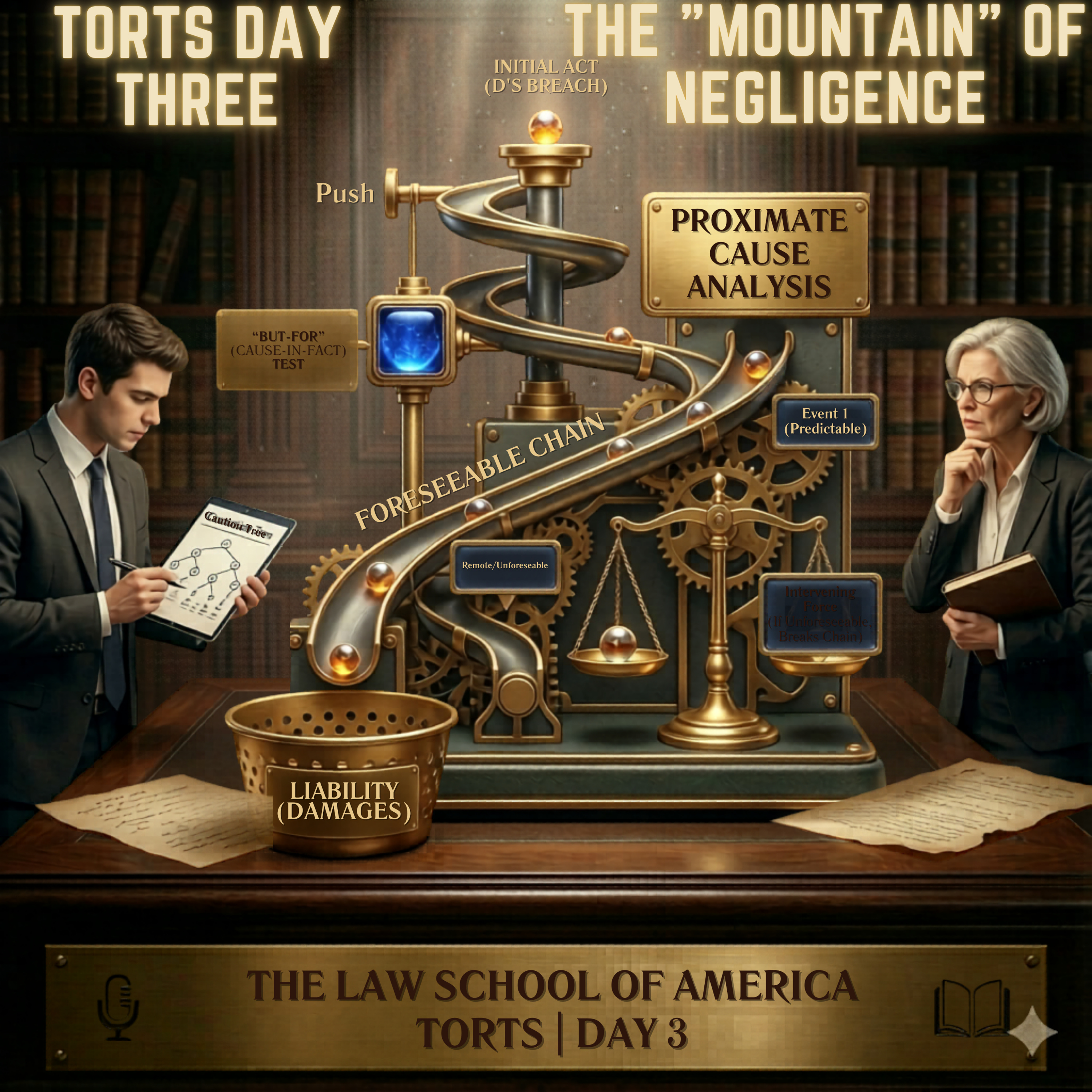
Torts Day Three: The "Mountain" of Negligence [not-audio_url] [/not-audio_url]

Duration: 1:01:53
In this episode, we explore the fundamental doctrines of negligence—the most crucial foundation of personal injury law—and decode how courts determine fault through duty and breach analysis. Whether you're a law student,…
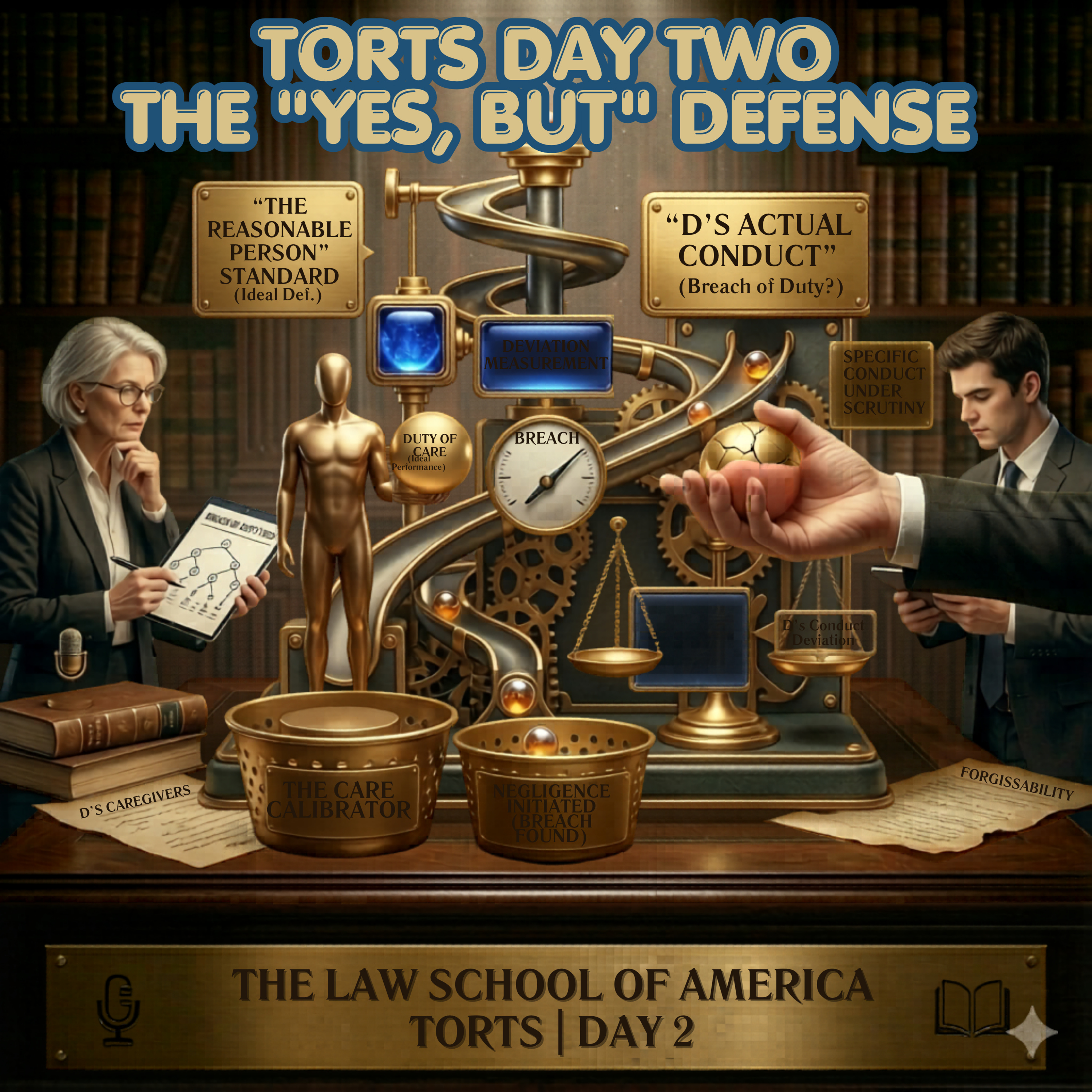
Torts Day Two: The "Yes, But" Defense [not-audio_url] [/not-audio_url]

Duration: 1:03:03
In this episode, we delve into the strategic complexity of affirmative defenses in tort law. Understanding how and when these shields apply can turn a losing case into a victory, or vice versa. We explore key defenses li…
Torts Day One: The Power of Intent [not-audio_url] [/not-audio_url]

Duration: 58:52
This episode breaks down the core principles of intentional torts, from the foundational engine of volitional acts and intent to the nuanced doctrine of transferred intent. Whether you're preparing for law school exams o…
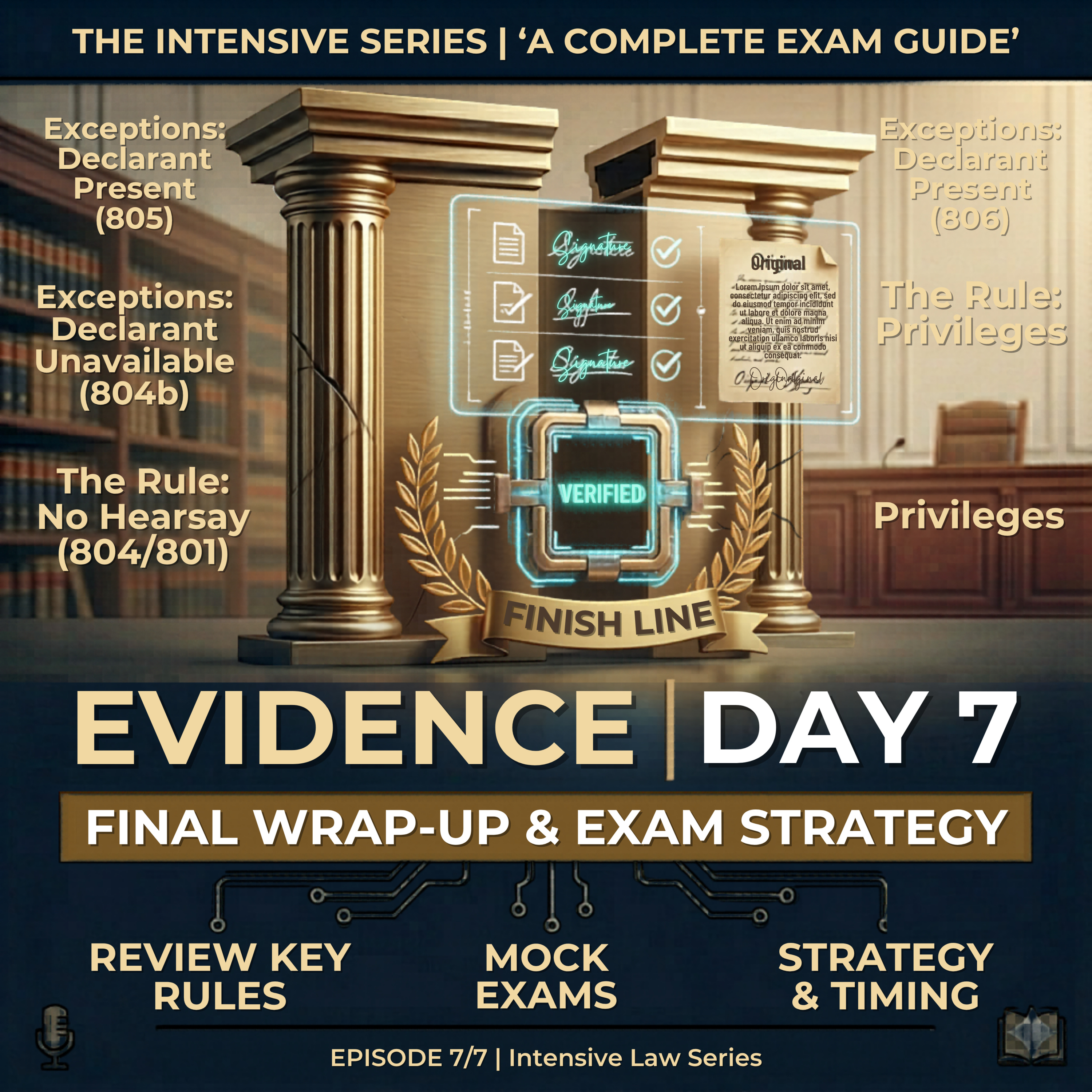
Evidence Day Seven: The Vault and the Final Machine [not-audio_url] [/not-audio_url]

Duration: 1:26:54
Prepare for your next exam or courtroom with a systematic framework that demystifies the complexity of evidence law. In this episode, we dissect the layered process of evaluating evidence—from privileges and presumptions…
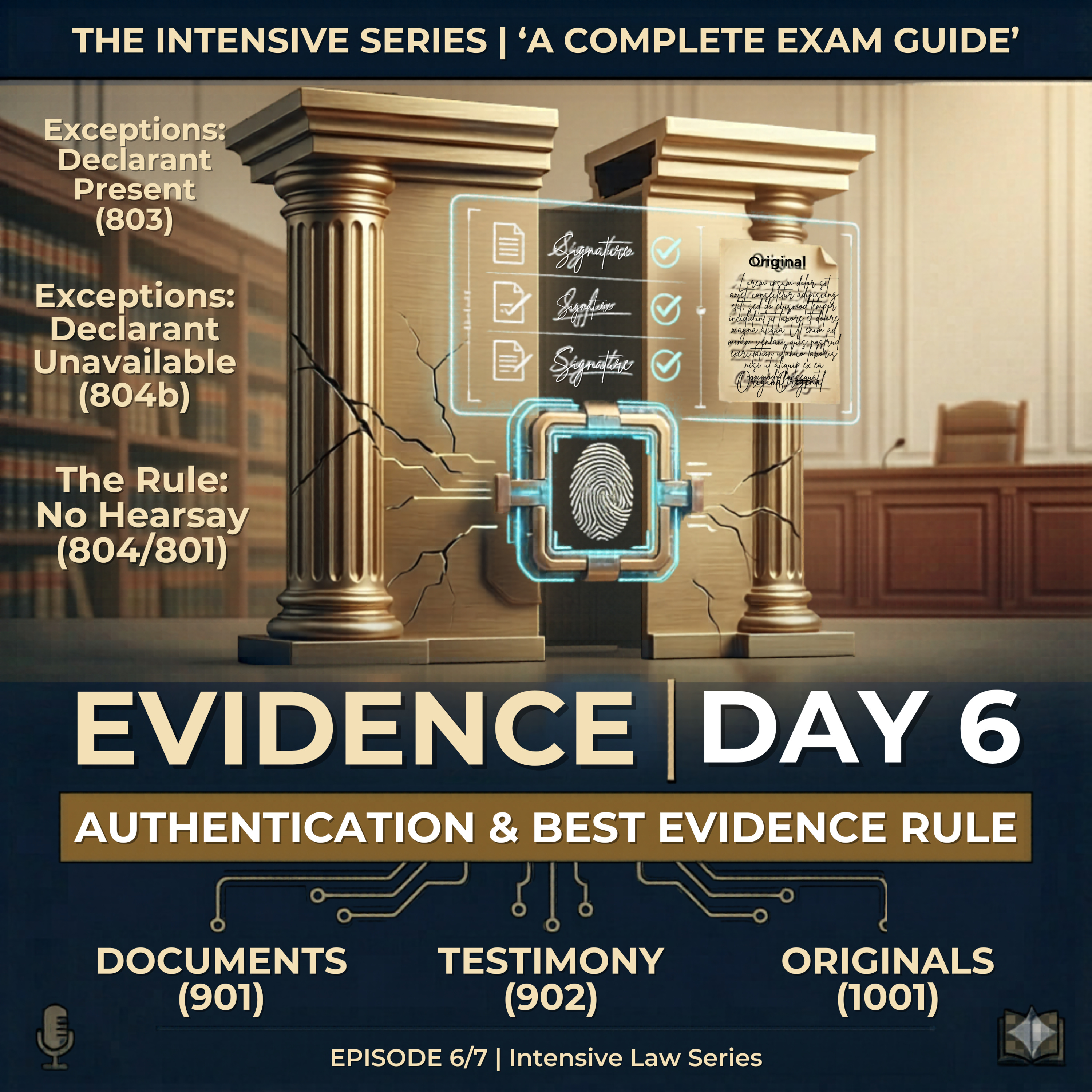
Evidence Day Six: The Container and the Key [not-audio_url] [/not-audio_url]

Duration: 57:07
This episode takes you through the rigorous process of introducing physical evidence in court, breaking down complex rules with clear analogies and real-world examples. Whether you're preparing for the bar exam or seekin…
Evidence Day Five: The Hearsay Exceptions [not-audio_url] [/not-audio_url]

Duration: 1:07:12
In this deep dive into evidence law, we explore how courts differentiate between trustworthy and unreliable out-of-court statements through rules, doctrines, and constitutional safeguards. If you're preparing for a law e…
Evidence Day Four: The Hearsay Gauntlet [not-audio_url] [/not-audio_url]

Duration: 1:01:34
In this episode, we demystify the complex world of hearsay evidence, turning what often feels like an insurmountable maze into a clear, actionable framework. Whether you're a law student, a lawyer, or just a curious mind…
Evidence Day Three: The Witness Clinic [not-audio_url] [/not-audio_url]

Duration: 1:06:48
In this episode, we delve into the foundational pillars of witness testimony, unraveling the complexities of competency, memory, and the art of impeachment. Designed to equip law students and future lawyers, this session…
Evidence Day Two: The Character Assassination Clinic [not-audio_url] [/not-audio_url]

Duration: 1:01:41
In this episode, we explore the intricate landscape of character evidence within U.S. law, emphasizing how rules and exceptions are designed to balance fairness with societal interests. Whether you're a law student or a…