Criminal Procedure Part Six: The Right to Counsel and Fair Trial Guarantees: The Sixth Amendment

Criminal Procedure Part Six: The Right to Counsel and Fair Trial Guarantees: The Sixth Amendment

Author: The Law School of America January 17, 2026 Duration: 45:51

Understanding the Sixth Amendment: The Right to Effective Counsel


This conversation delves into the complexities of the Sixth Amendment's right to counsel, focusing on the Doctrine of Ineffective Assistance of Counsel (IAC) as established by Strickland v. Washington. It explores the two-pronged test for proving IAC, the implications of plea bargaining, and the distinction between structural errors and personal ineffectiveness. The discussion highlights the ongoing debate regarding the effectiveness of counsel and the systemic issues within the criminal justice system.


Navigating the labyrinth of the legal system can be daunting, especially when one's freedom is at stake. The Sixth Amendment's guarantee of the right to counsel is a cornerstone of justice, ensuring that even the most vulnerable have a guiding hand through the complexities of the law.


The Strickland Test: At the heart of the right to effective counsel is the Strickland v. Washington case, which established a two-pronged test to determine ineffective assistance of counsel. This test requires proving both deficient performance by the lawyer and resulting prejudice affecting the trial's outcome. The challenge lies in overcoming the courts' deference to strategic legal decisions, making it a high bar for defendants to clear.


Structural Errors and Autonomy: Certain errors, known as structural errors, bypass the need for proving prejudice. These include fundamental violations like a biased judge or denial of counsel, which automatically warrant a new trial. The recent McCoy v. Louisiana case highlights the importance of client autonomy, where a lawyer's decision to concede guilt against a client's wishes was deemed a structural error.


Plea Bargaining and Counsel's Role: With over 90% of criminal cases resolved through plea deals, the quality of legal advice during these negotiations is crucial. Cases like Missouri v. Fry and Lafler v. Cooper underscore the importance of effective counsel in plea bargaining, where miscommunication or bad advice can significantly impact a defendant's decision and outcome.


Conclusion: The Sixth Amendment's promise of effective counsel is vital for a fair trial, yet the Strickland test's stringent requirements often challenge its fulfillment. As legal debates continue, the focus remains on ensuring that the right to counsel is not just a promise, but a tangible reality for all.


Subscribe now to stay informed on the latest developments in criminal procedure and the right to effective counsel.


Takeaways

Ineffective assistance of counsel is a critical area in criminal procedure.

Strickland v. Washington provides the framework for IAC claims.

The two-pronged test requires proving both deficient performance and prejudice.

Deficient performance is measured against objective standards of reasonableness.

Prejudice must undermine confidence in the trial's outcome.

Structural errors lead to automatic reversals without needing to prove prejudice.

Plea bargaining is a significant aspect of the right to counsel.

Counsel's advice during plea negotiations can have profound consequences.

The right to counsel is a personal right for the defendant.

Systemic failures in legal representation can undermine the integrity of the justice system.


Sixth Amendment, right to counsel, ineffective assistance of counsel, Strickland v. Washington, criminal procedure, plea bargaining, structural errors, legal representation, fair trial, legal standards

Ever wondered how the law really works but felt intimidated by dense textbooks and jargon? Law School, from The Law School of America, is here to change that. This podcast approaches legal education like a series of engaging conversations, breaking down the foundational principles of the American legal system into clear, manageable segments. Each episode focuses on a specific concept or area, building your comprehension step-by-step without overwhelming you. You'll hear straightforward explanations that connect theory to real-world application, making complex topics accessible whether you're a student, a professional in a related field, or simply a curious citizen. The goal is to demystify the law, transforming it from an abstract subject into a practical understanding you can use. By consistently tuning in, you gradually construct a solid framework of legal knowledge. This isn't about quick tricks; it's about dedicated, cumulative learning. The structure of the podcast is designed for steady progress, allowing listeners to absorb information at their own pace and truly integrate it. Think of it as an audio companion for your intellectual journey into jurisprudence, offering clarity and insight one episode at a time.
Author: Language: en-us Episodes: 100

Law School
Podcast Episodes
Family Law Part Three - Marital Property and Economic Distribution [not-audio_url] [/not-audio_url]

Duration: 45:31
This conversation delves into the complexities of marital property and economic distribution in divorce, emphasizing the importance of understanding the economic partnership theory. It outlines a three-step process for p…
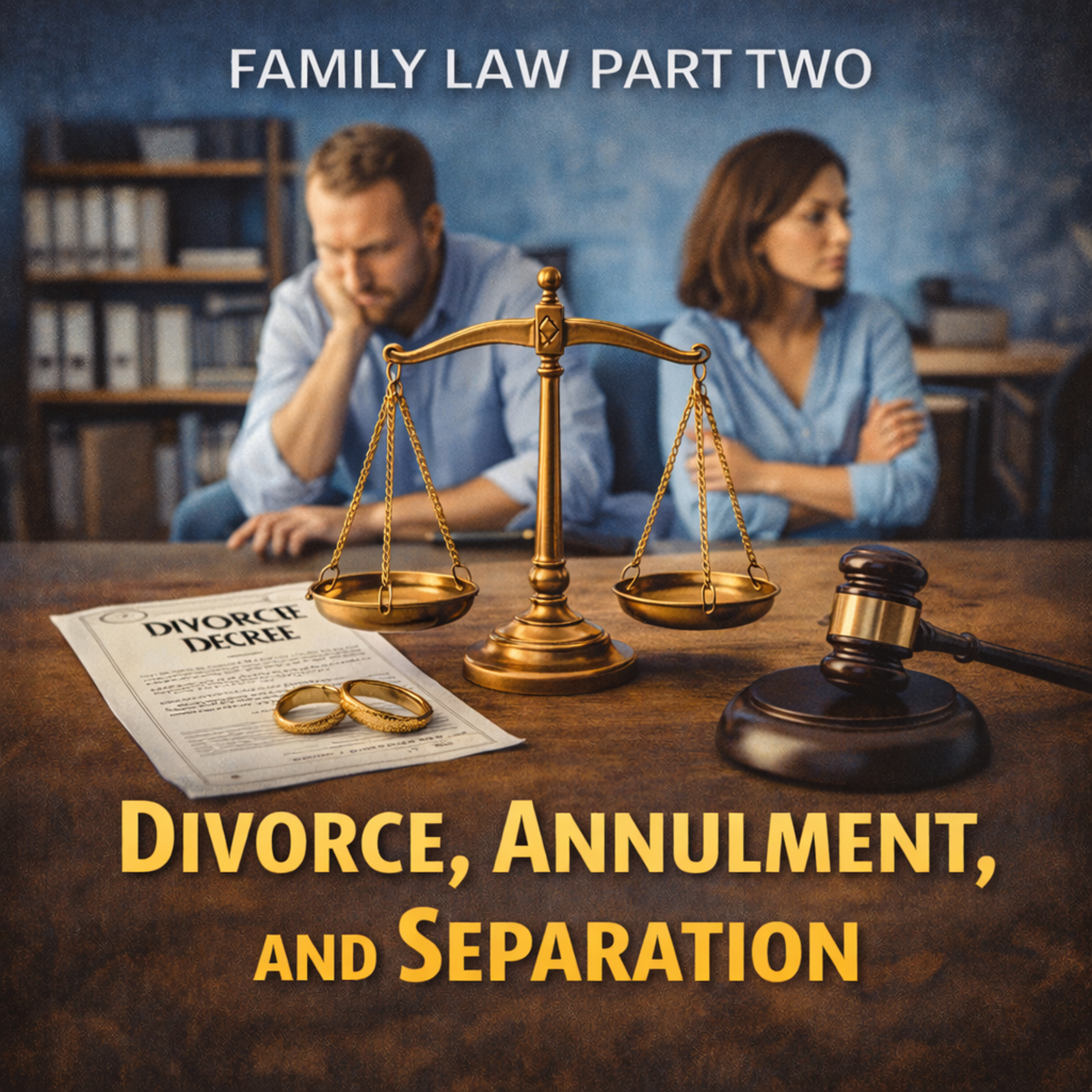
Family Law Part Two - Divorce, Annulment, and Separation [not-audio_url] [/not-audio_url]

Duration: 40:08
This conversation delves into the complexities of family law, specifically focusing on the dissolution of marriage. It covers essential topics such as jurisdiction, grounds for divorce, annulment, legal separation, and t…
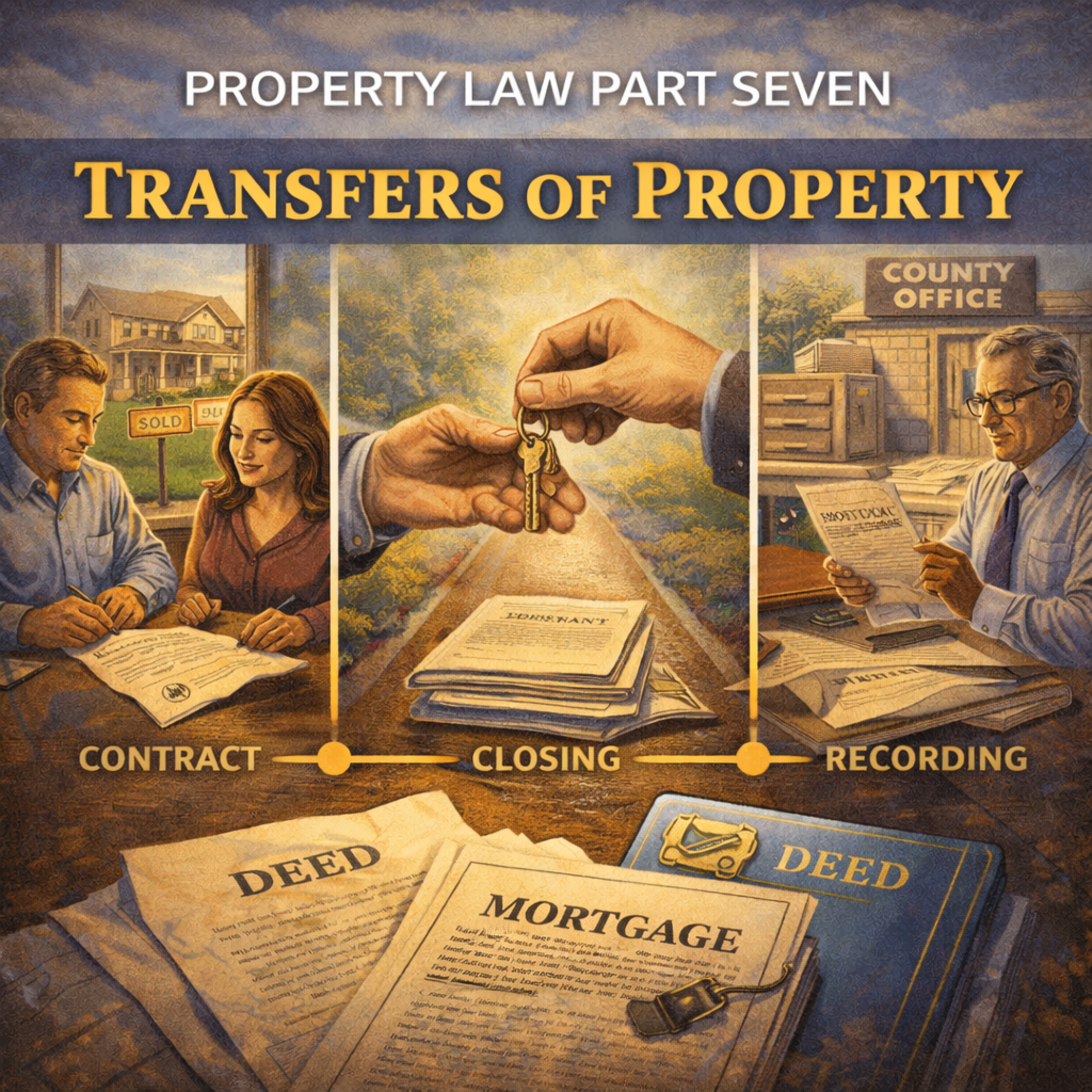
Property Law Part Seven: Transfers of Property [not-audio_url] [/not-audio_url]

Duration: 47:17
This conversation delves into the intricate life cycle of real estate transactions, exploring the various phases from contract signing to closing and recording. It emphasizes the importance of understanding the chronolog…
Property Law Part Five: Land Use Controls [not-audio_url] [/not-audio_url]

Duration: 50:06
This conversation delves into the complexities of land use controls, focusing on the interplay between individual property rights and government regulations. It explores the concept of police power, zoning laws, eminent…
Property Law Part Four: Landlord–Tenant Law [not-audio_url] [/not-audio_url]

Duration: 54:12
Property Law Chapter Four: Landlord–Tenant LawThis conversation delves into the complexities of landlord-tenant law, exploring the evolution of property law, the various types of leasehold estates, and the rights and res…
Property Law Part Three: Concurrent Ownership [not-audio_url] [/not-audio_url]

Duration: 41:40
Most people assume owning property together is simple—until the law reveals its chaotic, high-stakes complexity. If you think co-ownership is just "my house or yours," think again. One wrong step or misunderstood rule ca…
Property Law Part Two: Estates and Future Interest [not-audio_url] [/not-audio_url]

Duration: 50:39
This conversation delves into the complexities of property law, focusing on estates and future interests. It explores the foundational concepts of ownership, the intricacies of defeasible fees, life estates, and the rule…