
"AlgZoo: uninterpreted models with fewer than 1,500 parameters" by Jacob_Hilton

"AlgZoo: uninterpreted models with fewer than 1,500 parameters" by Jacob_Hilton

Author: LessWrong January 27, 2026 Duration: 21:53
Audio note: this article contains 78 uses of latex notation, so the narration may be difficult to follow. There's a link to the original text in the episode description.

This post covers work done by several researchers at, visitors to and collaborators of ARC, including Zihao Chen, George Robinson, David Matolcsi, Jacob Stavrianos, Jiawei Li and Michael Sklar. Thanks to Aryan Bhatt, Gabriel Wu, Jiawei Li, Lee Sharkey, Victor Lecomte and Zihao Chen for comments.

In the wake of recent debate about pragmatic versus ambitious visions for mechanistic interpretability, ARC is sharing some models we've been studying that, in spite of their tiny size, serve as challenging test cases for any ambitious interpretability vision. The models are RNNs and transformers trained to perform algorithmic tasks, and range in size from 8 to 1,408 parameters. The largest model that we believe we more-or-less fully understand has 32 parameters; the next largest model that we have put substantial effort into, but have failed to fully understand, has 432 parameters. The models are available at the AlgZoo GitHub repo.

We think that the "ambitious" side of the mechanistic interpretability community has historically underinvested in "fully understanding slightly complex [...]

---

Outline:

(03:09) Mechanistic estimates as explanations

(06:16) Case study: 2nd argmax RNNs

(08:30) Hidden size 2, sequence length 2

(14:47) Hidden size 4, sequence length 3

(16:13) Hidden size 16, sequence length 10

(19:52) Conclusion

The original text contained 20 footnotes which were omitted from this narration.

---

First published:
January 26th, 2026

Source:
https://www.lesswrong.com/posts/x8BbjZqooS4LFXS8Z/algzoo-uninterpreted-models-with-fewer-than-1-500-parameters

---


Narrated by TYPE III AUDIO.

---

Images from the article:

Neural network architecture diagram showing residual connections with ReLU activations and weight transformations.
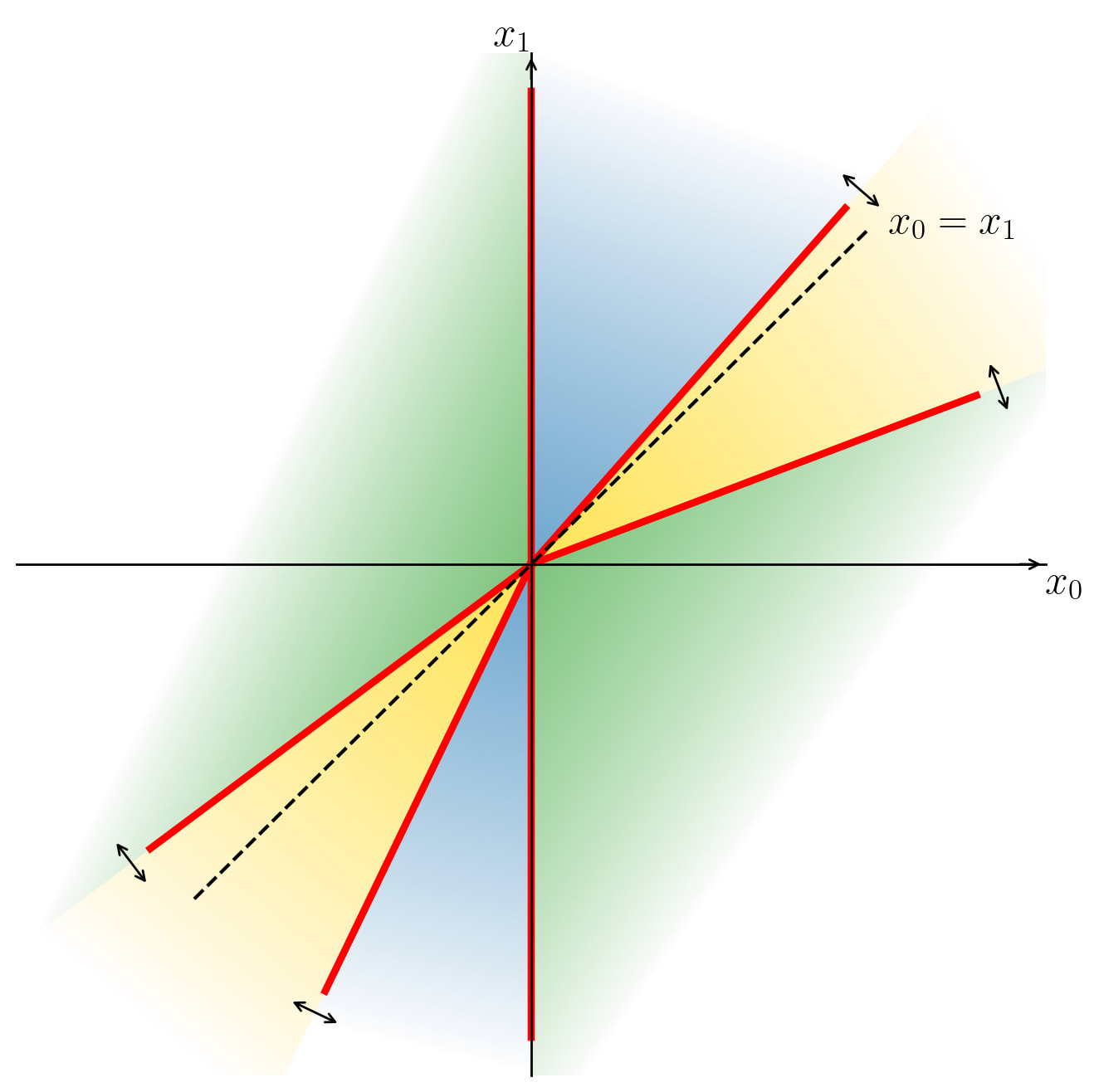
Coordinate system diagram showing angular sector between x₀ and x₁ axes.Apple Podcasts and Spotify do not show images in the episode description. Try Pocket Casts, or another podcast app.


Dive into a stream of ideas where technology, culture, philosophy, and society intersect, all through the lens of the LessWrong (Curated & Popular) podcast. This isn't a traditional talk show with hosts, but rather a curated audio library of the most impactful writing from the LessWrong community. Each episode is a narration of a full post, selected for its high value and interesting arguments, focusing on pieces that have been formally curated or have garnered significant community approval. You'll hear clear, thoughtful readings of essays that tackle complex topics like artificial intelligence, rational thinking, moral philosophy, and the forces shaping our future. The audio format lets you absorb these dense, often paradigm-shifting concepts during a commute or a walk, turning written analysis into an immersive listening experience. This particular feed is deliberately selective, offering a manageable stream of the community's standout work. For those who want an even deeper dive into the discussion, there are broader feeds available. The LessWrong (Curated & Popular) podcast serves as an intellectual filter, delivering the signal through the noise and inviting you to engage with some of the most rigorously examined ideas on the internet.
Author: Language: English Episodes: 100

LessWrong (Curated & Popular)
Podcast Episodes
"Responsible Scaling Policy v3" by HoldenKarnofsky [not-audio_url] [/not-audio_url]

Duration: 1:03:01
All views are my own, not Anthropic's. This post assumes Anthropic's announcement of RSP v3.0 as background.Today, Anthropic released its Responsible Scaling Policy 3.0. The official announcement discusses the high-level…
"Why we should expect ruthless sociopath ASI" by Steven Byrnes [not-audio_url] [/not-audio_url]

Duration: 16:11
The conversation begins (Fictional) Optimist: So you expect future artificial superintelligence (ASI) “by default”, i.e. in the absence of yet-to-be-invented techniques, to be a ruthless sociopath, happy to lie, cheat, a…
"You’re an AI Expert – Not an Influencer" by Max Winga [not-audio_url] [/not-audio_url]

Duration: 11:39
Your hot takes are killing your credibility. Prior to my last year at ControlAI, I was a physicist working on technical AI safety research. Like many of those warning about the dangers of AI, I don’t come from a backgrou…
"The optimal age to freeze eggs is 19" by GeneSmith [not-audio_url] [/not-audio_url]

Duration: 13:31
If you're a woman interested in preserving your fertility window beyond its natural close in your late 30s, egg freezing is one of your best options. The female reproductive system is one of the fastest aging parts of hu…
"The world keeps getting saved and you don’t notice" by Bogoed [not-audio_url] [/not-audio_url]

Duration: 4:29
Nothing groundbreaking, just something people forget constantly, and I’m writing it down so I don’t have to re-explain it from scratch. The world does not just ”keep working.” It keeps getting saved. Y2K was a real probl…
"Solemn Courage" by aysja [not-audio_url] [/not-audio_url]

Duration: 10:11
Every so often it slips. It seems I am writing a book, but I can’t remember why. Somehow, the sentences are supposed to perform that impossible, intimate task: to translate my inner world into another. Yet they sit there…
"Life at the Frontlines of Demographic Collapse" by Martin Sustrik [not-audio_url] [/not-audio_url]

Duration: 17:46
Nagoro, a depopulated village in Japan where residents are replaced by dolls. In 1960, Yubari, a former coal-mining city on Japan's northern island of Hokkaido, had roughly 110,000 residents. Today, fewer than 7,000 rema…
