We mark the birth on July 24, 1880 – 143 years ago today – of the Swiss-born American composer and educator Ernest Bloch, who was born in Geneva, Switzerland. He died in Portland, Oregon, on July 15, 1959, at the age of 78.
Establishing a Genealogy
People trace their family trees for all sorts of reasons: to establish family connections, to collect family medical information, to meet other people engaged in such research, and so forth. But at the root (pun intended) of these (and other) reasons to establish a family tree is the issue of self-identity: the desire to connect with oneself by connecting with one’s ancestors: learning what we can of who they were; where they came from; what sort of lives they led; and what they accomplished.
With the advent of genetic testing sites like “23 and Me,” “AncestryDNA,” “LivingDNA,” and “HomeDNA,” the whole family tree trip has taken a crazy-giant step forward, in that our family trees have gone from saplings to 400-year-old oaks.
A couple of years ago, bored to death during the pandemic and unable to resist any longer, my wife and I were so tested using the site “23 and Me.” Here are my results:
Ashkenazi Jewish: 98.9%
French and German: 0.6%
Sudanese: 0.2%
Northern Indian and Pakistani: 0.1%
Unassigned: 0.2%
(You betcha that 0.2% Sudanese caught my attention!)
The major drawback of having multiple testing sites is that your DNA can only be compared to others who have been tested using the same site. Nevertheless, my results are fascinating.
Not unexpectedly, the person with whom I share the most DNA is my brother Steve: we share 53.1% of our DNA and 45 segments, those “segments” being sections of DNA that are identical between two individuals.
According to “23 and Me,” at number 1508 of my 1510 DNA relatives is my wife, Nanci Tucker, who is rated as being a “Distant Cousin” with 0.12% DNA shared and 1 segment. (According to “23 and Me,” Nanci and I have in common a pair of ancestors more distant than our 5th-great-grandparents, making us more that sixth cousins.)
Experiential DNA
Might I be so bold as to suggest that family members are not the only people who share, in quotations, “DNA”? By “DNA” in quotations I’m not referring to the chemical deoxyribonucleic acid but rather, what we might call “experiential DNA”: wisdom passed down from one generation to the next via one-on-one relationship; one-on-one mentorships.
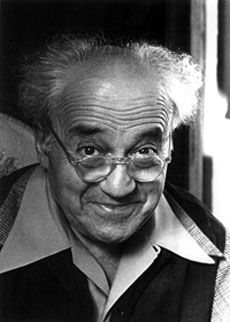
Edward Toner Cone (1917-2004)
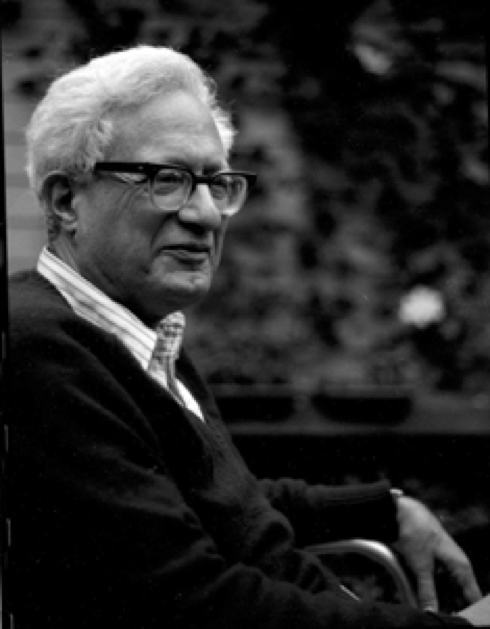
This is precisely the sort of “DNA” that is shared by musicians – composers, instrumentalists, and singers – musicians whose education consists of a series of one-on-one relationships with their teachers. For example, as an undergraduate, I studied composition primarily with Edward T. Cone (1917-2004). When it came time for graduate school, Ed wanted me to continue my studies with his friend Andrew Imbrie (1921-2007) at the University of California, Berkeley. And so I did; Andy Imbrie became not only my composition mentor but served as my Ph.D. thesis advisor.
Andrew Imbrie (1921-2007)
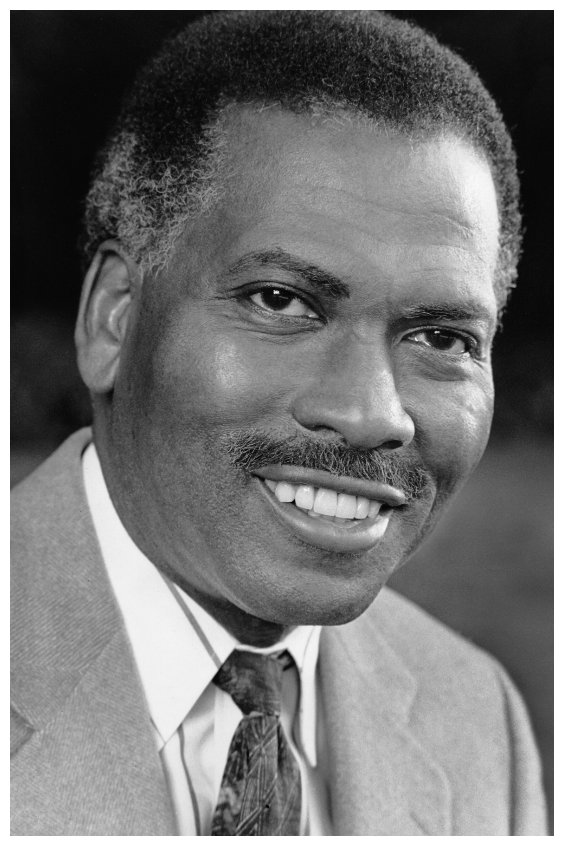
While at UC Berkeley, I developed another very close mentor-student relationship with the composer Olly Wilson (1937-2018).
Olly Wilson (1937-2018)
Ed Cone, Andy Imbrie, and Olly Wilson are, and always will be, my most treasured and most important composition teachers. Just so, Ed, Andy, and Olly were shaped by their own mentors, mentors whose experiences, knowledge, and wisdom they passed on to me.
For genealogists, tracking their family’s genetic roots allow them to connect more deeply with themselves by learning about their family’s past. For the musicians among us, tracing our teachers’ roots – our “experiential DNA” – allows us to connect with our artistic forebearers and to understand those artistic proclivities that have literally been “bred” into us. …
Every week, Music History Monday arrives with the kind of curiosity that turns dates on a calendar into doorways. Hosted by composer and historian Robert Greenberg, this podcast digs into the stories that happened *around* the music, finding the human moments-sometimes profound, sometimes scandalous, always fascinating-tied to a specific Monday. Greenberg approaches his subjects not as distant icons but as the complicated, brilliant, and often messy people they were, which makes each episode feel like a conversation rather than a lecture. You’ll hear about pivotal premieres, bitter rivalries, unexpected inspirations, and the sheer luck or misfortune that shaped the pieces we know today. The tone is erudite but never dry, packed with context and delivered with a wit that respects the art without putting it on a sterile pedestal. It’s for anyone who loves a good story and suspects that the history behind a symphony or a sonata is just as compelling as the notes themselves. Tune in each Monday with Robert Greenberg to connect the dots between a day in history and the soundtrack it inspired.
Author: Robert Greenberg
Language: en-us
Episodes: 100
Anton Bruckner (1824-1896) in 1896, wearing the Order of Franz Joseph, in a portrait by Josef Büche We mark the birth on September 4, 1824 – 199 years ago today – of the composer and organist Josef Anton Bruckner, in the…