We mark the birth on November 6, 1854 – 169 years ago today – of the American composer, conductor, and violinist John Philip Sousa. Born in Washington, D.C., Sousa died in Reading, Pennsylvania on March 6, 1932, at the age of 77.
Timing, Location, Life Experience, and Talent
We are told that talent – be it athletic, musical, artistic, culinary, whatever – will only take us so far; that without commitment, hard work, and perseverance “talent” is, in the end, nothing but potential. But success in any field in which innate, gene-given talent is an underlying necessity requires something more than just blood, sweat, and tears: it also requires timing, location, and life experience.
We consider. How many potential William Shakespeares have been born in times and places in which vernacular, secular theater was not being cultivated to a revolutionary degree? How many latent Sebastian Bachs lived until one was born into the perfect family and at the perfect time and place to exploit his skill set? How many possible LeBron Jameses existed before the invention of basketball?
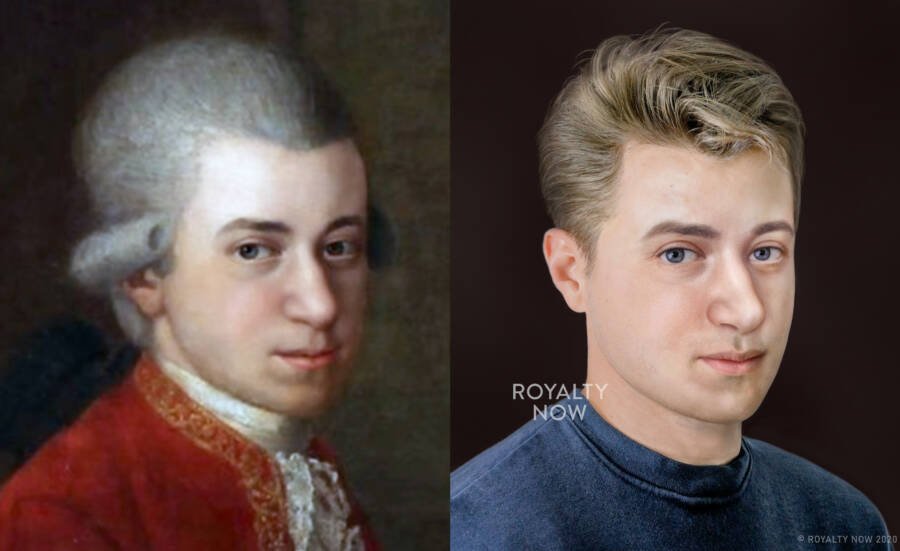
Left: the 24-year-old Mozart in Salzburg, 1780; Right: the 24-year-old Mozart in Cupertino, California, 2023
I would suggest that what made Mozart “Mozart” was not just his talent and work ethic, but that his father was a professional musician who trained his son at a time and place when high-end music making was considered culturally indispensable. If our Mozart had been born in 1999 in Cupertino, California to a father (or mother!) who worked for Apple, how do we think his talents and energies might have been directed? Towards music? I wouldn’t bet on it.
Yes, talent is huge, but timing and location and life experience make the artist as well, and rarely will we find a more striking confluence of talent, time, place, and experience than in the case of John Philip Sousa.
John Philip Sousa (1854-1932)
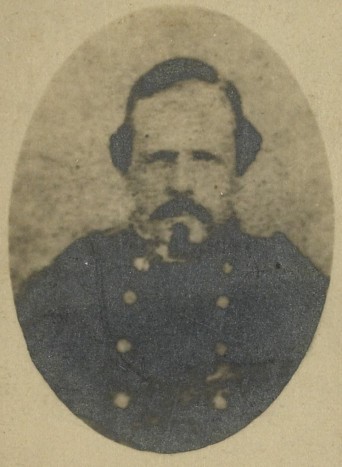
John Anthony Sousa (1824-1892), John Philip’s father, in his Marine uniform, circa 1863
He was the third of ten children born to immigrant parents. His mother, Maria Elizabeth (born Trinkhaus, 1826-1908) was born in Bavaria, in what today is southern Germany. Sousa’s father, John Anthony Sousa (1824-1892), was born João António de Sousa in Spain, to Portuguese parents.
Sousa was born, and the family lived, in a modest house at 636 G Street, in southeast Washington, D.C. The address is significant because it was close to the United States Marine barracks where John Philip’s father, Antonio, was a trombonist in the Marine Band. (For our information, the Marine Band based in Washington, D.C. is not just any military band. Known as “The President’s Own,” it is – today – the best and most prestigious military band in the United States and among the very best in the world. It was John Philip Sousa himself, who led the Marine Band from 1880-1892, who turned it into the crack ensemble it remains to this day.)
Life experience. Growing up, John Philip Sousa’s musical mother’s milk was military band music. It was in his blood, his DNA, and he was never to veer far from it. …
Every week, Music History Monday arrives with the kind of curiosity that turns dates on a calendar into doorways. Hosted by composer and historian Robert Greenberg, this podcast digs into the stories that happened *around* the music, finding the human moments-sometimes profound, sometimes scandalous, always fascinating-tied to a specific Monday. Greenberg approaches his subjects not as distant icons but as the complicated, brilliant, and often messy people they were, which makes each episode feel like a conversation rather than a lecture. You’ll hear about pivotal premieres, bitter rivalries, unexpected inspirations, and the sheer luck or misfortune that shaped the pieces we know today. The tone is erudite but never dry, packed with context and delivered with a wit that respects the art without putting it on a sterile pedestal. It’s for anyone who loves a good story and suspects that the history behind a symphony or a sonata is just as compelling as the notes themselves. Tune in each Monday with Robert Greenberg to connect the dots between a day in history and the soundtrack it inspired.
Author: Robert Greenberg
Language: en-us
Episodes: 100
Claude Debussy (1862-1918) in 1902 We celebrate the birth on August 22, 1862 – 160 years ago today – of the French composer and pianist Claude Debussy. Born in the Paris suburb of St. Germain-en-Laye, he died in Paris on…