If physical appearance had been the criterion, and not the ability to play the drums . . .
On August 14, 1962 – 61 years ago today – the manager of the Beatles Brian Epstein made a phone call to the drummer Ringo Starr, inviting him to join the band. As I suspect we are all aware, Starr said “yes.” Two days later, on August 16, Epstein had the unenviable task of firing the band’s present drummer, Randolph Peter “Pete” Best (born Randolph Peter Scanland, 1941), who had been the Beatles’ drummer for almost exactly two years, since August 1960. Best’s firing, effective on August 18, 1962, was, for Best, the worst timing ever. 17 days later, on September 4, 1962, a reconfigured Beatles with Ringo Starr as drummer recorded their first #1 hit and went from nobodies to superstars in the span of a few weeks.
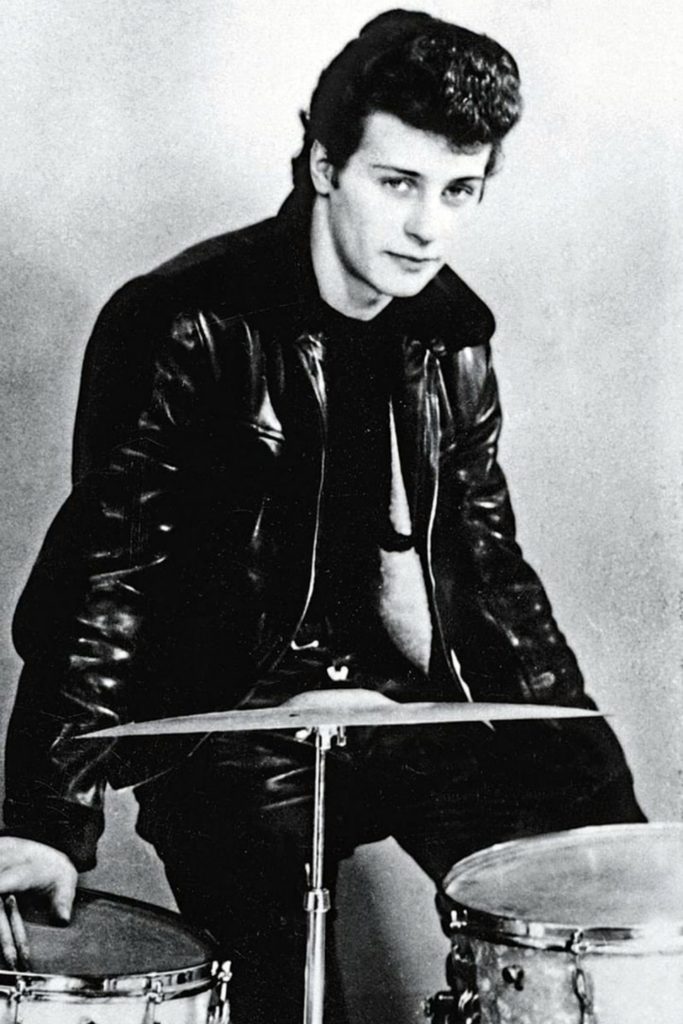
Pete Best (Born 1941)
Best circa 1962
Peter Best was born on November 24, 1941, in Madras, which was then part of British India. His father, a marine engineer named Donald Peter Scanland, died during World War Two. Pete’s mother Mona went on to marry a British officer from Liverpool named Johnny Best, with whom she had a second son, this one named Rory. In 1945, the Best family returned to Britain on the MV Georgic, the last British troop ship to leave India. It docked in Liverpool on December 25, 1945.
It was in Liverpool that Pete Best grew up. Writes the Beatles’ “biographer” Mark Lewisohn:
“Pete grew into a strong, muscly lad, exceptional at sports and carrying no excess weight, eminently capable of taking care of himself in a physical confrontation, which in Liverpool could always happen at any moment. He was also handsome and knew it.”
At the age of 17 (or so), Pete Best showed some interest in the drums. His mother Mona, who was running a club called the “Casbah Coffee Club” in her basement (it was a large basement!) was thrilled that Pete had expressed interest in anything: she “hurried down” to Rushworth & Draper’s music store and bought her son:
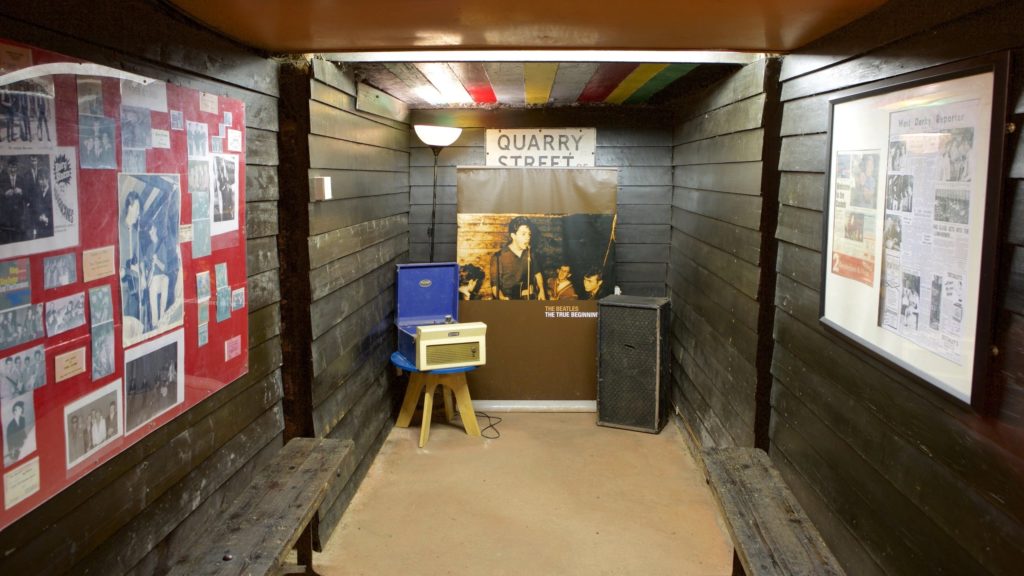
The “bandstand” at the Casbah Coffee Club as it exists today, as a shrine to the Beatles
“a smart-looking Premier kit in blue mother of pearl.”
Being a rank beginner as a drummer never stopped Pete Best (nor has it ever stopped any wannabe rock ‘n’ roller), and he organized a band called the Black Jacks.
Having a doting mother who owns a nightclub never hurts when it comes to bookings, and it didn’t hurt the Black Jacks, amateurish though they were. It was at his mother’s “Casbah Coffee Club” that Pete Best also met the local talent, including an up-and-coming band called the Quarrymen, which featured Paul McCartney, John Lennon, and George Harrison. In the spring of 1960, the Quarrymen changed their name to the Beatles, and a couple of months later their first manager – Allan William – secured the band an extended gig in Hamburg, Germany.
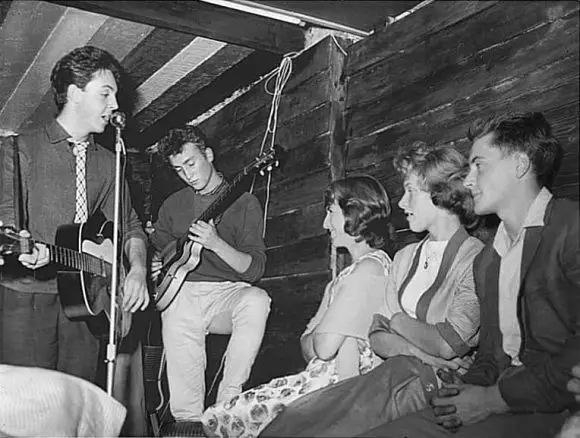
Paul McCartney (born 1942) and John Lennon (1940-1980) playing at the Casbah on August 29, 1959
There was a problem, though: the Beatles, consisting of McCartney, Lennon, and Harrison – were without a drummer. Paul McCartney was tasked with finding one. McCartney knew Best through the Casbah, and he knew that Best had one very important thing going for him: he actually owned a set of drums. McCartney also heard, as he later stated in an interview, that Pete Best’s female fans considered him as being:
“mean, moody, and magnificent,”
a James Dean/Marlon Brando-like trifecta that convinced McCartney that Pete Best would be a good match for the Beatles.
Garbage In, Garbage Out
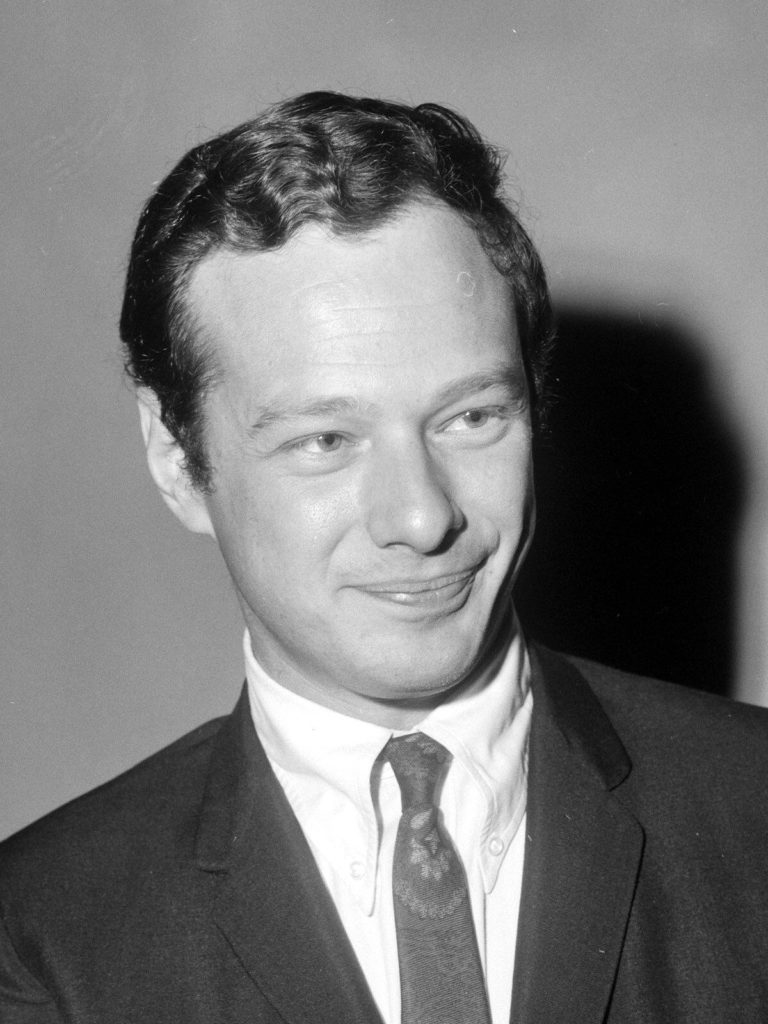
Brian Epstein (1934-1967) in 1965
Sadly, Pete Best wasn’t much of a drummer when he joined the Beatles in Hamburg, and he wasn’t much of one when they returned from Hamburg two years later, in 1962. By 1962, almost everyone associated with the Beatles except their manager Brian Epstein (1934-1967) wanted Best to make like a tree and leave. Nevertheless, had Pete Best been a little better; had he been willing to grow out his hair like McCartney, Lennon, and Harrison; had he spent some off time schmoozing with the other three bandmembers; if, in a phrase, he had made any attempt to behave like a member of the band, he might have lasted a bit longer. And had he managed to last just a bit longer, he might today be a household name (instead of being an object lesson in failure), because the Beatles caught fire just weeks after his departure.
How many different ways can we say, “bummer, dude”? Bummero; bummerissimo, bummersky, bummah. I would suggest that the next time any one of us suffers a professional reversal, a disappointment, or even, heaven forbid, a firing, let us count our blessings that, in fact, we are not Randolph Peter Best and that we have not had to spend our lives explaining our firing to an endlessly curious world.…
Every week, Music History Monday arrives with the kind of curiosity that turns dates on a calendar into doorways. Hosted by composer and historian Robert Greenberg, this podcast digs into the stories that happened *around* the music, finding the human moments-sometimes profound, sometimes scandalous, always fascinating-tied to a specific Monday. Greenberg approaches his subjects not as distant icons but as the complicated, brilliant, and often messy people they were, which makes each episode feel like a conversation rather than a lecture. You’ll hear about pivotal premieres, bitter rivalries, unexpected inspirations, and the sheer luck or misfortune that shaped the pieces we know today. The tone is erudite but never dry, packed with context and delivered with a wit that respects the art without putting it on a sterile pedestal. It’s for anyone who loves a good story and suspects that the history behind a symphony or a sonata is just as compelling as the notes themselves. Tune in each Monday with Robert Greenberg to connect the dots between a day in history and the soundtrack it inspired.
Author: Robert Greenberg
Language: en-us
Episodes: 100
Claude Debussy (1862-1918) in 1902 We celebrate the birth on August 22, 1862 – 160 years ago today – of the French composer and pianist Claude Debussy. Born in the Paris suburb of St. Germain-en-Laye, he died in Paris on…