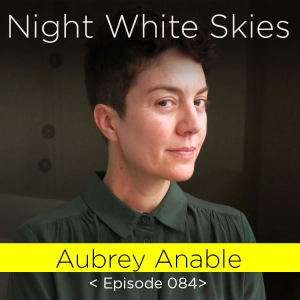
084 _ Aubrey Anable _ 'Rehearsing Our Feelings'

084 _ Aubrey Anable _ 'Rehearsing Our Feelings'

Author: Sean Lally April 26, 2021 Duration: 49:07

'Rehearsing our Feelings'  

When it comes to trying to plan for the future, various tools are used to help us with the process. If you have a series of appointments to attend in the coming months, you'll likely use a calendar to schedule time and place. If you plan on building a structure or a landscape, you'll likely turn to drawings to define shapes and qualities. But you could lump these two examples together (the scheduling of time and the representation of a shape) as tools that help you deliver something you know you already want. In many ways, they are both instructions to manage something you already know. We're of course aware that this isn't exactly the case. The tools we use for design have proclivities embedded within them that inform the decisions we make while using them.  

But maybe we're missing the whole point here when discussing how to represent the future for people. Instead of showing them examples of how it might look, (one form or shape being better than the other) we instead need to allow people to experience a future that doesn't yet exist. There are various reasons why this could be of importance. It's possible that pressures like climate change, new forms of communication, social dynamics and an evolving human body are going to be delivering a near future so different from what we know today that there is a need to rehearse potential futures now. As my guest today, Aubrey Anable has said, 'rehearsing our feelings'. 

Video games are a medium that allow the player to experience environments and social scenarios in ways that other representation can't. This is in part because they can often be played many times with different outcomes each time. And these varied experiences within games give players an active interaction that is spatial, has aesthetics and often social, moral contracts embedded within. This concept of 'rehearsing our feelings' is a way for people to be embedded in unknown realities that could very well help prepare us for a future that is uncertain. A future that might require difficult choices in how we live in a changing climate, how we engage ecological anxiety, or even how we might live together (wink wink). Rehearsing our feelings, our expectations and our imaginations for what the future might hold is likely going to include the strengths that video games can offer. 

Aubrey Anable is assistant professor of film studies at Carleton University, Canada. Anable's research is broadly concerned with film and media aesthetics in North America after 1945 with an emphasis on the ways digital computers have changed visual culture. Her book Playing with Feelings: Video Games and Affect (University of Minnesota Press, 2018) provides an account of how video games compel us to play and why they constitute a contemporary structure of feeling emerging alongside the last sixty years of computerized living. Her articles have appeared in the journals Feminist Media Histories, Afterimage, Television & New Media, and Ada. She is currently co-editing The Concise Companion to Visual Culture (Forthcoming from Wiley Blackwell). 

Also try...Ep. 065 _ Dr Lisa Feldman Barrett _ 'How Emotions are Made' 



In a world where the very ground we stand on and the bodies we inhabit are becoming malleable territories for design, Night White Skies offers a necessary space for conversation. Host Sean Lally guides these discussions, which venture far beyond traditional architectural discourse to ask what kind of future we are actually building. This podcast thrives on the friction and insight generated by bringing together an unexpected mix of voices-from philosophers and scientists to policy makers and science fiction authors. You’ll hear how a cultural anthropologist’s research on ritual intersects with a material scientist’s work on smart environments, or how a novelist’s vision of tomorrow clarifies the ethical dilemmas faced by urban planners today. Each episode is a deep, meandering exploration, avoiding easy answers in favor of nuanced, often surprising connections. The aim is to piece together a broader, more complex picture of the transformations currently unfolding around and within us. By engaging with such a diverse range of thinkers, the Night White Skies podcast doesn't just report on change; it actively participates in the difficult, essential work of imagining what comes next.
Author: Language: English Episodes: 50

Night White Skies
Podcast Episodes
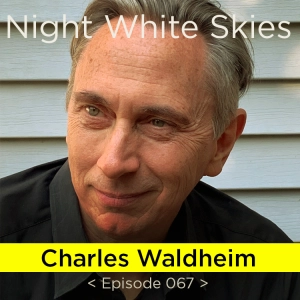
Ep. 067 _ Charles Waldheim _ 'Overcoming Spatial Fixity' [not-audio_url] [/not-audio_url]

Duration: 54:48
Today is a conversation with Charles Waldheim. Waldheim is a Canadian-American architect and urbanist. Waldheim's research examines the relations between landscape, ecology, and contemporary urbanism. He is author, edito…
Ep. 066 _ Jo Lindsay Walton _'Strange Economics' [not-audio_url] [/not-audio_url]

Duration: 1:00:34
Today is a conversation with Jo Lindsay Walton and we're discussing a book called 'Strange Economics' which is edited by David F. Shultz. The book consists of 23 new science fiction pieces written specifically for the bo…
Ep. 065 _ Dr Lisa Feldman Barrett _ 'How Emotions Are Made [not-audio_url] [/not-audio_url]

Duration: 28:49
Lisa Feldman Barrett, PhD, is a University Distinguished Professor of Psychology at Northeastern University, with appointments at Harvard Medical School and Massachusetts General Hospital. In addition to the book How Emo…
Ep. 064 _ Alexander Eisenschmidt _ 'The Good Metropolis [not-audio_url] [/not-audio_url]

Duration: 50:59
Alexander Eisenschmidt is the author of 'The Good Metropolis, Between Urban Formlessness and Metropolitan Architecture' Birkhauser, 2018 Alexander is a designer, theorist, and Associate Professor at the School of Archite…
Ep. 063 _ Nancy Y. Kiang _ 'The Color of Plants on Other Worlds' [not-audio_url] [/not-audio_url]

Duration: 33:15
Dr. Kiang is a biometeorologist at NASA's Goddard Institute for Space Studies, New York. She conducts research on the interaction between the biosphere and the atmosphere, focusing on life on land. Dr. Kiang also relates…
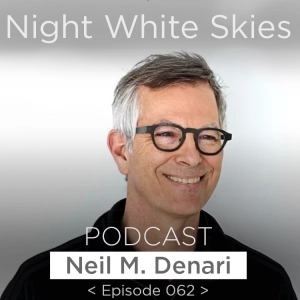
Ep. 062 _ Neil M. Denari 'Career Arcs' [not-audio_url] [/not-audio_url]

Duration: 59:41
Neil Denari is principal of Neil M. Denari Architects / NMDA and a Professor in the Department of Architecture and Urban Design at UCLA. With NMDA, Denari works on building projects in North America, Europe and Asia. In…
Ep. 060 _ Rachel Armstrong _ 'Far From Equilibrium' [not-audio_url] [/not-audio_url]

Duration: 58:37
This week is with Rachel Armstrong, Professor of Experimental Architecture at the Department of Architecture, Planning and Landscape, Newcastle University. Rachel Armstrong leads Metabolism research in developing artific…
Ep. 059 _ Edward Tenner _ 'The Efficiency Paradox' [not-audio_url] [/not-audio_url]

Duration: 37:54
'The Efficiency Paradox: What Big Data Can't Do'. Edward Tenner is a distinguished scholar of the Smithsonian's Lemelson Center for the Study of Invention and Innovation and a visiting scholar in the Rutgers University D…