N526FC Hawker 900XP Overrun at Telluride: 0° Flaps and a Tailwind

N526FC Hawker 900XP Overrun at Telluride: 0° Flaps and a Tailwind

Author: Max Trescott | Aviation News Talk Network July 28, 2026 Duration: 42:16

Max Trescott and Rob Mark examine the July 20, 2024 runway excursion of Hawker 900XP N526FC at Telluride Regional Airport. The crew planned a Runway 27 departure from an airport elevation of 9,069 feet, with density altitude above 11,200 feet and takeoff calculations using nearly all of the 7,111-foot runway. But the jet began its takeoff with the flaps retracted instead of set to the planned 15 degrees, while a gusty tailwind exceeded the airplane’s operating limitation. Here are Takeoff Videos One and Two.

The aircraft never became airborne. After the crew rejected the takeoff, it ran through the engineered material arresting system and stopped beyond the runway. Both pilots escaped without injury, though the airplane sustained substantial damage and its engines continued running after impact.

Max and Rob analyze the cockpit voice recorder summary, the absence of audible checklist use or takeoff briefing, the missed opportunities to verify flap position, and the hazards of operating with almost no performance margin. They also discuss fuel-loading decisions at mountain airports, the unusual arrival hold on Telluride’s RNAV approach, unofficial instrument procedures, discrepancies in the pilots’ NTSB forms, and the lesson: disciplined checklist use, crew communication, and attention to detail are essential when conditions leave no room for error.


Ever wonder what really happens after the dust settles on an aviation accident? NTSB News Talk-Aviation Accidents, Safety Investigations & Pilot Lessons pulls back the curtain on the meticulous world of safety investigations, transforming complex reports into actionable knowledge. Hosted by award-winning aviation journalist Rob Mark alongside Max Trescott-a flight instructor with formal accident investigator training-each episode delves into recent findings from the National Transportation Safety Board. Their conversations move beyond the headlines to analyze the chain of events, human factors, and mechanical failures that lead to incidents. This isn't about sensationalism; it's a clear-eyed look at the facts, designed to translate tragedy into tangible lessons for those in the cockpit. Whether you're a seasoned pilot, a flight instructor shaping the next generation, or an enthusiast fascinated by the intricacies of flight safety, this podcast serves as a vital resource. You'll hear detailed breakdowns of specific cases, discussions on broader safety trends, and practical takeaways that can directly inform decision-making and checklists. The dialogue between a journalist's perspective and an instructor's hands-on experience creates a unique and authoritative tone, making technical details accessible and immediately relevant. Tune in for a sobering yet essential exploration of how the aviation community learns, adapts, and strives to make every flight safer.

Author: Language: English Episodes: 39

NTSB News Talk – Aviation Accidents, Safety Investigations & Pilot Lessons
Podcast Episodes
Fatal Pilot Errors: How Common Medications Led to Deadly Crashes [not-audio_url] [/not-audio_url]

Duration: 39:31
Max Trescott and Rob Mark explore one of the most overlooked killers in aviation: common medications that quietly impair pilots and contribute to fatal crashes. While many aviators think over-the-counter or prescription…
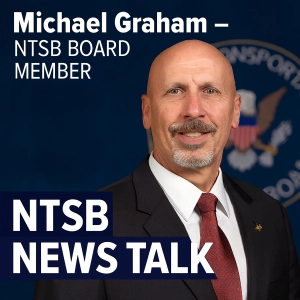
NTSB Board Member Michael Graham on Safety Culture, SMS, and GA Risks [not-audio_url] [/not-audio_url]

Duration: 52:42
In this episode of NTSB News Talk, hosts Max Trescott and Rob Mark welcome Michael Graham, a current member of the National Transportation Safety Board (NTSB), for a deep discussion on the agency’s work and the broader s…
NTSB Accident Reports: TBM & King Air Loss of Control [not-audio_url] [/not-audio_url]

Duration: 37:50
In Episode 10 of NTSB News Talk, aviation safety experts Max Trescott and Rob Mark examine recent accident reports that reinforce why loss of control in flight continues to be the number one cause of fatalities in genera…