Haley Stevens has found her groove. She’s made herself into a plucky underdog, which is hard because she’d been typecast as the spoiled golden girl — Chuck Schumer’s special little lady who was handed everything and had all the money. Mallory McMorrow was fresh, Abdul El-Sayed was exciting, and Stevens looked like she was getting run over. Now her message is: I don’t care what they make fun of me for. I’m like you, and I’m looking out for you. It’s solid. It’s good.
El-Sayed has run a very good campaign, but he’s had trouble restabilizing since Stevens found her footing. His problem is explaining his progressive message to people who don’t automatically buy into it. You need to describe the what before the why. Start with the person who counted on a government check that didn’t come, then explain why it happened and where the money went. El-Sayed keeps starting with AIPAC and the quid pro quo because he’s still talking to progressives. Progressives understand that language, but everybody else might not.
Politics Politics Politics is a reader-supported publication. To receive new posts and support my work, consider becoming a free or paid subscriber.
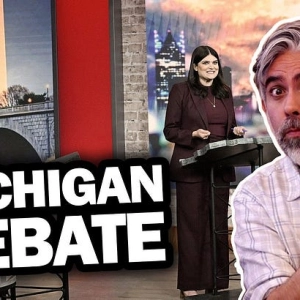
The Stevens campaign wants to make El-Sayed the bully. She keeps pointing out that he makes fun of the way she talks, and she brought up his comment about putting an ogre’s head on a spike. That matters because El-Sayed needs the McMorrow women — voters who weren’t into Stevens but could be talked into a more progressive way of thinking. He’s going to ride and die on being a fighter, including his support for abolishing ICE. That’s authentic, but he’s more of a blunt instrument than Bernie Sanders or Alexandria Ocasio-Cortez. Stevens looked confident under the lights. El-Sayed didn’t look in command. My prediction: Stevens by five.
Trump, meanwhile, has asked the Supreme Court to revive parts of his executive order restricting mail voting before the November midterms. A federal judge blocked provisions directing agencies to build state citizenship lists and requiring the Postal Service to send mail ballots only to currently listed voters. I’m not personally for asking states to assemble these lists so close to an election, for the same reason I wasn’t for expanding mail voting during COVID. Anytime you’re expanding or restricting voting and changing the electorate, you’ve got to do it with some tender loving care.
Trump also met with Benjamin Netanyahu for the first time since the United States and Israel launched their joint air campaign against Iran. Iran was expected to dominate the meeting as Trump decides whether to resume large-scale strikes or give diplomacy more time. There’s visible friction: Trump doesn’t like Netanyahu publicly raising concerns about activity at Iran’s Pickaxe Mountain to pressure him, while Netanyahu wants to preserve military pressure. Their decision could determine whether this pause becomes a negotiating window or merely an intermission. Nobody knows what’s happening in Iran. There are only so many ways I can say it.
Michigan’s attorney general is also reviewing how a false allegation against Pete Buttigieg led authorities to separate him from his four-year-old twins. Officials acted on a vague tip before confirming the caller’s identity or credibility, and Michigan State Police later declared the allegation unfounded. Investigators found a Facebook post in which the apparent caller urged people not to vote for Buttigieg and referenced the accusation before contacting authorities. Emergency responses involving children need a hair trigger, but unsupported accusations can also become political intimidation. It’s ugly — really, really, really ugly.
Chapters
00:00:00 - Intro
00:03:49 - Michigan
00:21:31 - Israel, Iran, and Ukraine
00:30:40 - Mayor Pete Swatted
00:34:22 - Interview with Howard Mortman
01:06:28 - Wrap-up
This is a public episode. If you'd like to discuss this with other subscribers or get access to bonus episodes, visit
www.politicspoliticspolitics.com/subscribe