The regenerative potential of transformative learning, with Pavel Cenkl

The regenerative potential of transformative learning, with Pavel Cenkl

Author: Oliver Goshey February 21, 2025 Duration: 1:01:34
Today I want to start a fun new series on a topic that I’ve wanted to explore for quite a while, which is the concept of regenerative education. I’ve worked as a teacher and educational facilitator in different capacities since the beginning of my career, first in before and after school programs for kids, then as an arts and environmental educator at summer camps, then English as a second language in both South Korea and Guatemala, and in between teaching various technical workshops in natural building, permaculture, ecosystem restoration, the transition journey to regenerative agriculture, and of course water management and water cycle restoration. Every time I engage in these activities I gain huge respect for teachers and the incredible skill and patience it takes to be an effective educational facilitator. Similarly, I want to continue to grow as a teacher and even improve my skills as a student since I’m also always in some sort of course or other at the same time. I know this is a wide and nuanced topic and so to help me to become oriented to the considerations and scope of what I’m exploring, I reached out to Pavel Cenkl, who is the Academic Dean at Prescott College in Arizona (US) and the Founder of the Regenerative Learning Network. His work focuses on the intersection of transformative learning, community, and ecology and building a more regenerative, resilient, and equitable educational future. He’s also the author of several books including Transformative Learning (with Satish Kumar), “Relational Ecologies: Building Regenerative Community Learning Networks” in Regenerative Ecosystems in the Anthropocene (2023) and “Lessons from the Periphery” in Regenerative Learning (2022). Pavel’s current book in progress is titled Networked Learning: Transforming Higher Education through Distributed Learning. This conversation weaves from the troubles with traditional or conventional educational models and why they leave so many behind, and increasingly in debt, through alternative models of teaching and the potential that educational institutions really have. We explore the role of technology in learning as well as the things the digital world can’t replace. Pavel also give his take on what makes effective educators and a window into their process of creating learning curriculums that are in line with the concept of regenerative education. This is the first in a series of interviews that I’m in the process of planning so if you have any ideas of what questions I should explore or who I should speak to in upcoming interviews, I encourage you to reach out to me through the Regenerative Skills Discord server. 

What does it mean to live a regenerative life, and how do we actually do it? That's the central question explored in Regenerative Skills, hosted by Oliver Goshey. This isn't just about theory; it's a practical dialogue focused on stewardship of the natural world and fostering strong, resilient communities. Every week, Oliver brings conversations with a diverse range of global experts right to your ears, translating their knowledge into actionable steps you can integrate into your daily habits. You'll hear tangible strategies for everything from soil health and sustainable food systems to building local networks and re-skilling ourselves for a better future. The aim is to move beyond sustainability toward active regeneration, providing the tools and perspectives needed to make a tangible difference right where you are. Tune into this educational podcast for a grounded, hopeful, and deeply informative journey. Together, these discussions build a comprehensive guide for anyone looking to heal their relationship with the environment and their neighbors, proving that positive change is woven from countless small, intentional actions.
Author: Language: en-us Episodes: 100

Regenerative Skills
Podcast Episodes
Diving deep into ocean farming, with Joost Wouters [not-audio_url] [/not-audio_url]

Duration: 45:29
Today I want to continue with a deeper dive into the topic of water, literally, by going to the furthest point downstream, where terrestrial water enters the ocean. Marine ecosystems are much less understood by the gener…
The essentials of rainwater harvesting, with Rob Avis [not-audio_url] [/not-audio_url]

Duration: 46:45
In keeping with the theme of water regeneration this month I spoke to Rob Avis, the co-author along with Michelle Avis of their book in the New Society Essentials series called Rain Water Harvesting. Rob and Michelle fou…
How to plant the rain in drylands and beyond, with Brad Lancaster [not-audio_url] [/not-audio_url]

Duration: 1:01:06
If at any point you’ve been interested in water harvesting in dryland contexts, it’s almost impossible that you’ve missed Brad Lancaster’s work. His pioneering activities and projects in Tucson, AZ have propelled a movem…
Repairing eroded and incised waterways, with Van Clothier [not-audio_url] [/not-audio_url]

Duration: 24:21
In today’s episode I spoke with Van Clothier about an innovative and subtle water erosion mitigation technique, and how to build a one rock dam. I know this might seem oddly specific, but after an interview with Brad Lan…
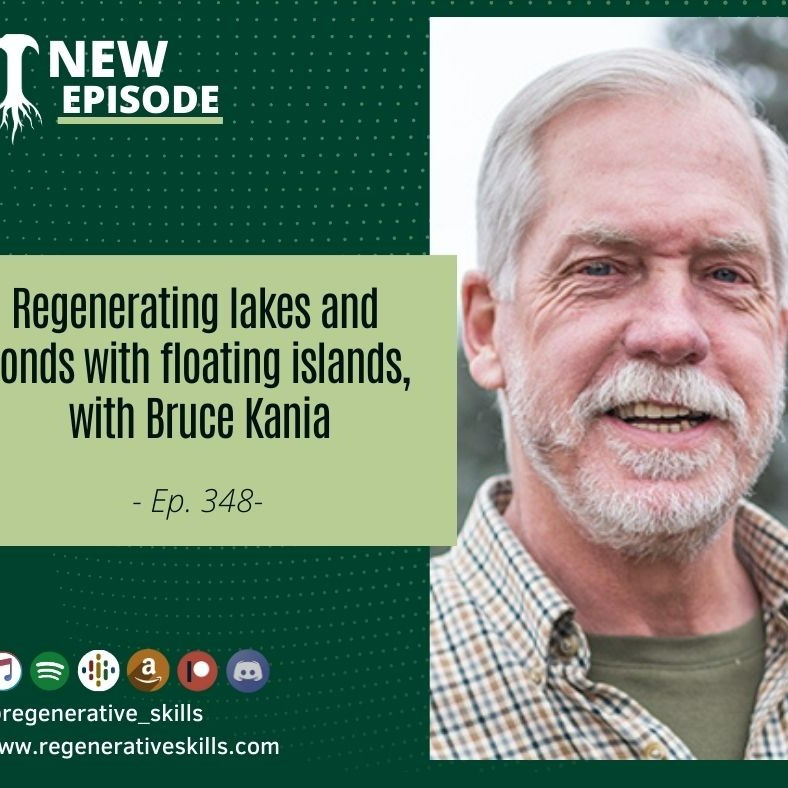
Regenerating lakes and ponds with floating islands, with Bruce Kania [not-audio_url] [/not-audio_url]

Duration: 56:54
I had done one other episode in the past on the topic of floating wetlands that I’d like to revisit today as we continue with this series on regenerative water solutions. In today’s episode I got to speak with Bruce Kani…
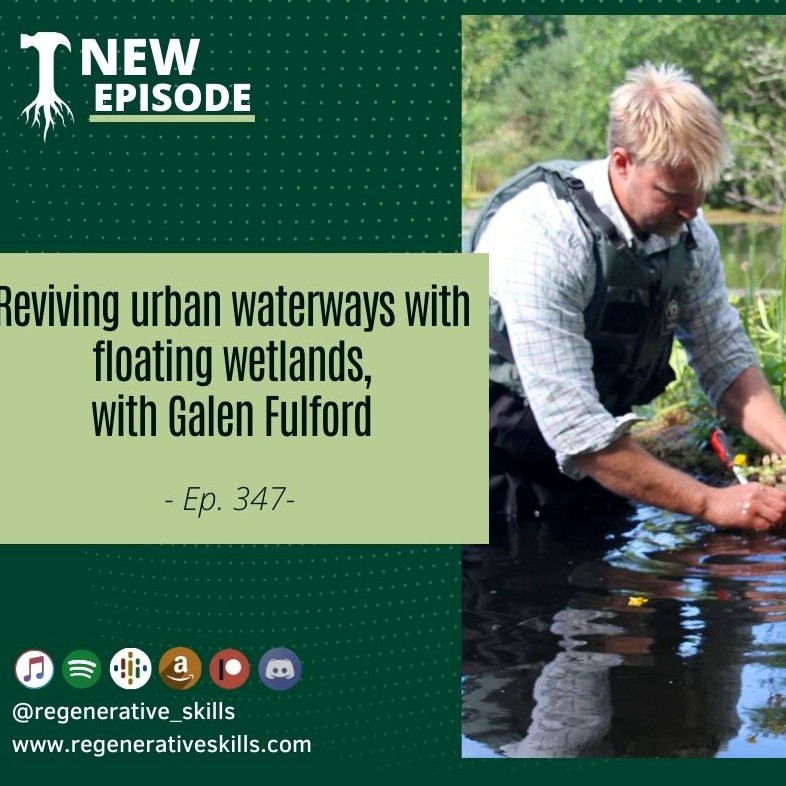
Reviving urban waterways with floating wetlands, with Galen Fulford [not-audio_url] [/not-audio_url]

Duration: 57:20
Today we’re going to take a look at fresh water systems and specifically, how to decontaminate them through biological methods. Some of you may remember an interview I did with Tom Duncan about his floating wetlands and…
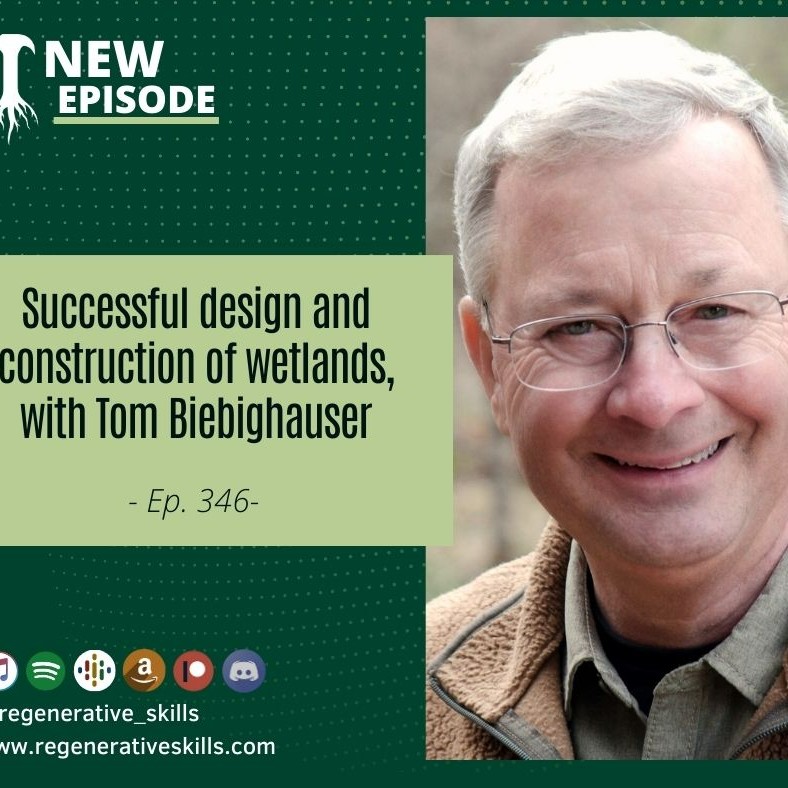
Successful design and construction of wetlands, with Tom Biebighauser [not-audio_url] [/not-audio_url]

Duration: 1:37:52
One of the most crucial natural environments for the health and stability of landscape hydrology are wetlands. They also usually happen to be areas of the highest density of wildlife and biodiversity when they are health…