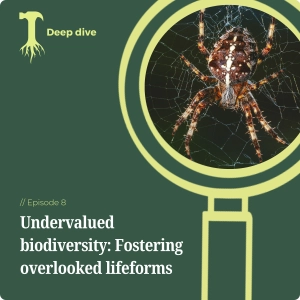
Undervalued biodiversity: Fostering overlooked lifeforms

Undervalued biodiversity: Fostering overlooked lifeforms

Author: Oliver Goshey June 15, 2026 Duration: 1:19:26
After the biodiversity panel from the last episode, I got to thinking about how protecting biodiversity is so often reduced to the life forms that humans value. The ones we find beautiful, friendly, or otherwise useful to us directly. Cuddly mammals, majestic birds, colorful butterflies and flowers, etc.    In many ways though, these living beings are only able to survive and thrive if the critters that we dislike are abundant in the same spaces. Many flowers are pollinated by bugs most would find annoying. A lot of cuddly mammals feed on weed species or our own crops. Eagles and owls need an abundance of rodents and reptiles if their populations are to grow. Many invasive exotic species are working tirelessly to restore damaged and imbalanced ecosystems.    It’s kinda like trying to lose body fat in just one area of your body. You can’t just pick the parts that are desirable to you and expect the whole interconnected system to accept that. Collectively we need to embrace the restoration and stewardship, especially of the lower trophic levels of the food web that support all the higher levels above.    In the last panel we touched a little on the tolerance and adaptation required to share space with predators and birds that threaten livestock and crops, recognizing their role despite the challenges that come from having them around.    Today I’ll be revisiting some of my favorite interviews from previous seasons in which we talked about three specific categories of overlooked and undervalued wildlife.    My hope is that we can welcome these into a broader conversation about biodiversity, and maybe even convince you to work to promote greater diversity and open pollination of your crops and livestock, the full range of insects, and even rethink your management of invasive species in your land or on your farm. 

What does it mean to live a regenerative life, and how do we actually do it? That's the central question explored in Regenerative Skills, hosted by Oliver Goshey. This isn't just about theory; it's a practical dialogue focused on stewardship of the natural world and fostering strong, resilient communities. Every week, Oliver brings conversations with a diverse range of global experts right to your ears, translating their knowledge into actionable steps you can integrate into your daily habits. You'll hear tangible strategies for everything from soil health and sustainable food systems to building local networks and re-skilling ourselves for a better future. The aim is to move beyond sustainability toward active regeneration, providing the tools and perspectives needed to make a tangible difference right where you are. Tune into this educational podcast for a grounded, hopeful, and deeply informative journey. Together, these discussions build a comprehensive guide for anyone looking to heal their relationship with the environment and their neighbors, proving that positive change is woven from countless small, intentional actions.
Author: Language: en-us Episodes: 50

Regenerative Skills
Podcast Episodes
Practical considerations for designing and installing water systems [not-audio_url] [/not-audio_url]

Duration: 1:02:46
Since water management and landscape rehydration is a topic that I’ve covered in depth over years now, I wanted to try and dig into some of the often overlooked, and sometimes less exciting considerations for water. Toda…
Alternative markets and sales strategies for farm products [not-audio_url] [/not-audio_url]

Duration: 50:39
As important as it is to manage the land well to create healthy and abundant produce, it's just as important to sell that produce to a market that values its quality. Many large scale markets buy volume at the lowest pri…
Building resilience on farms against drought, flood, and fire [not-audio_url] [/not-audio_url]

Duration: 1:07:29
Wherever you’re listening to this right now you’re probably feeling the changes this summer in a big way. It’s not only us here in the Mediterranean region of Europe who are experiencing record heat waves, droughts, and…
Reading the landscape for water cycle restoration [not-audio_url] [/not-audio_url]

Duration: 43:36
Following up from the last episode in which I explained some of the broader concepts of water cycles and their relationship with land, vegetation, and management practices, we're going to go down to ground level to explo…
Farm centered research and learning [not-audio_url] [/not-audio_url]

Duration: 56:24
As we’ve explored in recent episodes of the Regenerative Skills Podcast, there’s an unfortunate disconnect between academic institutions, independent research, and real farms. We all know there are endless opportunities…
The fundamentals of water management for farms [not-audio_url] [/not-audio_url]

Duration: 58:38
Today we're going to pause our deep-dive episodes to launch a new series supporting a regenerative agriculture master’s program being developed with European universities, starting with regenerative water management . In…
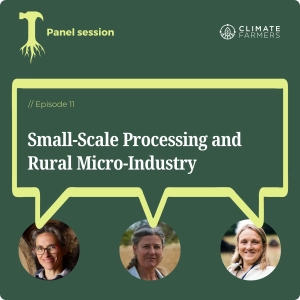
Small-Scale Processing and Rural Micro-Industry panel [not-audio_url] [/not-audio_url]

Duration: 51:02
Farm viability depends on much more than what happens in the field. While we often focus on production and farm management, many of the biggest challenges farmers face are shaped by what happens. After harvest: processin…
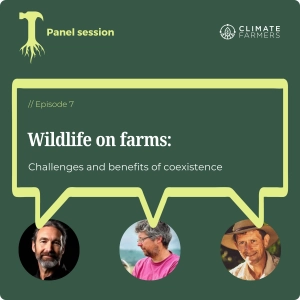
Wildlife on farms: Challenges and benefits of coexistence [not-audio_url] [/not-audio_url]

Duration: 54:28
This month we’re tackling the challenges and benefits of wildlife in all its forms. Wildlife and wild spaces are often spoken about as if they're at odds with the goals of farms. We often talk about battling weeds, deter…
Are carbon markets the best way to finance regenerative transition? [not-audio_url] [/not-audio_url]

Duration: 1:09:19
It’s been over a year now since Climate Farmers let go of its Carbon credit program, and yet I know that many people who’ve been following our company don’t know the full story about how we got started in the carbon mark…
Farms as learning centers: workshops, research, and students [not-audio_url] [/not-audio_url]

Duration: 53:14
The only real way to learn and gain experience in farming is to get your hands dirty and put knowledge into practice. For that reason farms play an essential role in training others to get into this sector and navigate t…