AI Literacy Is Problem-Solving Literacy

AI Literacy Is Problem-Solving Literacy

Author: Jeff Utecht & Tricia Friedman July 7, 2026 Duration: 13:44

Tricia Friedman shares a real-life story about a flooded basement, an insurance claim, and what it revealed about AI literacy.

After a major storm in Ottawa caused basement flooding, Tricia found herself facing the kind of problem many people recognize: too many damaged items, too many documents, too many decisions, and a process that can quickly become overwhelming. But this time, compared with a similar flood two years earlier, the experience felt different.

Using AI tools, Tricia organized photos of damaged belongings, created an insurance-ready inventory, reviewed policy details, searched for replacement costs, identified relevant local supports, and built a project plan for the weeks ahead. She also used AI to think through communication with the insurance company, plan around disruption at home, and even create a small family recipe resource in the middle of the chaos.

The point is not that AI made the flood easy. It did not. The point is that AI changed Tricia's capacity to respond.

For educators, that distinction matters.

Too often, school conversations about AI focus on shortcuts, cheating, prompt-writing, or which tool to use. This episode asks us to widen the frame. AI literacy is also about helping students become stronger problem solvers. That means knowing how to break down a complex situation, gather evidence, ask better questions, compare options, verify claims, communicate clearly, and decide what to do next.

This kind of AI literacy belongs across the curriculum. A flood insurance claim can become a math problem, a media literacy problem, a civics problem, a consumer rights problem, a writing problem, a design problem, and a wellbeing problem. That is the real invitation here: bring AI bigger problems, not just cleaner prompts.

In this episode:

Tricia explains how AI helped her organize a flood-related insurance claim.

She reflects on the difference between using AI for a task and using AI to manage a complex problem.

The episode explores why AI literacy should include verification, judgment, documentation, and communication.

Tricia makes the case that schools need to help students practice using AI in realistic, interdisciplinary situations.

She also raises an equity question: if AI can help people navigate systems like insurance, consumer rights, city services, and legal language, then every student deserves to understand how to use it responsibly.

For educators, this episode asks:

What kinds of real problems are we inviting students to bring to AI?

Are students learning how to check AI outputs against evidence, policy, data, and lived context?

How might AI help students see connections across math, language, civics, research, and design?

What does it mean to teach AI literacy as a form of agency, not just technical skill?

Big idea:

AI literacy is not mainly about knowing how to use a chatbot. It is about knowing how to think with a tool when the problem is complicated, consequential, and real.


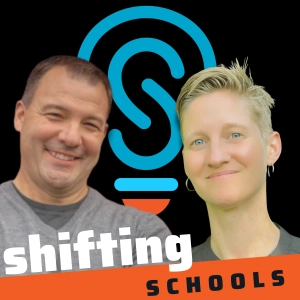
Ever feel like the conversation around education moves faster than a school day? Shifting Schools: Conversations for K12 Educators is here to slow things down just enough for a meaningful dialogue. Hosted by practicing educators Jeff Utecht and Tricia Friedman, this podcast creates a necessary space for teachers and administrators to dig into the real work of modern teaching. Instead of just theory, you’ll hear from fellow practitioners and thought leaders who are navigating the same challenges you face daily. The discussions move beyond surface-level trends to unpack practical strategies and tools that can be adapted for your own classroom or school. Whether it’s rethinking assessment, integrating technology with purpose, or fostering a more inclusive learning environment, each episode is grounded in the shared goal of improving outcomes for every student. Tuning in feels less like another professional development requirement and more like a candid staff room conversation with colleagues who get it. This is where the abstract ideas about educational change meet the concrete reality of the K-12 world, offering actionable insights for anyone committed to the craft of teaching. Find Shifting Schools wherever you listen to your favorite podcasts for a regular dose of perspective and practical ideas.
Author: Language: English Episodes: 50

Shifting Schools: Conversations for K12 Educators
Podcast Episodes
How to Turn Real History into Fiction: Lessons from Steve Berry [not-audio_url] [/not-audio_url]

Duration: 15:15
In this conversation, author Steve Berry discusses his deep-rooted love for history, the intricate process of crafting thrillers that intertwine historical facts with modern narratives, and the importance of research in…
Building connection one board book at a time [not-audio_url] [/not-audio_url]

Duration: 14:33
In this conversation, Sandra Magsamen discusses her approach to creating children's literature that emphasizes connection, love, and emotional intelligence. She shares insights into her creative process, the importance o…
Will AI change the future of the Super Bowl? [not-audio_url] [/not-audio_url]

Duration: 11:03
How is artificial intelligence being used in the NFL today? In this solo episode of Shifting Schools, Tricia Friedman explores how AI is already shaping professional football, with a special focus on Super Bowl Sunday. R…
How Puzzles Build Confidence, Community, and Curiosity [not-audio_url] [/not-audio_url]

Duration: 15:44
What do puzzles teach us about being human. In this episode, Tricia talks with Allison Kane, Head of Puzzle Innovation at Highlights, about why puzzling matters far beyond entertainment. From Hidden Pictures and Wordle t…
What to Do When Teachers Are at Very Different Places With AI [not-audio_url] [/not-audio_url]

Duration: 31:10
How do you move forward with AI in schools when staff confidence is all over the place? Jeff Utecht and Tricia Friedman address one of the most persistent leadership challenges in AI literacy implementation. Within the s…
What Skills Matter Most for AI Literacy? [not-audio_url] [/not-audio_url]

Duration: 33:35
AI literacy in the classroom looks like students practicing judgment, sense-making, and self-awareness while working alongside AI, not replacing thinking with tools. It emphasizes mindset before mechanics. In this episod…
The Mindset Shift You Need for AI Literacy in 2026 [not-audio_url] [/not-audio_url]

Duration: 33:10
In this episode of Shifting Schools, hosts Jeff Utecht and Tricia Friedman discuss their personal experiences over the holidays, leading into a broader conversation about the importance of mindset in education, particula…
How do we help students be more critical of health advice? [not-audio_url] [/not-audio_url]

Duration: 22:03
In this episode, host Tricia Friedman sits down with Dr. Michael Greger, bestselling author and founder of NutritionFacts.org, to explore why non-commercial, evidence-based health guidance matters more than ever. They di…