How to build a story one ingredient at a time with Keala Kendall

How to build a story one ingredient at a time with Keala Kendall

Author: Jeff Utecht & Tricia Friedman June 1, 2026 Duration: 27:49

Join us as Keala Kendall, author of the compelling gothic novel That Which Feeds Us, takes us through her creative process, the importance of representation in storytelling, and how horror can serve as a mirror to society's fears and unresolved histories. This conversation uncovers the layers behind her work, blending culture, history, and genre to provoke thought and evoke emotion.

Main topics covered:
  • Kendall's artistic process and how the novel evolved from initial inspiration
  • The significance of Hawaiian history, colonialism, and land in her storytelling
  • How research and world-building influenced the succinct yet powerful narrative
  • The role of horror in exploring societal fears and marginalized voices
  • The creative benefits of genre fiction, especially horror, in addressing difficult truths
  • Personal journey: reading influences, media inspiration, and her experiences as a Pacific Islander author
  • The novel's reception, including selection by Reese Witherspoon's Book Club, and its impact on conversations about Hawaii
  • The importance of representation and amplification of Pacific Islander stories in publishing
  • How fiction can be a tool for education and social change
Timestamps:

00:00 - Introduction to the novel That Which Feeds Us
00:30 - The inspiration and artistic process behind the book
01:25 - Use of horror to tell stories rooted in colonial history
02:16 - Hawaii as a gothic setting and its historical echoes
03:00 - How the novel balances brevity with depth and world-building
06:13 - Introducing the protagonist, Lihua, and her connection to Hawaii
07:03 - The significance of the book's title and themes of reciprocal land relationships
07:53 - The impact of the Reese Witherspoon Book Club selection
08:28 - What readers might discuss after reading the book
10:05 - Amplifying Pacific Islander voices and stories in publishing
11:17 - The concept of ghosts and history as a collective haunting
12:49 - Confronting Hawaii's dark history and media portrayals
13:17 - The influence of reading and media on her writing, including White Lotus and horror films
14:05 - Early ideas for the novel and Hawaiian cultural motifs in her stories
15:36 - How horror makes space for taboo topics and societal critique
16:24 - Early stories about sisters and the significance of land in Hawaiian culture
17:22 - Her transition from Massachusetts inspiration to homeland storytelling
18:07 - Influences from film and media, including Moana and Hollywood's depiction of Hawaii
19:02 - The intersection of media representations and authentic cultural narratives
20:58 - The pandemic's role in shaping her perspective on Hawaii's infrastructure
22:12 - Why horror's capacity for boundary-pushing makes it vital today
23:58 - The societal fears reflected in horror, from Godzilla to Get Out and Us
25:26 - The power of horror in sparking conversations and societal reflection
26:20 - Closing remarks and thoughts on the book's impact and importance

Keala Kendall is the New York Times and USA Today bestselling author of How Far I'll Go and Nobody Gets Left Behind in Disney's A Twisted Tales series. Hapa Native Hawaiian, she is a co-founder of Pacific Islanders Publishing and a past organizer of the charity Books for Maui.


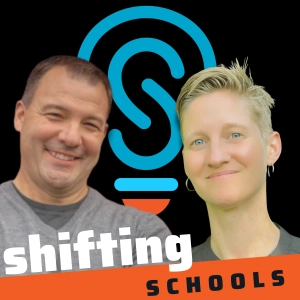
Ever feel like the conversation around education moves faster than a school day? Shifting Schools: Conversations for K12 Educators is here to slow things down just enough for a meaningful dialogue. Hosted by practicing educators Jeff Utecht and Tricia Friedman, this podcast creates a necessary space for teachers and administrators to dig into the real work of modern teaching. Instead of just theory, you’ll hear from fellow practitioners and thought leaders who are navigating the same challenges you face daily. The discussions move beyond surface-level trends to unpack practical strategies and tools that can be adapted for your own classroom or school. Whether it’s rethinking assessment, integrating technology with purpose, or fostering a more inclusive learning environment, each episode is grounded in the shared goal of improving outcomes for every student. Tuning in feels less like another professional development requirement and more like a candid staff room conversation with colleagues who get it. This is where the abstract ideas about educational change meet the concrete reality of the K-12 world, offering actionable insights for anyone committed to the craft of teaching. Find Shifting Schools wherever you listen to your favorite podcasts for a regular dose of perspective and practical ideas.
Author: Language: English Episodes: 50

Shifting Schools: Conversations for K12 Educators
Podcast Episodes
How Nolan's Odyssey and Cover Songs Help Us Talk About AI [not-audio_url] [/not-audio_url]

Duration: 13:27
Christopher Nolan's Odyssey just earned nearly $300 million retelling a 3,000-year-old story — so what actually separates imitation from transformative interpretation? In this episode, Tricia makes the case that cover so…
When Students Go After Real Problems [not-audio_url] [/not-audio_url]

Duration: 32:28
When Alex Campbell set out to teach sociology through true crime, he wasn't trying to catch a murderer. He was trying to make the stakes real. Nine years later, his high school students in Appalachia have restored names…
Do you want to better understand your team? [not-audio_url] [/not-audio_url]

Duration: 14:51
Every team has communication habits, but how many of those habits have ever been discussed out loud? In this episode, Tricia introduces The Shared Kitchen, a free reflection and facilitation tool designed to help teams u…
The perfect middle grade book for readers during The World Cup [not-audio_url] [/not-audio_url]

Duration: 21:45
Award-winning author Christina Diaz Gonzalez joins Tricia to discuss Offside, her new bilingual middle-grade graphic novel about soccer, friendship, ambition, identity, and finding the courage to use your voice. Although…
AI Literacy Is Problem-Solving Literacy [not-audio_url] [/not-audio_url]

Duration: 13:44
Tricia Friedman shares a real-life story about a flooded basement, an insurance claim, and what it revealed about AI literacy. After a major storm in Ottawa caused basement flooding, Tricia found herself facing the kind…
Jerry Spinelli: What Young Writers Need to Know About Stories [not-audio_url] [/not-audio_url]

Duration: 17:56
Newbery Medal-winning author Jerry Spinelli joins the podcast for a conversation about writing, perseverance, childhood, and the stories that stay with young readers. Known to many elementary and middle school teachers t…
Colin Woodard on Civic Identity, Trust, and the American Story [not-audio_url] [/not-audio_url]

Duration: 18:18
In this Fourth of July weekend episode, Tricia Friedman speaks with Colin Woodard, director of Nationhood Lab at Salve Regina University's Pell Center, about national identity, civic trust, polarization, and the stories…
Teaching the Declaration Beyond the Fourth of July [not-audio_url] [/not-audio_url]

Duration: 23:12
In this Fourth of July weekend episode, Tricia Friedman speaks with historian and author Katie Kennedy about her new book, The Declaration Decoded, and the stories behind America's foundational documents. For history and…
What 600 Letters Can Teach Us About WWII [not-audio_url] [/not-audio_url]

Duration: 28:27
In this episode, Tricia speaks with Jan Cress Dondi about the years-long research journey behind her USA Today bestselling WWII book. What began with the discovery of hundreds of family letters became a much larger act o…