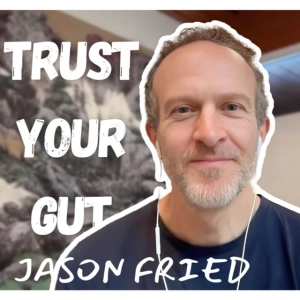
I recently had the honor of interviewing Jason Fried, founder of 37 Signals, Basecamp, on my podcast. Jason provided so many fascinating insights about building a successful business by staying small and sticking to your values. In this post, I want to recap some of his key lessons that really resonated with me.
"Just go and make something - don't overthink it or ask too many people for opinions. Keep it as small as possible and see bootstrap constraints as an advantage, not a disadvantage. And above all, practice your writing as much as you can early on. Honing this skill will provide great leverage." —Jason Fried
The Tradeoffs of Joining an Accelerator Program
When I asked Jason Fried whether he would have joined an accelerator program like Y Combinator when first starting out, he offered thoughtful perspective on the tradeoffs.
* Jason values independence and control above all else in the early stages of business building. Joining an accelerator often requires giving up equity and some autonomy.
* While he sees some benefits like camaraderie with peer founders, Jason prioritized flexibility and patience in the early Basecamp days.
* In his experience, bootstrapping organically and retaining flexibility led to sustainable success, even if growth was slower initially.
Jason's focus on maintaining independence and decision-making power worked extremely well for him. While accelerators provide networking and support, their tradeoffs may not suit every founder's priorities and vision in the critical early days.
Jason Fried's Approach to Decision-Making
When I asked Jason about his decision-making framework, he offered insightful perspectives on how he navigates choices in both his work and personal life.
* Jason relies heavily on intuition and "gut feel" for major decisions instead of overly analysing data. He values acting decisively based on experience.
* He aims to make decisions quickly, avoiding overthinking or unnecessary bureaucracy that can slow progress. Jason empowers his teams to make many calls themselves as well.
* For personal life decisions, Jason looks to become more accepting of situations outside his control, rather than try to control uncontrollable things.
* He finds decisions easier when the timeframe and stakes are lower, enabling course correction later if needed. Not every choice must be perfect.
* Jason sleeps on tougher calls to get clarity from "tomorrow morning" before finalizing complex decisions.
* Input from others provides valuable perspective, but ultimately Jason combines that with his own instincts and experience.
Jason's reliance on intuition paired with decisiveness has clearly worked well for Basecamp. He offers a compelling case for not over-analyzing every decision, and trusting your gut combined with wisdom.
"While data has an important role, the mystery and power of intuition, built on years of experience, should not be ignored when making business decisions. Often, the ideas we test originate from someone's gut instinct deep down, even in highly data-driven companies." —Jason Fried
No Venture Capital Investment Needed
When I asked Jason about his approach to venture capital and angel investing, he offered thought-provoking perspective shaped by Basecamp's organic growth journey.
* Jason does very little angel investing himself, only small amounts in friends' companies to help them out personally.
* In general he avoids external investing to limit risk exposure beyond his own business.
* Critically, Basecamp has never raised any venture capital or taken outside investment.
* Jason wanted the freedom to build the business on his own terms and timeline, not dictated by investor expectations.
* He warns founders that VC funding can shift priorities toward rapid growth and short-term returns for backers.
* While he sees how VC enables some companies to quickly scale, Jason chose patient, sustainable self-funding for Basecamp.
* By reinvesting profits back into the business over time, Basecamp has grown organically without giving up equity or control.
Jason's commitment to retaining independence and control clearly shaped his approach to avoiding external investment and VC funding for Basecamp. His priorities were building a lasting business on his own terms, not rapid investor-fueled growth.
Jason Fried on Hiring and Firing at Basecamp
I asked Jason about his unique approach to hiring and firing at Basecamp. His philosophy offers fascinating insights.
* Jason hires based on cover letters over resumes to understand how applicants think and communicate.
* He looks for reasoned thought and problem-solving ability over academic/work achievements.
* Skills matter less than alignment with Basecamp's values and independent working style.
* Jason gives candidates small paid test projects vs. speculative work samples.
* For firing, underperformers are given direct feedback and opportunities to improve.
* But if values/team fit remains wrong, letting someone go is often better for both parties.
* Jason aims to handle firing in a compassionate, dignified manner focused on humanity.
* Compensation continues during the firing transition period at Basecamp.
Jason's unorthodox hiring and firing approaches focus on culture fit and alignment over typical qualifications. He aims to maintain ethical, humane practices for employees.
"You don't need to 'win' or dominate a market to thrive. Find your niche, cover costs, turn a profit, and carve out a sustainable place - that's how you define success." — Jason Fried
Jason Fried's Tips for Protecting Focus
When I asked Jason how he protects his attention and avoids distractions, he shared actionable insights.
* Jason schedules long uninterrupted blocks of time for focused work. He relies on calendar blocking diligently.
* He eliminates internal company distractions by keeping chat and meetings to a minimum.
* Jason turns off notifications and limits checking emails to set batch times twice a day.
* He changes environments to get into deeper flow states, working outside the office when needed.
* Jason sets clear expectations on when and how team members can contact each other.
* He models focus for his team by not interrupting them when they are heads-down working.
* Jason sustains energy by taking regular breaks and incorporating physical activity.
Jason protects focus through calendar blocking, eliminating internal distraction, changing settings, setting communication expectations, taking breaks, and leading by example. “Time to think and create is treasured.”
Jason Fried's Top Tips for His Younger Self
When asked what advice he'd give his younger self at Basecamp's founding, Jason shared insightful reflections.
* Don't take outside investment or venture capital right away. Bootstrap the business slowly.
* Start with a niche focus. Don't try to serve everyone early on. Do one thing exceptionally well.
* Get traction and validate demand before building out a large team. Stay small and avoid unnecessary growth.
* Don't get distracted by other people's metrics for success. Focus on your own goals and values.
* Trust your instincts more. Don't get paralyzed overanalyzing every data point and decision.
* Appreciate the journey. Don't just fixate on some future endpoint or exit strategy.
Jason's advice centered on staying patient, retaining control, keeping teams small, ignoring unnecessary pressures and metrics, trusting your gut, and enjoying the ride.
"I look to nature and architecture to shape my perspective - nature for its sublime solutions and architecture for its craft of space and feeling. These timeless examples from the world around us inspire artistry and thoughtfulness in all that I do." —Jason Fried
Get full access to Startup Istanbul at
newsletter.startupistanbul.com/subscribe