Best of Frenemies: Debussy and Ravel

Best of Frenemies: Debussy and Ravel

Author: Joshua Weilerstein April 3, 2025 Duration: 52:22

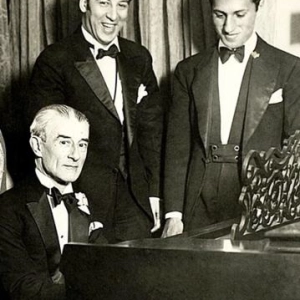
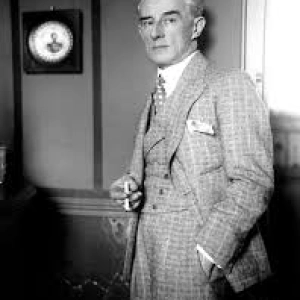
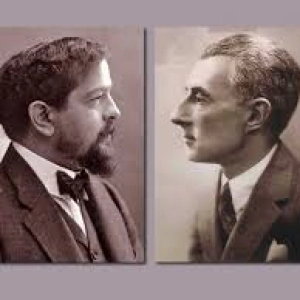
Debussy and Ravel are often described as the prototypical musical impressionists. It is often said that the two composers are the closest equivalents to the artistic world of Monet, Renoir, Pisarro, Degas, and others. But both Ravel and Debussy (like Monet for that matter), vehemently rejected the term Impressionism, and they both felt that they were striking out on their own individual paths in their msuic. That didn't stop the public and critics from constantly comparing the music of these two shining lights of French music, despite the fact that Ravel and Debussy are actually quite different. Comparing Ravel and Debussy is a bit like comparing Haydn and Mozart. At first glance, there are many similarities, but if you look and listen more closely, Ravel and Debussy(like Mozart and Haydn) had totally different approaches, goals, and styles.

All of the constant comparisons and attempts at making the composers compete with each other had a real impact on Debussy and Ravel. Initially they were friends and mutual admirers of each others work, but they slowly drifted apart over time until they stopped speaking to each other altogether. We'll talk about this complicated personal relationship, as well as looking at these differences in their music, not from a critical standpoint, but from the perspective of bringing out what is so wonderfully unique about their music. We'll also talk about Ravel's arrangements of two Debussy's greatest orchestral works: his two piano arrangement of Debussy's Nocturnes, and his piano 4 hands arrangement of the legendary Prelude to the Afternoon of a Faun. Join us on another collaboration with G Henle Publishers!

Recordings:

Nocturnes

Claudio Abbado with London Symphony
Anne Shasby, Richard McMahon, Piano

Prelude to the Afternoon of a Faun

Ravel arrangement: Jean-Pierre Armengaud and Olivier Chauzu
Debussy Arrangement: Charles Badami and Anthony Olson 


There’s a particular kind of curiosity that draws people to classical music, but the sheer scale of the repertoire can feel overwhelming. Sticky Notes: The Classical Music Podcast, hosted by conductor Joshua Weilerstein, meets that curiosity right where it is. Think of it as a series of open conversations about the music itself, designed to be equally engaging for someone hearing a symphony for the first time and for a lifelong devotee. Episodes might feature a thoughtful interview with a performing artist, offering a glimpse behind the curtain, or they could focus entirely on a single piece, peeling back its layers to explore why it resonates. Weilerstein guides these explorations with clarity and enthusiasm, moving seamlessly from foundational concepts to more nuanced details about different musical eras. The entire premise of this podcast is built on a genuine belief that this music belongs to all of us. It’s about replacing any sense of intimidation with connection and understanding. While past seasons are gradually being re-released, each episode stands as its own invitation to listen more deeply.
Author: Language: English Episodes: 50

Sticky Notes: The Classical Music Podcast
Podcast Episodes
Impressions in Blue: Ravel & Gershwin [not-audio_url] [/not-audio_url]

Duration: 44:34
In the mid-1920s, Maurice Ravel wrote a letter to the legendary composition teacher Nadia Boulanger. Boulanger's class was a mecca for composers, both young and old, and musicians from all over the world vied to study wi…
Weill: The Seven Deadly Sins [not-audio_url] [/not-audio_url]

Duration: 1:00:01
The collaboration between Kurt Weill and Bertolt Brecht is rightly legendary. The two men could not have been more different from each other, and like the Brahms/Joachim relationship I mentioned in my recent show about t…
The Ravel Sound with Norbert Müllemann and Stefan Knüpfer [not-audio_url] [/not-audio_url]

Duration: 45:32
I so enjoyed making this latest episode in my collaboration with G Henle Publishers. I talked with two absolute experts in their fields, Norbert Mülleman and Stefan Knüpfer, all about how to edit Ravel's music, and how t…
Dvorak Violin Concerto [not-audio_url] [/not-audio_url]

Duration: 49:16
Admit it: if you're a fan of classical music—or even just a regular concertgoer—you might have glanced at the title of this episode and done a double take. The Dvořák Violin Concerto? Not the Cello Concerto? One of the t…
Brahms Double Concerto [not-audio_url] [/not-audio_url]

Duration: 58:17
It's entirely possible that we would not know the name of Johannes Brahms very well if Brahms hadn't met Joseph Joachim as a very young man. Joachim, who was one of the greatest violinists of all time, had already establ…
Copland Clarinet Concerto [not-audio_url] [/not-audio_url]

Duration: 48:13
The commission for a new Clarinet Concerto from the great American composer Aaron Copland came from a rather unlikely source: Benny Goodman, the man known as the King of Swing. Goodman was one of the most famous and impo…
Steve Reich: Different Trains [not-audio_url] [/not-audio_url]

Duration: 52:30
Steve Reich, the great American contemporary composer, provided this program note about his work Different Trains: "The idea for the piece came from my childhood. When I was one year old my parents separated. My singer,…
Shostakovich Cello Concerto No. 1 [not-audio_url] [/not-audio_url]

Duration: 50:05
It's hard to overstate the depth of the connection between Dmitri Shostakovich and the legendary cellist Mstistlav Rostropovich. Shostakovich and Rostropovich were extremely close friends, and Shostakovich wrote and dedi…