Franck Symphony in D Minor

Franck Symphony in D Minor

Author: Joshua Weilerstein November 20, 2025 Duration: 59:57

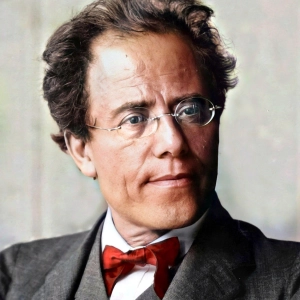
In the 1960s, Leonard Bernstein famously helped to popularize the music of a then relatively obscure composer, Gustav Mahler. His work, as well as the work of other conductors, made Mahler into a classical-music household name. Mahler's symphonies are played every year all over the world, and he is firmly ensconced in the so-called canon of standard orchestral repertoire.

Would it surprise you to know that Franck's D Minor Symphony once had the same reputation? It was played almost every year by most major orchestras, it was recorded by all the great conductors, and it was a fixture of the canon just like a Brahms symphony. Nowadays you would be lucky if, outside of France and Belgium, you hear Franck's Symphony once every five years, if that.

The truth is that, other than a short golden period for this symphony, it has either been controversial (around the time it was premiered) or ignored (nowadays), which is a real shame, since it is a glorious piece that I would argue is drastically underrated in our modern world. The symphony was radically innovative for its time, which probably explains some of the more virulent criticism it received, but even though those innovations now sound completely normal to our ears, they are still at the heart of what makes this symphony so profoundly satisfying to listen to.

Ahead of my performances of the symphony in Lille this December, I wanted to dive in and explore this unfairly ignored masterpiece. In about 40 minutes of music in three grand movements, Franck pours his soul into this work. That phrase sounds a bit cliché, I know, but I really mean it; there is an earnestness about this music that I find deeply moving, and it is something we will explore together today.

We will talk about Franck's late entry into the world of composition, his reputation as an organist, and the challenges he faced in finding acceptance as a composer. Along the way, we will discuss this gorgeous piece in all of its passion and intensity. Join us!


There’s a particular kind of curiosity that draws people to classical music, but the sheer scale of the repertoire can feel overwhelming. Sticky Notes: The Classical Music Podcast, hosted by conductor Joshua Weilerstein, meets that curiosity right where it is. Think of it as a series of open conversations about the music itself, designed to be equally engaging for someone hearing a symphony for the first time and for a lifelong devotee. Episodes might feature a thoughtful interview with a performing artist, offering a glimpse behind the curtain, or they could focus entirely on a single piece, peeling back its layers to explore why it resonates. Weilerstein guides these explorations with clarity and enthusiasm, moving seamlessly from foundational concepts to more nuanced details about different musical eras. The entire premise of this podcast is built on a genuine belief that this music belongs to all of us. It’s about replacing any sense of intimidation with connection and understanding. While past seasons are gradually being re-released, each episode stands as its own invitation to listen more deeply.
Author: Language: English Episodes: 284

Sticky Notes: The Classical Music Podcast
Podcast Episodes
Mendelssohn Octet in E Flat Major, Op. 20 [not-audio_url] [/not-audio_url]

Duration: 1:03:17
From 1825-1827, Mendelssohn wrote 3 of his most beloved and most played works: his Midsummer Night's Dream Overture, his String Quartet, Op. 13, and the piece were going to talk about today, his Octet. What is truly asto…
Mahler Symphony No. 5, Part 2 [not-audio_url] [/not-audio_url]

Duration: 48:53
I left you last week after Part 1 of Mahler's 5th symphony, dazed and defeated. There seems to be no hope, and no way out. But as many of you know by now, Mahler reaches for the entire emotional spectrum in his music, an…
Mahler Symphony No. 5, Part 1 [not-audio_url] [/not-audio_url]

Duration: 57:58
There is a thread of musical theory called Schenkerian analysis, based on the work of Heinrich Schenker. Schenker believed that musical works could be boiled down to their fundamental structures and harmonies. Entire wor…
Schoenberg: Verklärte Nacht [not-audio_url] [/not-audio_url]

Duration: 57:39
I'm not sure there's ever been a composer who changed as much throughout his or her life as Arnold Schoenberg. Schoenberg would become famous, or infamous, depending on who you talk to, for his invention of atonality; th…
What Does an Opera Director Really Do? W/ Tabatha McFadyen [not-audio_url] [/not-audio_url]

Duration: 59:49
Have you ever wondered what exactly goes on behind the scenes putting together an opera? Have you ever asked yourself how a director make decisions on how to interpret the libretto of an opera? Why do some productions lo…
The Life and Music of Clara Schumann [not-audio_url] [/not-audio_url]

Duration: 48:33
Clara Schumann, without a doubt, was one of the greatest pianists of all time. Schumann's playing didn't just leave critics and audiences in raptures, it also left other composers amazed that their music could sound so b…
Brahms Symphony No. 1 [not-audio_url] [/not-audio_url]

Duration: 52:30
Brahms was only 20 years old when Robert Schumann wrote his famous Neue Bahnen(New Paths) article that proclaimed Brahms as the future of music and the heir of Beethoven. Beethoven had only been dead for 26 years at this…
Debussy String Quartet [not-audio_url] [/not-audio_url]

Duration: 48:56
Just one year before Debussy wrote his legendary Prelude to the Afternoon of a Faun, he completed another groundbreaking work. It was a string quartet, which he expected to be the first of many. But in the end, it would…