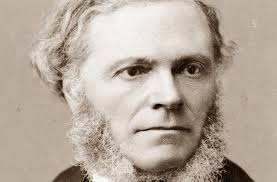
Franck Symphony in D Minor

Franck Symphony in D Minor

Author: Joshua Weilerstein November 20, 2025 Duration: 59:57

In the 1960s, Leonard Bernstein famously helped to popularize the music of a then relatively obscure composer, Gustav Mahler. His work, as well as the work of other conductors, made Mahler into a classical-music household name. Mahler's symphonies are played every year all over the world, and he is firmly ensconced in the so-called canon of standard orchestral repertoire.

Would it surprise you to know that Franck's D Minor Symphony once had the same reputation? It was played almost every year by most major orchestras, it was recorded by all the great conductors, and it was a fixture of the canon just like a Brahms symphony. Nowadays you would be lucky if, outside of France and Belgium, you hear Franck's Symphony once every five years, if that.

The truth is that, other than a short golden period for this symphony, it has either been controversial (around the time it was premiered) or ignored (nowadays), which is a real shame, since it is a glorious piece that I would argue is drastically underrated in our modern world. The symphony was radically innovative for its time, which probably explains some of the more virulent criticism it received, but even though those innovations now sound completely normal to our ears, they are still at the heart of what makes this symphony so profoundly satisfying to listen to.

Ahead of my performances of the symphony in Lille this December, I wanted to dive in and explore this unfairly ignored masterpiece. In about 40 minutes of music in three grand movements, Franck pours his soul into this work. That phrase sounds a bit cliché, I know, but I really mean it; there is an earnestness about this music that I find deeply moving, and it is something we will explore together today.

We will talk about Franck's late entry into the world of composition, his reputation as an organist, and the challenges he faced in finding acceptance as a composer. Along the way, we will discuss this gorgeous piece in all of its passion and intensity. Join us!


There’s a particular kind of curiosity that draws people to classical music, but the sheer scale of the repertoire can feel overwhelming. Sticky Notes: The Classical Music Podcast, hosted by conductor Joshua Weilerstein, meets that curiosity right where it is. Think of it as a series of open conversations about the music itself, designed to be equally engaging for someone hearing a symphony for the first time and for a lifelong devotee. Episodes might feature a thoughtful interview with a performing artist, offering a glimpse behind the curtain, or they could focus entirely on a single piece, peeling back its layers to explore why it resonates. Weilerstein guides these explorations with clarity and enthusiasm, moving seamlessly from foundational concepts to more nuanced details about different musical eras. The entire premise of this podcast is built on a genuine belief that this music belongs to all of us. It’s about replacing any sense of intimidation with connection and understanding. While past seasons are gradually being re-released, each episode stands as its own invitation to listen more deeply.
Author: Language: English Episodes: 284

Sticky Notes: The Classical Music Podcast
Podcast Episodes
Mahler Symphony No. 4, Part 1 [not-audio_url] [/not-audio_url]

Duration: 51:49
After the truly heavenly slow movement of Mahler's 4th symphony, a soprano emerges and sings a song literally called "The Heavenly Life." It is a symphonic ending like no other, one that leaves the listener peaceful and…
Beethoven String Quartet, Op. 132, Part 2 [not-audio_url] [/not-audio_url]

Duration: 44:37
If you joined me last week, you heard about the severe intestinal illness that Beethoven suffered from during the year of 1825. Beethoven thought that he was near death; he was spitting up blood, in terrible pain, and re…
Beethoven String Quartet, Op. 132, Part 1 [not-audio_url] [/not-audio_url]

Duration: 45:01
I had long hesitated to write a show about any of Beethoven's late string quartets. These are pieces that professional quartets spend the better part of their careers grappling with, struggling with, failing with, and mu…
Nielsen Symphony No. 4, "Inextinguishable" [not-audio_url] [/not-audio_url]

Duration: 59:36
At the top of the score for the Danish composer Carl Nielsen's 4th symphony, he wrote: "Music is life, and like it, inextinguishable." This could easily be the shortest podcast I've ever done. I could leave you with that…
Mendelssohn: A Midsummer Night's Dream [not-audio_url] [/not-audio_url]

Duration: 52:41
The stories, legends, and myths about the trials and travails of composers lives are legion, like Beethoven's battles against fate, Mozart and Schubert's struggles with finances, Brahms' failures with women, Mahler's tro…
Elgar Cello Concerto [not-audio_url] [/not-audio_url]

Duration: 52:24
Elgar's Cello Concerto was composed in the shadow of World War 1. It was a piece that marked a profound shift in Elgar's outlook on life and music, and was his last major work before a long silence caused by the death of…
Romeo and Juliet in Classical Music [not-audio_url] [/not-audio_url]

Duration: 49:19
The "love theme" from Tchaikovsky's Romeo and Juliet Fantasy-Overture is one of the most famous themes in the history of Western Classical Music. The story it accompanies might be the most famous Western play ever writte…
Mozart Symphony No. 38, "Prague" [not-audio_url] [/not-audio_url]

Duration: 53:28
Very few cities have had a relationship with a single person, especially a foreigner, like the city of Prague and its love affair with Mozart. Here's what Lorenzo Da Ponte, Mozart's librettist for some of his greatest op…
Jean-Louis Duport Cello Concerto No. 4 [not-audio_url] [/not-audio_url]

Duration: 43:05
Thank you to Nicole for sponsoring today's show on Patreon! Have you ever heard of Jean-Louis Duport? I imagine that unless you are a professional cellist, or someone who studied cello as a child, you probably haven't. E…
Brahms B Major Piano Trio [not-audio_url] [/not-audio_url]

Duration: 55:26
When we listen to the music of Johannes Brahms, we often are reminded of the image of the portly bearded Brahms at the piano, eyes closed in a soulful pose. Brahms' works always, even in his youth, seemed to have a burni…
