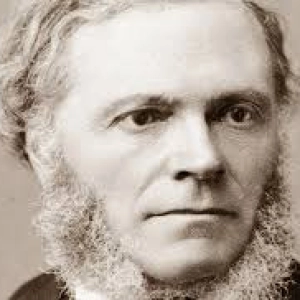
Franck Symphony in D Minor

Franck Symphony in D Minor

Author: Joshua Weilerstein November 20, 2025 Duration: 59:57

In the 1960s, Leonard Bernstein famously helped to popularize the music of a then relatively obscure composer, Gustav Mahler. His work, as well as the work of other conductors, made Mahler into a classical-music household name. Mahler's symphonies are played every year all over the world, and he is firmly ensconced in the so-called canon of standard orchestral repertoire.

Would it surprise you to know that Franck's D Minor Symphony once had the same reputation? It was played almost every year by most major orchestras, it was recorded by all the great conductors, and it was a fixture of the canon just like a Brahms symphony. Nowadays you would be lucky if, outside of France and Belgium, you hear Franck's Symphony once every five years, if that.

The truth is that, other than a short golden period for this symphony, it has either been controversial (around the time it was premiered) or ignored (nowadays), which is a real shame, since it is a glorious piece that I would argue is drastically underrated in our modern world. The symphony was radically innovative for its time, which probably explains some of the more virulent criticism it received, but even though those innovations now sound completely normal to our ears, they are still at the heart of what makes this symphony so profoundly satisfying to listen to.

Ahead of my performances of the symphony in Lille this December, I wanted to dive in and explore this unfairly ignored masterpiece. In about 40 minutes of music in three grand movements, Franck pours his soul into this work. That phrase sounds a bit cliché, I know, but I really mean it; there is an earnestness about this music that I find deeply moving, and it is something we will explore together today.

We will talk about Franck's late entry into the world of composition, his reputation as an organist, and the challenges he faced in finding acceptance as a composer. Along the way, we will discuss this gorgeous piece in all of its passion and intensity. Join us!


There’s a particular kind of curiosity that draws people to classical music, but the sheer scale of the repertoire can feel overwhelming. Sticky Notes: The Classical Music Podcast, hosted by conductor Joshua Weilerstein, meets that curiosity right where it is. Think of it as a series of open conversations about the music itself, designed to be equally engaging for someone hearing a symphony for the first time and for a lifelong devotee. Episodes might feature a thoughtful interview with a performing artist, offering a glimpse behind the curtain, or they could focus entirely on a single piece, peeling back its layers to explore why it resonates. Weilerstein guides these explorations with clarity and enthusiasm, moving seamlessly from foundational concepts to more nuanced details about different musical eras. The entire premise of this podcast is built on a genuine belief that this music belongs to all of us. It’s about replacing any sense of intimidation with connection and understanding. While past seasons are gradually being re-released, each episode stands as its own invitation to listen more deeply.
Author: Language: English Episodes: 100

Sticky Notes: The Classical Music Podcast
Podcast Episodes
Literary Works in Classical Music [not-audio_url] [/not-audio_url]

Duration: 46:31
My Patreon sponsor for this episode, Adrian, set me a challenge: The influence of literary works on classical compositions, exploring pieces inspired by poetry, novels, or plays. He also asked me to do something else, an…
Brahms Clarinet Quintet [not-audio_url] [/not-audio_url]

Duration: 51:11
The muses were Ancient Greek goddesses of inspiration. Throughout history, the term muse has been used to describe any number of people, all of whom inspired works of great art and/or literature. In the popular imaginati…
Politics in Classical Music [not-audio_url] [/not-audio_url]

Duration: 57:21
Classical music and politics have never been easy bedfellows. Composers and performers throughout history have relied on patronage and support from wealthy sources in order to keep their dreams afloat, and so unlike many…
Bernstein: Symphonic Dances from Westside Story [not-audio_url] [/not-audio_url]

Duration: 42:29
The original production of Westside Story ran for 732 performances, spawned a movie that won 11 Academy Awards, and is still a go to on every list of the greatest Broadway Musicals ever written. The collaboration between…
A Conversation with Composer Caroline Shaw [not-audio_url] [/not-audio_url]

Duration: 47:32
Caroline Shaw is one of the most fascinating, innovative, and brilliant composers of our time. Since winning the Pulitzer Prize in 2013, she rocketed onto the scene and has stayed there ever since, writing music that has…
Ives Three Places in New England [not-audio_url] [/not-audio_url]

Duration: 1:00:25
In 1929, the conductor Nicolas Slonimsky contacted the American composer Charles Ives about performing one of his works. This was a bit of a surprise for Ives, since he had a checkered reputation among musicians and audi…
William Grant Still Symphony No. 1, "Afro-American" [not-audio_url] [/not-audio_url]

Duration: 1:06:53
Fundraiser link here: https://www.eventbrite.com/e/1026719635067?aff=oddtdtcreator On October 29th, 1931, The Rochester Philharmonic in New York State presented the world premiere of a new symphony by the composer Willia…
Gershwin: Rhapsody In Blue [not-audio_url] [/not-audio_url]

Duration: 48:19
"It was on the train, with its steely rhythms, its rattle-ty bang, that is so often so stimulating to a composer – I frequently hear music in the very heart of the noise.... And there I suddenly heard, and even saw on pa…
Bartok Violin Concerto No. 2 [not-audio_url] [/not-audio_url]

Duration: 56:50
During Bartok's life, the violin concerto we now know as Violin Concerto No. 2 was simply known as Bartok's only violin concerto. The reason? His first concerto, written when he was a much younger man, had never been per…
Dvorak Symphony No. 7 [not-audio_url] [/not-audio_url]

Duration: 58:59
In December of 1884, Dvorak wrote to a friend about the composition of a new symphony: "I am now busy with this symphony for London, and wherever I go I can think of nothing else. God grant that this Czech music will mov…