Gustav Holst: The Planets

Gustav Holst: The Planets

Author: Joshua Weilerstein December 4, 2025 Duration: 1:02:09

Mr. Holst, wherever you are, I apologize in advance for what I'm about to say. From my research, I know you resented this fact, but unfortunately, I think it's true. Here it is: despite the large catalogue of music Gustav Holst composed, much of it wonderful, he is essentially a one-hit wonder in the classical music world, à la Pachelbel, Dukas, Mascagni, and others. His one hit is a big one, though: an epic, seven-movement suite entitled The Planets.

As I said, Holst was not happy about this in the slightest. He was a prolific composer and someone who devoted himself fully to his subjects. He considered other works he wrote better than The Planets, and yet, in the end, we hear very little of his other music, though since the 1980s some of it has been performed more frequently, particularly in the UK.

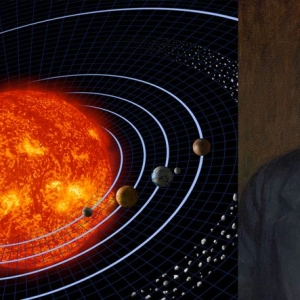
But The Planets is truly a hit: the reason we know Holst's name today, and one of the most frequently performed pieces in the entire Western classical canon. Holst took a novel approach to his depiction of the planets. They are not ordered by their astronomical distance, but by musical cohesiveness. Nor do they depict the planets in a scientific sense; instead, they present a deeply personal astrological interpretation, something we'll explore as we discuss the piece.

The orchestration is massive yet subtle, with colors unique both to the work itself and to Holst's output more broadly. It is easy to listen to and straightforward, while also somehow intensely complex and varied. It is powerful, Romantic, thrilling, joyous, mysterious, terrifying, and ultimately cosmic in both conception and execution.

This is one of those pieces that people love without necessarily giving it the full respect it deserves. So today on the show, we'll learn a little about Holst's life, what led him to write The Planets, and why this piece grabs hold of us and doesn't let go throughout our journey through the stars. Join us! 


There’s a particular kind of curiosity that draws people to classical music, but the sheer scale of the repertoire can feel overwhelming. Sticky Notes: The Classical Music Podcast, hosted by conductor Joshua Weilerstein, meets that curiosity right where it is. Think of it as a series of open conversations about the music itself, designed to be equally engaging for someone hearing a symphony for the first time and for a lifelong devotee. Episodes might feature a thoughtful interview with a performing artist, offering a glimpse behind the curtain, or they could focus entirely on a single piece, peeling back its layers to explore why it resonates. Weilerstein guides these explorations with clarity and enthusiasm, moving seamlessly from foundational concepts to more nuanced details about different musical eras. The entire premise of this podcast is built on a genuine belief that this music belongs to all of us. It’s about replacing any sense of intimidation with connection and understanding. While past seasons are gradually being re-released, each episode stands as its own invitation to listen more deeply.
Author: Language: English Episodes: 100

Sticky Notes: The Classical Music Podcast
Podcast Episodes
Mendelssohn: A Midsummer Night's Dream [not-audio_url] [/not-audio_url]

Duration: 52:41
The stories, legends, and myths about the trials and travails of composers lives are legion, like Beethoven's battles against fate, Mozart and Schubert's struggles with finances, Brahms' failures with women, Mahler's tro…
Elgar Cello Concerto [not-audio_url] [/not-audio_url]

Duration: 52:24
Elgar's Cello Concerto was composed in the shadow of World War 1. It was a piece that marked a profound shift in Elgar's outlook on life and music, and was his last major work before a long silence caused by the death of…
Romeo and Juliet in Classical Music [not-audio_url] [/not-audio_url]

Duration: 49:19
The "love theme" from Tchaikovsky's Romeo and Juliet Fantasy-Overture is one of the most famous themes in the history of Western Classical Music. The story it accompanies might be the most famous Western play ever writte…
Mozart Symphony No. 38, "Prague" [not-audio_url] [/not-audio_url]

Duration: 53:28
Very few cities have had a relationship with a single person, especially a foreigner, like the city of Prague and its love affair with Mozart. Here's what Lorenzo Da Ponte, Mozart's librettist for some of his greatest op…
Jean-Louis Duport Cello Concerto No. 4 [not-audio_url] [/not-audio_url]

Duration: 43:05
Thank you to Nicole for sponsoring today's show on Patreon! Have you ever heard of Jean-Louis Duport? I imagine that unless you are a professional cellist, or someone who studied cello as a child, you probably haven't. E…
Brahms B Major Piano Trio [not-audio_url] [/not-audio_url]

Duration: 55:26
When we listen to the music of Johannes Brahms, we often are reminded of the image of the portly bearded Brahms at the piano, eyes closed in a soulful pose. Brahms' works always, even in his youth, seemed to have a burni…
Sibelius Violin Concerto [not-audio_url] [/not-audio_url]

Duration: 48:02
There's a joke among classical musicians that the only parts of a piece that matter are the beginning, the end, and one place in the middle. I don't think its something that anyone really believes in, but the value of th…
Ravel, Bolero + La Valse [not-audio_url] [/not-audio_url]

Duration: 54:28
Maurice Ravel the Magician, the Swiss Watchmaker, the aloof, the elegant, the precise, the soulful, the childlike, the naive, the warm, the radical, the progressive. These are all words that were used to describe a man o…
Mussorgsky, Pictures at an Exhibition [not-audio_url] [/not-audio_url]

Duration: 58:50
Have you ever been to an art museum and wished that you had music to accompany your experience? Music that made the art you were looking at more vivid, more immediate, and more emotionally intense? Well, Modest Mussorgsk…
Beethoven Piano Concerto No. 4 [not-audio_url] [/not-audio_url]

Duration: 59:35
Welcome to episode number 200 of Sticky Notes!! On December 22nd, 1808, a day that would live in classical music lore forever, Ludwig Van Beethoven sat down for his very last appearance as a solo pianist to play this new…