Scriabin Poem of Ecstasy

Scriabin Poem of Ecstasy

Author: Joshua Weilerstein July 23, 2026 Duration: 51:04

Thence the universe resounds


With a joyful cry 

I AM.

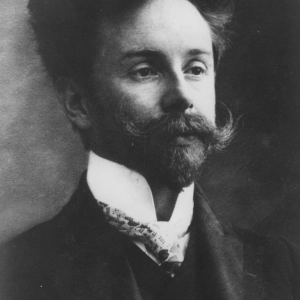
These are the final lines of Alexander Scriabin's epic Poem of Ecstasy, a 300-line poem that takes nearly 10 minutes to read aloud and is one of the most surreal texts in the world. Scriabin wrote a Poem of Ecstasy in text and a Poem of Ecstasy in music simultaneously. Both are absolutely wild, with the musical Poem of Ecstasy being a 20-minute thrill ride that alternates between languid, sinewy, seductive music and some of the loudest, most over-the-top, and dramatic music that could possibly exist. I've always been fascinated by Scriabin, and so this week's episode is an opportunity to talk about his wild (I'm going to be using that word a lot today) life and the eclectic philosophy behind Scriabin's works, as well as to take you through this masterpiece of musical sensuality. Scriabin not only doesn't shy away from sensual aspects in music but instead fully embraces them; in fact, the original title for this piece was Orgiastic Poem! Thankfully, since the piece probably would have never been performed with that title, Scriabin changed the name to Poem of Ecstasy, and the piece has stayed in the repertoire of most big orchestras ever since. And big is the key word here, because this piece is written for an absolutely massive orchestra. Like a Mahler symphony, the Poem of Ecstasy is an event whenever it is performed, simply from seeing the sheer size of the orchestra on stage when you see this piece live in concert. It is truly an overwhelming experience to listen to this piece, and I can't wait to share it with you this week. Join us!


There’s a particular kind of curiosity that draws people to classical music, but the sheer scale of the repertoire can feel overwhelming. Sticky Notes: The Classical Music Podcast, hosted by conductor Joshua Weilerstein, meets that curiosity right where it is. Think of it as a series of open conversations about the music itself, designed to be equally engaging for someone hearing a symphony for the first time and for a lifelong devotee. Episodes might feature a thoughtful interview with a performing artist, offering a glimpse behind the curtain, or they could focus entirely on a single piece, peeling back its layers to explore why it resonates. Weilerstein guides these explorations with clarity and enthusiasm, moving seamlessly from foundational concepts to more nuanced details about different musical eras. The entire premise of this podcast is built on a genuine belief that this music belongs to all of us. It’s about replacing any sense of intimidation with connection and understanding. While past seasons are gradually being re-released, each episode stands as its own invitation to listen more deeply.
Author: Language: English Episodes: 50

Sticky Notes: The Classical Music Podcast
Podcast Episodes
Shostakovich Symphony No. 6 [not-audio_url] [/not-audio_url]

Duration: 1:02:38
Dmitri Shostakovich: "I have set myself a task fraught with tremendous responsibility, to express in sound the immortal image of Lenin as a great son of the Russian people and as a leader of the masses. I have received n…
Grieg: Peer Gynt [not-audio_url] [/not-audio_url]

Duration: 1:07:35
Grieg's Peer Gynt suites are among the best-known and best-loved works of classical music in the world. They are practically embedded into popular culture, being used in a dizzying number of cartoons, advertisements, and…
Mozart Clarinet Concerto [not-audio_url] [/not-audio_url]

Duration: 51:41
When it comes to a piece like the Mozart Clarinet Concerto, a few words or phrases regularly come up: the concerto is described as "mellow" or Mozart's "swan song," but most often it is described as "perfect." Such a per…
Bohuslav Martinu Symphony No. 1 [not-audio_url] [/not-audio_url]

Duration: 1:01:53
It took a lot to make the composer and critic Virgil Thomson happy. He was famous for savaging new works he didn't like, and the truth is, he didn't like very many new works at all. One exception was Bohuslav Martinů's v…
Sibelius Tapiola [not-audio_url] [/not-audio_url]

Duration: 47:03
Ancient, mysterious, brooding savage dreams; Within them dwells the Forest's mighty God, And wood-sprites in the gloom weave magic secrets. These lines are affixed to the first page of Sibelius' tone poem Tapiola, a piec…
Arthur Honneger, Symphony No. 3, "Liturgique" [not-audio_url] [/not-audio_url]

Duration: 53:04
In the aftermath of World War II, the Swiss composer Arthur Honegger, who had been living in occupied Paris throughout the war, wrote a new symphony entitled "Liturgical." He wrote an extended commentary on the piece, wh…
Dvorak Piano Quintet, Op. 81 [not-audio_url] [/not-audio_url]

Duration: 49:31
In 1872, at the age of 31, Dvořák wrote a Piano Quintet designated as Opus 5. Dvořák was not a prodigy like some other famous composers; instead, his development as a composer was slow and steady. Later in his life, he w…
Mozart String Quartet, K. 465, "Dissonance" [not-audio_url] [/not-audio_url]

Duration: 49:26
You might be wondering: why on earth would I choose a piece that is literally called "Dissonance" when I was looking for something a bit simpler or cleaner to talk about on the show today? Actually, Mozart's Dissonance q…
Bonus Episode: Beethoven 5 en français! [not-audio_url] [/not-audio_url]

Duration: 42:47
Bienvenue dans cette édition spéciale du podcast Sticky Notes en français ! Aujourd'hui, nous parlons de la symphonie la plus célèbre du monde, et de la symphonie que nous allons interpréter à Lille les 21, 22 et 23 mai,…
Liszt Faust Symphony [not-audio_url] [/not-audio_url]

Duration: 1:03:46
Thank you to Jerry for sponsoring today's episode on Patreon! Goethe's Faust is considered to be the greatest work of German literature. This sprawling, 2-part play occupied Goethe's life for nearly 60 years, from its or…